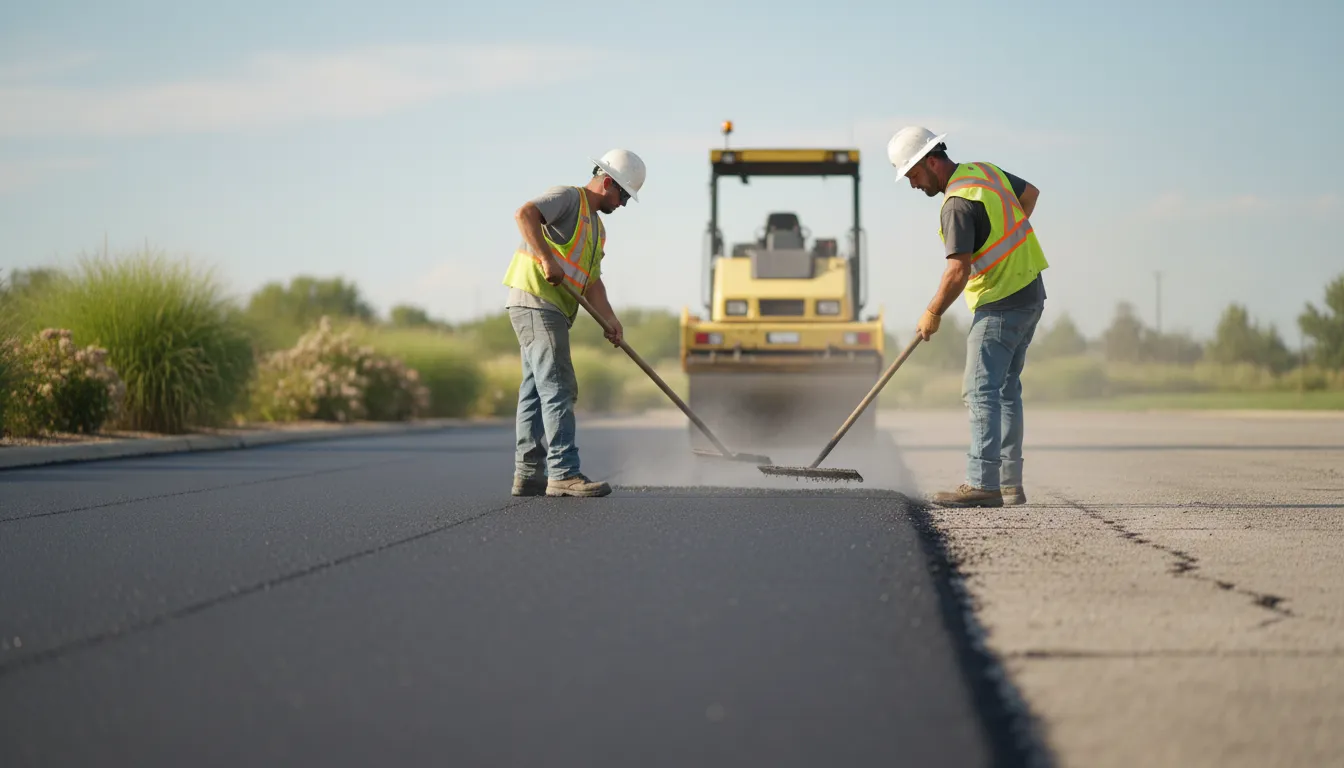
Find the Best Parking Lot Paving Contractors for Your Business
No obligation • Fast responses • Nationwide coverage
Why you can trust Tidy Parking
Tidy Parking is a leading U.S. source for parking lot maintenance services, including striping, sealcoating, sweeping, paving, resurfacing, and repairs. Our content is created independently, and providers cannot pay to influence ratings or recommendations.
Search providers near you
Top Parking Lot Paving Contractors in Palm Desert, California Ranked
A durable, well-constructed parking lot is a critical asset for any business or property in Palm Desert. The process of parking lot paving involves more than just laying asphalt; it's a comprehensive construction project that creates a safe, functional, and long-lasting surface capable of withstanding the unique demands of the Coachella Valley. Given the extreme heat, intense sun, and specific soil conditions, proper asphalt installation is essential to avoid premature failure and costly repairs. This guide explains the specialized techniques, common challenges, and key considerations for asphalt paving in Palm Desert, helping you understand what goes into a successful project and how to evaluate local paving expertise.
Cortez Paving Inc
Riverside, CA
Cortez Paving Inc provides asphalt, concrete, and sealcoating services in Riverside, CA. They handle residential, commercial, and industrial projects with expertise in parking lot paving, striping, and sealcoating to protect and maintain paved surfaces. The company also specializes in ADA compliance, including handicap parking stalls, signage, and accessible pathways. Cortez Paving uses advanced technology and premium materials to ensure durable and visually appealing results.
Asphalt Paving Palm Springs
Orlando, FL
Asphalt Paving Palm Springs is a family-owned company serving Palm Springs, FL, and the surrounding Palm Springs County. They specialize in residential and commercial asphalt paving, parking lot striping, sealcoating, resurfacing, and repair services. Their team handles projects ranging from driveway paving to large-scale commercial parking lots, ensuring safety and functionality for vehicles and pedestrians. With decades of experience, they focus on quality workmanship and customer satisfaction, maintaining up-to-date industry standards. The company is committed to minimizing business disruption during commercial projects and offers expert pothole and crack repair services.
Understanding the Palm Desert Paving Environment
Paving a parking lot in the desert is a distinct engineering challenge. The local climate and geology demand a tailored approach that differs significantly from methods used in more temperate regions. The primary adversaries are extreme heat, ultraviolet radiation, and the native soil composition.
Summer temperatures in Palm Desert regularly exceed 110°F, which can soften standard asphalt mixes, leading to rutting and deformation under the weight of vehicles. This intense heat is compounded by powerful UV radiation that breaks down the asphalt binder through oxidation, causing the surface to become brittle, fade to a gray color, and crack 1. Furthermore, the arid climate accelerates moisture depletion within the asphalt, robbing it of flexibility and accelerating the aging process 2. Beneath the surface, the soil in the Coachella Valley can be unstable or weak, requiring significant preparation to create a solid foundation that won't settle or shift under load. Understanding these environmental factors is the first step toward specifying a pavement system built to last.
The Step-by-Step Paving Process for Desert Durability
A successful parking lot construction project follows a meticulous sequence, each phase building upon the last to ensure structural integrity. Cutting corners on any step is a primary reason for early pavement failure.
1. Site Inspection & Preparation Every project begins with a thorough evaluation. Contractors assess the existing soil quality, drainage patterns, and the condition of any old pavement. For a repaving or rehabilitation project, this phase includes the removal of vegetation and the excavation of existing asphalt and base materials. In some local rehabilitation projects, like those documented for public works, this can involve removing 10 to 12 inches of material to address underlying issues.
2. Excavation & Subgrade Compaction Once cleared, the natural soil (subgrade) is graded to the proper slope and compacted to a high density. This is a critical step, especially in areas with unstable soil, as a weak subgrade will lead to cracking and sinking in the finished pavement. Proper compaction creates a stable platform for the layers above.
3. Aggregate Base Installation The aggregate base is the unsung hero of a parking lot, providing 80-90% of its structural strength 3. In Palm Desert, a robust base is non-negotiable. Contractors typically install a minimum 5-inch layer of Class II aggregate, which is then meticulously graded and compacted. This layer distributes vehicle loads and provides crucial drainage away from the subgrade.
4. Asphalt Paving Application Hot-mix asphalt is then applied in one or more layers (lifts). For a new parking lot, the total thickness is typically around 3 inches. The mix design itself is key; in high-temperature regions, pavers use mixes engineered for higher stability to resist softening and rutting. The asphalt must be placed at the correct temperature and compacted with rollers before it cools to achieve proper density.
5. Drainage, Grading & Final Touches During paving, the surface is graded to a slope of 2-5% to ensure water runs off efficiently toward drains or swales 4. After the asphalt has cured, final touches include installing wheel stops, applying pavement markings (striping), and often, an initial sealcoat to protect the fresh asphalt from the sun and elements.
Key Challenges & Engineering Solutions
Paving in Palm Desert isn't just about following steps; it's about proactively solving for the desert's specific challenges through intelligent engineering.
- Thermal Expansion and Contraction: The drastic temperature swing from day to night causes pavement to constantly expand and contract. This stress leads to thermal cracking and longitudinal joint distress. The solution lies in using flexible, high-quality asphalt mixes and ensuring proper joint construction and sealing 5.
- Water Management & Drainage: While rain is rare, when it does occur in the Coachella Valley, it can be intense. Imperfect grading leads to ponding, which seeps into cracks, weakens the base, and causes rapid deterioration like potholes and alligator cracking. Engineering proper slope (grading) and installing concrete swales or channel drains are essential to direct runoff away from the pavement structure 6.
- Soil Stabilization: Unstable native soils require extra attention. Solutions include over-excavation of poor soil, using geotextile fabrics for separation and stabilization, and ensuring exceptionally high compaction standards for the subgrade and aggregate base 7. A strong foundation prevents the entire pavement system from failing.
- UV & Heat Resistance: To combat oxidation and softening, the strategy involves two parts: using an asphalt mix formulated with polymers or modifiers for high-temperature stability, and committing to a rigorous maintenance schedule including timely sealcoating. Sealcoating acts as a sunscreen, replenishing surface oils and blocking UV rays.
Find the perfect parking lot paving contractors for your needs
Get personalized recommendations and expert advice
Material & Design Considerations for Longevity
Choosing the right materials is as important as the installation process. For asphalt pavement in extreme heat, the binder (the glue that holds the rock together) must be performance-graded (PG) for high temperatures. A PG 76-22 or similar grade is often specified for desert climates, as it remains stable at higher temperatures than standard mixes. The aggregate (stone) must be clean, hard, and durable to resist crushing under load.
The structural design-the thickness of the base and asphalt layers-should be calculated based on expected traffic. A lot expecting frequent heavy delivery trucks or garbage trucks requires a much more robust design than one serving only passenger vehicles. This is where an experienced paving contractor provides immense value, designing a system appropriate for your specific use to avoid over- or under-building.
Cost Factors for Parking Lot Paving Projects
Costs for asphalt paving can vary widely based on the scope of work, site conditions, and material prices. Generally, projects are priced per square foot.
- New Construction / Full-Depth Repaving: This is the most comprehensive option, involving full excavation and installation of a new aggregate base and asphalt surface. In Palm Desert, costs typically range from $2.50 to $7.00 or more per square foot8. The higher end of this range accounts for significant site preparation, deep excavation (like the 12-inch removal noted in some local projects), and a thicker aggregate base 9.
- Resurfacing (Overlay): If the existing base is structurally sound, a new layer of asphalt can be applied over the old. This is less expensive, generally ranging from $1.50 to $3.00 per square foot.
- Sealcoating: A protective maintenance treatment, sealcoating costs between $0.30 and $0.50 per square foot10. It is a critical investment in the desert to prolong pavement life.
It's important to view paving as a long-term investment. A properly engineered and constructed lot, followed by regular maintenance like sealcoating and crack sealing, will have a significantly longer lifespan and lower lifetime cost than a cheaply built alternative that requires major repairs in a few years.
Maintenance: Protecting Your Pavement Investment
Once your new parking lot is paved, a proactive maintenance plan is essential to maximize its lifespan against the harsh desert elements. The first line of defense is sealcoating, which should be applied 6-12 months after new asphalt installation and then reapplied every 2-3 years. It seals small surface cracks, restores flexibility, and provides a barrier against oil, gas, and UV rays 11.
Crack sealing is another crucial task. Small cracks should be cleaned and filled with a rubberized sealant annually to prevent water infiltration, which is the leading cause of base failure and potholes 12. Regular cleaning to remove debris and staining materials also helps preserve the surface. By addressing minor issues promptly, you prevent them from evolving into costly, large-scale repairs, ensuring your paved asset remains safe and attractive for years to come.
Frequently asked questions
Sources
Footnotes
-
Anticipating and Responding to Pavement Performance as Climate Changes - https://link.springer.com/chapter/10.1007/978-3-662-44719-2_4 ↩
-
Weather Considerations: How Climate Affects Your Asphalt Driveway - https://premierpavingmd.com/weather-considerations-how-climate-affects-your-asphalt-driveway/ ↩
-
The New Parking Lot Construction Process - Metro Paving INC - https://metropavinginc.com/2022/05/the-new-parking-lot-construction-process/ ↩
-
Making the Grade: Parking Lot Drainage - Metro Paving INC - https://metropavinginc.com/2021/03/making-the-grade-parking-lot-drainage/ ↩
-
The Importance Of Asphalt Inspection After Summer Heat - https://terracontracting.com/importance-of-asphalt-inspection-after-summer-heat/ ↩
-
Asphalt Paving & Maintenance - https://palmspringspaving.net/asphalt-paving-maintenance/ ↩
-
Proper Base and Subgrade Construction for Parking Lots - https://www.mypavementguy.com/proper-base-and-subgrade-construction-for-parking-lots/ ↩
-
The Cost of ADA Asphalt Paving: What to Expect in 2025 - https://advancedasphaltofswflinc.com/the-cost-of-ada-asphalt-paving-what-to-expect-in-2025/ ↩
-
Palm Desert Operations Parking Lot Rehabilitation-Phase 2 - https://ceqanet.lci.ca.gov/2024030031 ↩
-
How Much Does Parking Lot Paving Cost in 2025? - Eli's Paving - https://elispaving.com/how-much-does-parking-lot-paving-cost-in-2025/ ↩
-
Common Parking Lot Issues and How to Fix Them: The Complete Guide - https://asphaltcoatingscompany.com/blog/common-parking-lot-issues-and-how-to-fix-them-the-complete-guide/ ↩
-
How Parking Lot Drainage Impacts Pavement Longevity - Rose Paving - https://www.rosepaving.com/blog/how-parking-lot-drainage-impacts-pavement-longevity/ ↩