Find the Best Parking Lot Paving Contractors for Your Business
No obligation • Fast responses • Nationwide coverage
Why you can trust Tidy Parking
Tidy Parking is a leading U.S. source for parking lot maintenance services, including striping, sealcoating, sweeping, paving, resurfacing, and repairs. Our content is created independently, and providers cannot pay to influence ratings or recommendations.
Search providers near you
Top Parking Lot Paving Contractors in Newark, California Ranked
A well-paved parking lot is a critical asset for any California business, providing a safe, durable, and professional first impression for customers and employees. This surface must withstand intense sun, seasonal rains, and constant traffic while complying with strict state and local engineering standards. Finding the right contractor for your project involves understanding these unique requirements, material options, and proper installation techniques to ensure a long-lasting result.
Charis Paving Co
San Jose, CA
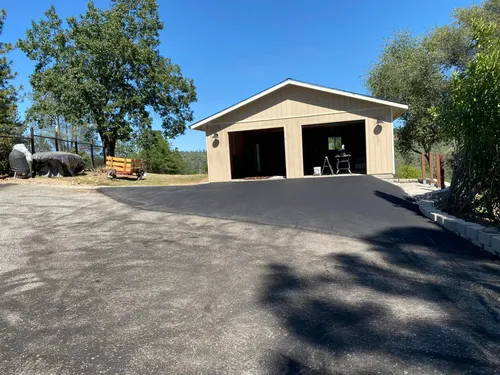
Charis Paving Co is an asphalt contractor based in San Jose, CA, offering a range of services including asphalt paving, patching, striping, sealcoating, and driveway installation. They serve both residential and commercial clients, using quality materials and advanced techniques to ensure durable and reliable pavement solutions. Their expertise covers parking lot paving and maintenance, with a focus on extending the lifespan and functionality of asphalt surfaces. With years of industry experience, Charis Paving Co emphasizes timely project completion and customer satisfaction.
Granite Northwest Grading And Paving
San Jose, CA
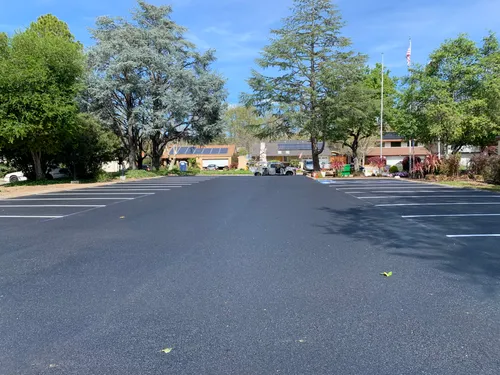
Granite Northwest Grading And Paving is a family-owned paving contractor serving San Jose, CA, with three generations of experience. They provide a wide range of services including asphalt and concrete driveway installations, parking lot paving, repairs, sealcoating, resurfacing, and striping. The company handles both residential and commercial projects, focusing on durable, long-lasting pavement solutions. Their expertise includes parking lot paving and maintenance, ensuring smooth, safe surfaces that meet local regulations. Granite Northwest Grading And Paving emphasizes clear communication and a collaborative approach throughout each project.
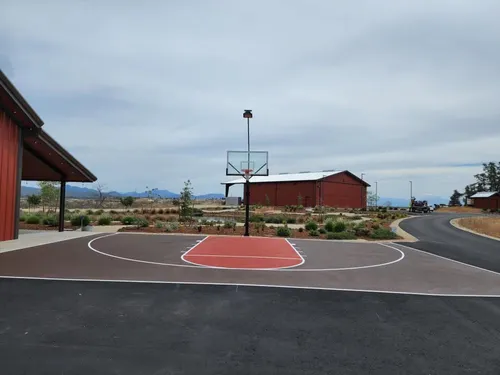
Progressive Asphalt Paving
San Jose, CA
Progressive Asphalt Paving is an asphalt contractor serving San Jose, CA, specializing in asphalt paving, patching, striping, sealcoating, and driveway installation. They provide services for residential, commercial, and municipal clients, using premium materials to ensure durable and long-lasting asphalt surfaces. Their expertise includes asphalt patching techniques that restore pavement strength and professional striping that meets regulatory standards. The company emphasizes tailored solutions and transparent pricing based on years of industry experience.
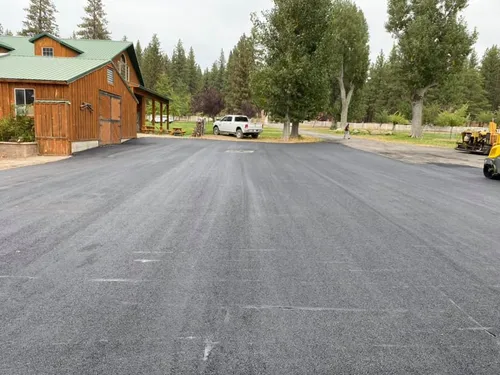
All Things Asphalt Inc
360 Portage Ave, Palo Alto, CA 94306
All Things Asphalt Inc is a locally owned asphalt contractor based in San Jose, CA, offering a full range of asphalt services including paving, patching, striping, sealcoating, and driveway installation. They serve both residential and commercial clients, providing durable and visually appealing asphalt surfaces tailored to the needs of the Palo Alto area. The company uses high-quality materials and advanced equipment to ensure long-lasting results and specializes in parking lot construction and repair with attention to grading and drainage. With years of industry experience, All Things Asphalt Inc focuses on delivering projects on schedule while maintaining quality standards.
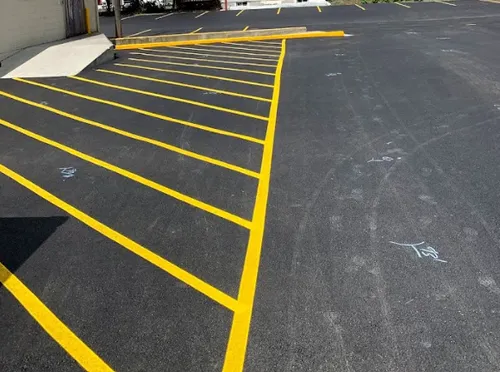
San Mateo Asphalt
San Diego, CA
San Mateo Asphalt is a parking lot paving contractor and repair company based in San Diego, CA. They provide asphalt paving, demolition, maintenance, and repair services with a focus on durable and well-executed surfaces. Their approach includes detailed proposals with site designs and explanations of the work to be done. The company emphasizes using industry-approved methods and premium materials to ensure long-lasting pavement performance.
Understanding California's Paving Standards and Codes
Parking lot construction in California is governed by a combination of state guidelines and municipal codes. The California Department of Transportation (Caltrans) provides foundational standards, particularly Section 39 for asphalt, which many local jurisdictions reference or adopt. Municipalities often have their own specific ordinances covering everything from stall dimensions to drainage, so checking with your local building department is an essential first step.
Key engineering standards often cited include:
- Asphalt Thickness: For commercial parking areas, the asphalt surface course typically ranges from 2 to 6 inches, depending on expected traffic loads.
- Base Material: A stable foundation is non-negotiable. This usually consists of 4 to 8 inches of compacted aggregate base (gravel) placed beneath the asphalt.
- Compaction: The base material must achieve a minimum of 95% relative compaction. This is arguably the most critical step in the process, as inadequate compaction leads to settling, potholes, and premature failure 1.
- Stall Dimensions: Standard parking spaces are generally a minimum of 9 feet wide by 18-20 feet deep. Some local codes allow for reduced depth (15-18 feet) if the stall abuts a 6-foot-wide landscaped area 2 3.
Climate Challenges for California Asphalt
The state's diverse climate presents specific challenges that must be addressed in the paving design and material selection.
- Heat and Oxidation: Prolonged exposure to high temperatures and intense UV rays can soften asphalt binder, leading to rutting and deformation, while also causing the surface to oxidize and become brittle. This brittleness leads to cracking, allowing water infiltration. Using heat-resistant asphalt mixes and a timely application of quality sealcoating are essential defenses.
- Moisture Management: While Southern California is often dry, winter rains and coastal moisture are significant factors. Water is the primary enemy of asphalt pavement. Without proper drainage, water seeps into cracks, softens the subgrade, and leads to potholes, heaving, and alligator cracking. Ensuring the lot is designed to shed water quickly is paramount.
Choosing the Right Asphalt Mix for Your Lot
Not all asphalt is the same. The choice of mix depends on your location, traffic patterns, and budget.
- Hot Mix Asphalt (HMA): This is the most common material for commercial parking lots. It's durable, flexible, and provides a smooth riding surface. Within HMA, Type A or B mixes are typically specified for commercial applications, with Type A often used for higher traffic areas like drive aisles 4.
- Rubberized Asphalt (RHMA-G/O): California is a leader in using this environmentally friendly option, which incorporates ground tire rubber into the asphalt binder. Rubberized asphalt is excellent for managing thermal stress (reducing cracking in both heat and cold) and can enhance the longevity of the pavement 5 6. It is often used on roads but is a premium option for parking lots subject to heavy loads or extreme temperature swings.
The Critical Role of Base Preparation
A successful paving project is built from the ground up. The condition and preparation of the base layer determine the pavement's lifespan more than any other factor.
The process involves excavating to stable soil, placing and grading the aggregate base material (typically 4-8 inches), and then compacting it in layers to achieve at least 95% density 7. A laser grader ensures the base already has the proper slope for drainage before a single ton of asphalt is placed. Skipping or short-cutting base preparation is a guarantee of future problems and costly repairs.
Drainage and Slope Requirements
Effective drainage is not an optional feature; it's a requirement for pavement integrity. California standards typically mandate a minimum slope of 2% (a 2-foot drop over a 100-foot run) to ensure water runs off the surface efficiently 8.
Beyond the slope of the pavement itself, a complete design includes:
- Catch Basins and Drain Inlets: Strategically placed to collect runoff.
- Proper Grading: Directing water toward these drains and away from building foundations.
- Subsurface Drains: In some cases, these are necessary to manage groundwater or spring water that could undermine the subgrade.
Find the perfect parking lot paving contractors for your needs
Get personalized recommendations and expert advice
Cost Factors for Parking Lot Paving in California
Paving costs are highly variable and depend on the scope, site conditions, materials, and regional labor rates. Prices are generally quoted per square foot.
- Small Projects (e.g., a large driveway or small lot): Can range from $5 to $12+ per square foot 9.
- Medium to Large Commercial Lots: Typically fall between $6 and $14 per square foot 10 11.
- Very Large Lots (e.g., 1-2 acres): Total project costs can range from $120,000 to $350,000 or more, heavily influenced by the amount of base repair, drainage work, and site complexity 12.
The largest cost variables are:
- Site Conditions: Does the project require full demolition and reconstruction, or can a new layer be placed over the existing pavement (an overlay)? Extensive grading, poor soil, or unknown utilities increase costs.
- Base Repair: If the existing base has failed, repairing it is necessary and adds significant expense but is cheaper than repaving a failed lot in a few years.
- Material Choice: Standard HMA is the baseline cost, while specialized mixes like rubberized asphalt command a premium.
- Drainage and Curbing: Adding new drainage infrastructure or concrete curbs is a separate but often essential part of the project budget.
The Paving Process: What to Expect
A professional paving project follows a structured sequence:
- Consultation and Estimate: A reputable contractor will visit the site, discuss needs, take measurements, and identify potential challenges.
- Design and Permitting: The contractor or a civil engineer will create a plan that meets code, including drainage details. They may also handle pulling necessary permits.
- Site Preparation: This includes clearing, excavation, grading, and compacting the subgrade and base material.
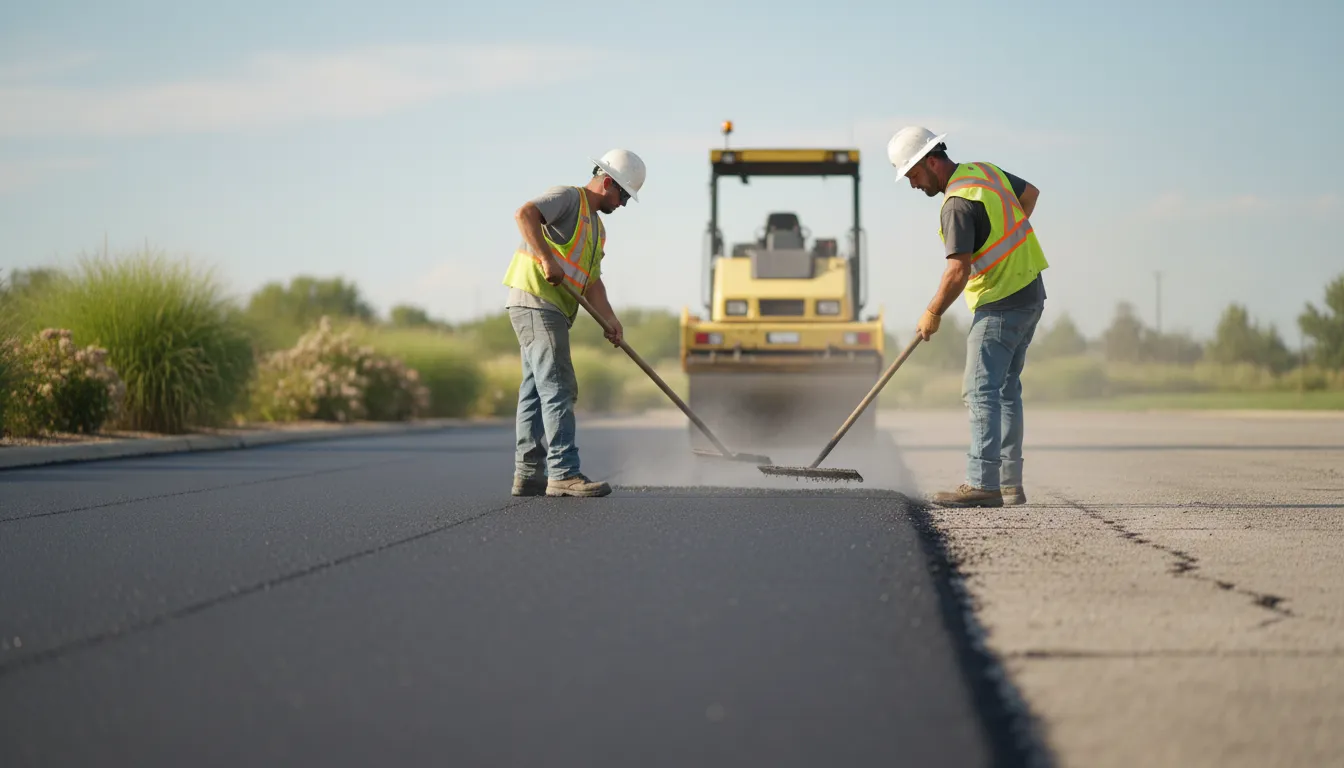
- Asphalt Installation: Hot asphalt is delivered, spread with a paver, and immediately compacted with rollers to achieve proper density and smoothness.
- Finishing: Once cooled, the new pavement can be striped. Sealcoating is usually recommended after 30-90 days to protect the fresh asphalt.
Maintenance for Longevity
Protecting your investment starts immediately after installation. A routine maintenance plan should include:
- Sealcoating: Apply a protective coal tar or asphalt-based sealant every 2-3 years to shield against UV oxidation, gas/oil spills, and water 13.
- Prompt Crack Sealing: Fill small cracks annually to prevent water from penetrating to the base.
- Regular Cleaning: Keep drains clear and remove debris.
- Periodic Inspections: Have a professional assess the pavement every few years to plan for repairs before they become major.
Frequently asked questions
Sources
Footnotes
-
Roadside Management Toolbox: Asphalt Concrete - Caltrans - CA.gov - https://dot.ca.gov/programs/design/lap-roadside-management-toolbox/tool46-lap-asphalt-concrete ↩
-
Sec. 9-4.2405. General design standards of parking areas. - https://codelibrary.amlegal.com/codes/thousandoaks/latest/thousandoaks_ca/0-0-0-16213 ↩
-
Pavement Marking for Parking Lots in California | GPM - https://www.gpmpavement.com/blog/parking-lot-pavement-marking-guide/ ↩
-
ASPHALT PAVEMENT DESIGN GUIDE - https://cms3.revize.com/revize/hudsonnynew/Boards%20and%20Committees/Truck%20Route/2023/December/Asphalt%20Design.pdf ↩
-
Asphalt Pavement - Caltrans - https://dot.ca.gov/programs/maintenance/pavement/asphalt-pavement ↩
-
Newsletter of the California Pavement Preservation Center - https://www.csuchico.edu/cp2c/_assets/documents/2024-3/nl69march-2024-web-story-6.pdf ↩
-
Key Factors for Asphalt Paving - Advantage Asphalt - https://www.advantageasphaltpaving.com/key-factors-for-asphalt-paving/ ↩
-
Commercial Asphalt Thickness Standards in California - https://www.welovepaving.com/commercial-asphalt-thickness-standards-in-california/ ↩
-
How Much Does Paving an Asphalt Driveway Cost? - SMA Estimating - https://www.smaestimating.com/how-much-does-paving-an-asphalt-driveway-cost/ ↩
-
How Much Does Paving an Asphalt Driveway Cost? (2026) - HomeGuide - https://homeguide.com/costs/asphalt-driveway-cost ↩
-
How to Prepare Your Property for Professional Parking Lot Paving - https://www.raffertypavingteam.com/blog/2025/april/how-to-prepare-your-property-for-professional-pa/ ↩
-
Northern California Parking Lot Paving: The Commercial ... - https://www.advantageasphalt.com/resources/northern-california-parking-lot-paving-guide ↩
-
Weather and Environmental Breakdown of Parking Lot Pavement - https://buckbros.com/blog/environmental-breakdown-of-parking-lot-pavement/ ↩