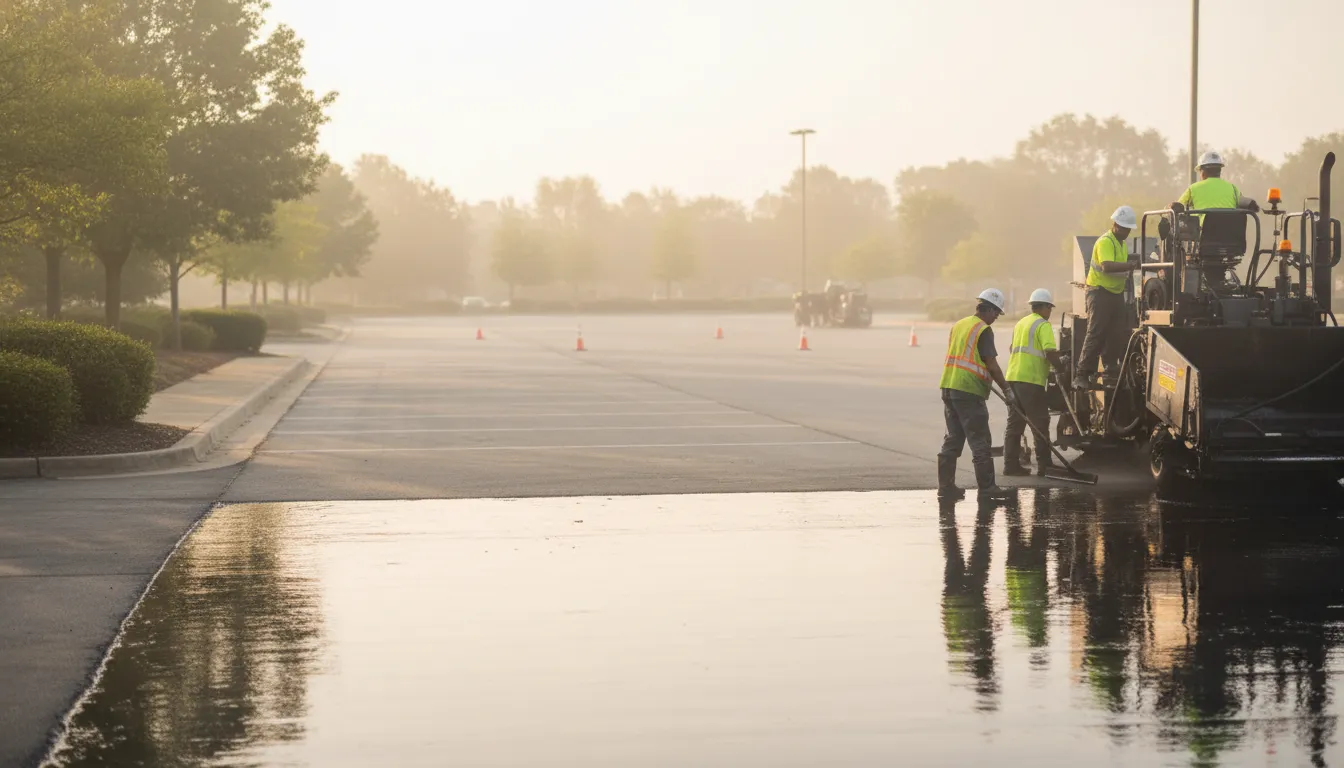
Find the Best Parking Lot Sealcoating Companies for Your Business
No obligation • Fast responses • Nationwide coverage

Why you can trust Tidy Parking
Tidy Parking is a leading U.S. source for parking lot maintenance services, including striping, sealcoating, sweeping, paving, resurfacing, and repairs. Our content is created independently, and providers cannot pay to influence ratings or recommendations.
Search providers near you
Best Parking Lot Sealcoating Companies in Vermont Ranked
Parking lot sealcoating is an essential protective maintenance service for property owners and managers across Vermont. This process involves applying a specialized protective coating to asphalt pavement to shield it from the state's harsh weather, damaging freeze-thaw cycles, and corrosive winter chemicals. A properly applied sealcoat waterproofs the surface, prevents oxidation, and dramatically extends the life of your pavement investment. This guide provides Vermont-specific insights on timing, costs, preparation, and best practices to help you plan an effective sealcoating project and connect with qualified local professionals.
Why Sealcoating is Critical in Vermont's Climate
Vermont's environment presents unique challenges for asphalt pavement. Long, cold winters with heavy snowfall and frequent freeze-thaw cycles are the primary causes of pavement deterioration. Water seeps into tiny cracks in the asphalt. When it freezes, it expands, widening those cracks. Subsequent thaws allow more water in, repeating the cycle and leading to potholes, alligator cracking, and base failure. Sealcoating acts as a waterproof barrier, preventing this infiltration in the first place.
Furthermore, winter maintenance itself is abrasive. Snowplow blades scrape across parking lots, and sand applied for traction acts like sandpaper under tires. A high-quality sealcoat provides a durable, smooth surface that is more resistant to this abrasive wear, making snow removal easier and less damaging. It also protects the asphalt binder from degradation caused by ultraviolet (UV) rays in summer and corrosive de-icing salts like calcium chloride and rock salt used in winter.
The Optimal Sealcoating Season in Vermont
Timing is everything for a successful sealcoating project in Vermont. The application window is constrained by temperature and weather conditions required for the sealant to cure properly.
Primary Season: May through September This is the safest and most reliable window for sealcoating in Vermont 1. The goal is to apply when temperatures are consistently above 50°F (10°C) and rising, with low humidity and no rain in the forecast for at least 24 hours 1 2. Pavement temperature should also be considered; it should be under 140°F to ensure proper adhesion and curing.
The "50/50/50" Rule: A common guideline for ideal sealcoating conditions is the 50/50/50 rule:
- Air temperature at least 50°F and rising.
- Relative humidity below 50%.
- Pavement temperature below 140°F (some variations cite 50°F minimum pavement temp) 3.
Late Season & Risky Applications: While some may attempt applications into October, this is risky. If the sealant does not fully cure before the first hard freeze, it can remain soft, become tacky, or peel off entirely, wasting the investment. Late-season projects also carry the risk of unexpected cold snaps or early snowfalls.
Strategic Timing for Winter Prep: Applying sealcoat in the late summer or early fall is an excellent strategy for winter preparation. It ensures your pavement enters the harsh season with a fresh, protective layer already fully cured and ready to defend against plows and salts 4 5.
Find the perfect parking lot sealcoating companies for your needs
Get personalized recommendations and expert advice
How Often Should You Sealcoat in Vermont?
A consistent sealcoating schedule is key to proactive pavement management. The frequency depends on several factors:
- New Asphalt: Wait 6 to 12 months after a new asphalt installation before the first sealcoat. This allows oils in the fresh asphalt to fully cure and evaporate; sealing too soon can trap moisture and cause issues 6.
- General Maintenance: For most parking lots with moderate traffic, a cycle of every 2 to 3 years is standard 7 8.
- High-Traffic & Commercial Lots: Lots that experience heavy daily vehicle volume, frequent truck traffic, or exposure to fuel and oil spills (like gas stations) may require sealcoating every 1 to 2 years 9.
- Annual Inspection: Regardless of schedule, a professional inspection each spring (to assess winter damage) and fall (to plan maintenance) is highly recommended for Vermont properties.
Essential Preparation Steps for Lasting Results
Proper surface preparation is arguably more important than the application itself. Skipping steps leads to poor adhesion and premature failure.
- Thorough Cleaning: The pavement must be completely free of dirt, dust, leaves, and vegetation. For large lots, professional power sweeping and cleaning can cost between $500 and $3,500 but is non-negotiable for a good bond 10 11.
- Oil and Stain Priming: Gasoline, oil, and antifreeze stains must be treated with a specialized latex-based primer. If not, the sealcoat will not adhere to these spots and will quickly wear away, leaving bare patches 12.
- Crack Filling: All cracks should be cleaned and filled with a hot-pour rubberized crack filler. This prevents water from entering the crack underneath the new sealcoat, which would defeat its primary purpose 13.
- Pothole and Base Repair: Any areas with alligator cracking (interconnected cracks resembling alligator skin) or potholes require full-depth repair before sealing. Sealcoating is a surface treatment, not a structural fix.
Materials and Environmental Considerations
- Material Types: Standard asphalt emulsion sealers are common, but for Vermont's climate, consider upgrading to polymer-modified sealants. These contain added plastics or rubbers that provide greater flexibility (resisting freeze-thaw stress) and durability against abrasion and chemicals 14.
- Aggregate Additives: Adding fine sand or other aggregates to the sealcoat mix can significantly enhance its texture and resistance to snowplow wear, a smart choice for Vermont lots 15.
- Vermont Regulations: Sealcoating projects must follow the Vermont Department of Environmental Conservation (DEC) guidelines for stormwater pollution prevention. This includes preventing runoff into storm drains and protecting nearby waterways from sealant materials 16. Reputable contractors will manage this compliance.
Understanding Costs for Parking Lot Sealcoating in Vermont
Sealcoating is a cost-effective preventative measure. Professional pricing is typically quoted per square foot, with several factors influencing the final cost.
- Average Cost Per Square Foot: Professional sealcoating in Vermont typically ranges from $0.17 to $0.30 per square foot 17.
- Typical Project Cost: For a standard 50,000-square-foot commercial parking lot, total costs often fall between $8,500 and $15,000.
- Crack Filling: This critical prep work is usually priced separately at $1.00 to $2.00 per linear foot 18.
- Minimum Charges: Due to mobilization and setup costs, most contractors have a minimum project charge, often between $2,500 and $5,000, even for smaller lots 19.
- Scheduling for Best Value: Planning your project for the spring or early summer (before September) can sometimes secure better pricing, as contractor demand peaks in the late fall rush before winter. Scheduling early also ensures warranty coverage is valid, as some warranties may not apply to late-season applications.
Choosing a Contractor in Vermont
Selecting the right professional is crucial. Look for contractors with specific experience in Vermont's climate. They should be willing to discuss:
- Their recommended preparation process.
- The type of sealant they use (standard vs. polymer-modified).
- Their understanding of the 50/50/50 rule and willingness to reschedule for poor weather.
- Proof of insurance and references from similar commercial projects in the state.
- Their plan for complying with Vermont DEC stormwater regulations.
Frequently asked questions
Sources
Footnotes
-
Best Weather Conditions for Sealcoating - D.B.Krieg, Inc. - https://dbkrieginc.com/blog/best-temperature-weather-for-sealcoating/ ↩ ↩2
-
Best Weather Conditions for Sealcoating - D.B.Krieg, Inc. - https://dbkrieginc.com/blog/best-temperature-weather-for-sealcoating/ ↩
-
How to Extend the Life of Asphalt Driveways in Vermont's Cold ... - https://twinstatepaving.com/asphalt-driveways-vermont-winter-tips/ ↩
-
Asphalt Sealcoating: A Wise Winter Preparation Strategy - https://paveconnect.com/blog/sealcoating-a-wise-winter-preparation-strategy/ ↩
-
Seal coating your parking lot before winter offers several benefits, especially in climates where freeze-thaw cycles and snow can cause damage. Here are some key advantages✅Prevents Water Damage: Seal coating seals small cracks and gaps, stopping water from seeping into the asphalt. This prevents freeze-thaw cycles during winter from expanding the cracks and creating potholes.✅Prepares for Snow Removal: A smooth, sealed surface makes it easier to remove snow with shovels or plows without damaging the pavement. This reduces the likelihood of scraping or gouging the asphalt.✅Shields Against Deicing Agents: Winter salts and deicing chemicals can break down asphalt over time. A seal coat provides a protective layer that reduces damage from these harsh substances.✅Cost-Effective Preventative Maintenance: Seal coating is a low-cost investment that helps prevent expensive repairs by shielding your parking lot from winter's damaging effects. | T&K Asphalt Services - https://www.facebook.com/TandKAsphalt/videos/seal-coating-your-parking-lot-before-winter-offers-several-benefits-especially-i/545785104551364/ ↩
-
When Is The Perfect Time To Sealcoat Your Driveway? - https://actionasphalt.com/when-is-the-perfect-time-to-sealcoat-your-driveway/ ↩
-
How Often Should You Sealcoat Your Asphalt? - https://asphaltcoatingscompany.com/blog/how-often-should-you-sealcoat-your-asphalt/ ↩
-
How Often to Sealcoat an Asphalt Driveway & Parking Lot? - https://sipesasphaltconcrete.com/how-often-should-you-sealcoat-your-commercial-driveway-and-parking-lot/ ↩
-
Vermont Sealcoating for Driveways & Parking Lots - https://vermontpavement.com/sealcoating/ ↩
-
Vermont Develops Guidance for Maintaining Porous Asphalt ... - https://maintainroads.org/vermont-develops-guidance-for-maintaining-porous-asphalt-pavements/ ↩
-
Retail Parking Lot Sealcoating: Why It Pays to Plan Ahead - Pavement Maintenance, Asphalt Paving and Repair Contractors - https://www.dryco.com/blog/retail-parking-lot-sealcoating-why-it-pays-to-plan-ahead/ ↩
-
How Often Should You Seal Coat Asphalt? - Elcor Construction - https://elcorconstruction.com/how-often-should-you-seal-coat-asphalt/ ↩
-
Asphalt Preventive Maintenance Checklist | ABC Paving & Sealcoating - https://pavingandsealcoating.com/asphalt-pavement-checklist-for-facilities-maintenance/ ↩
-
Parking Lot Seal Coating: How to Maintain Your Parking Lot Through Seal Coating - https://www.themonrazcompany.com/parking-lot-seal-coating ↩
-
pavement preservation how: new hampshire, massachusetts ... - https://www.fhwa.dot.gov/pavement/pubs/hif20013.pdf ↩
-
The Vermont Standards and Specifications for Erosion Prevention & ... - https://dec.vermont.gov/sites/dec/files/wsm/stormwater/docs/StormwaterConstructionDischargePermits/VT%20Standards%20and%20Specifications%20for%20EPSC%20-%202019.pdf ↩
-
Sealcoating a Parking Lot: When, Why & How Much - https://strikeforcestriping.com/sealcoating-parking-lot-guide ↩
-
Parking Lot Seal Coating Costs for Asphalt : 2025 Pricing Guide - https://www.fixasphalt.com/blog/how-much-does-it-cost-to-sealcoat-an-asphalt-parking-lot ↩
-
When's the Best Time of Year to Sealcoat? - Arnold Asphalt - https://arnoldasphalt.com/whens-the-best-time-of-year-to-sealcoat/ ↩