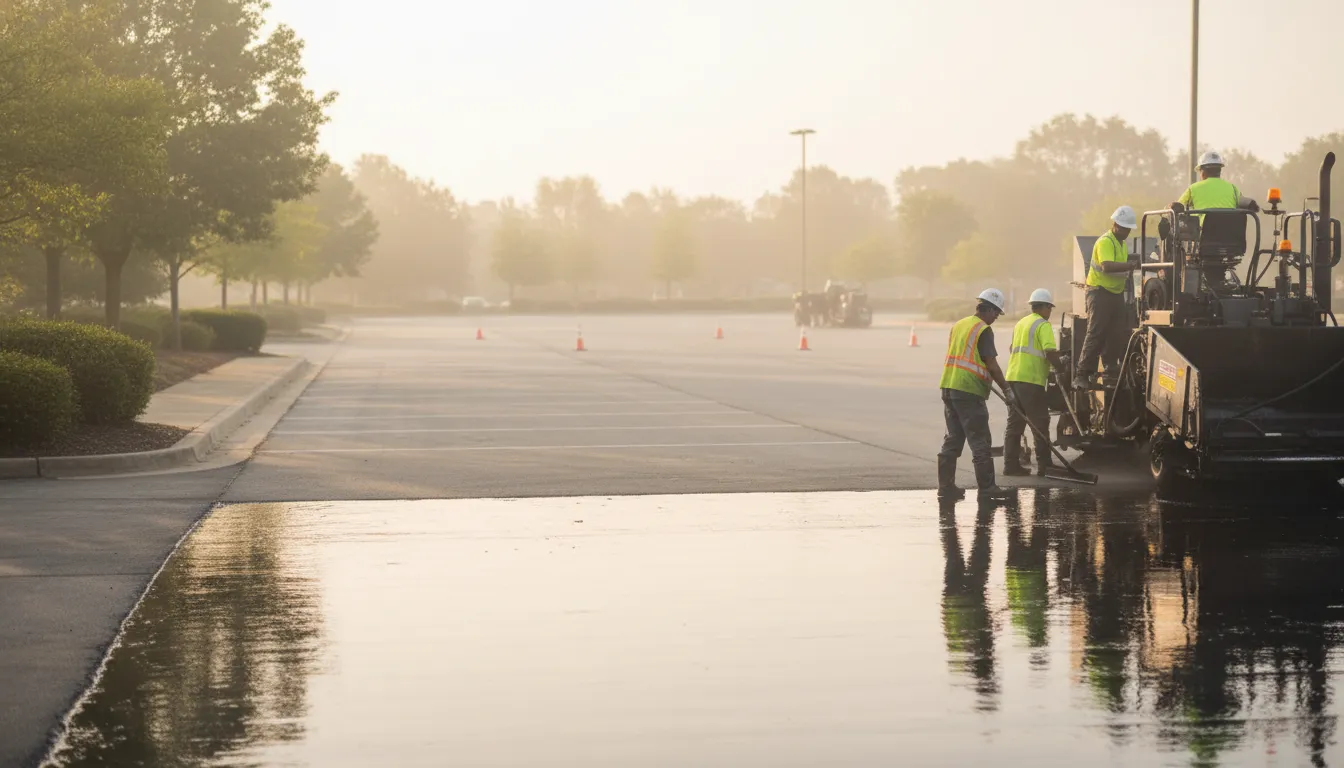
Find the Best Parking Lot Sealcoating Companies for Your Business
No obligation • Fast responses • Nationwide coverage
Why you can trust Tidy Parking
Tidy Parking is a leading U.S. source for parking lot maintenance services, including striping, sealcoating, sweeping, paving, resurfacing, and repairs. Our content is created independently, and providers cannot pay to influence ratings or recommendations.
Search providers near you
Best Parking Lot Sealcoating Companies in Nevada Ranked
Parking lot sealcoating is a vital protective maintenance procedure for commercial asphalt surfaces in Nevada. Applying a specialized asphalt-based coating shields the pavement from the state's intense sun, extreme heat, and automotive fluids, extending its lifespan and improving its appearance. For property managers and business owners, understanding the unique demands of the Nevada climate is key to effective scheduling and execution. This guide provides the essential information needed to plan a successful sealcoating project and connect with qualified local professionals.
Blacktop Paving
10270 Donner Pass Rd, Truckee, CA 96161
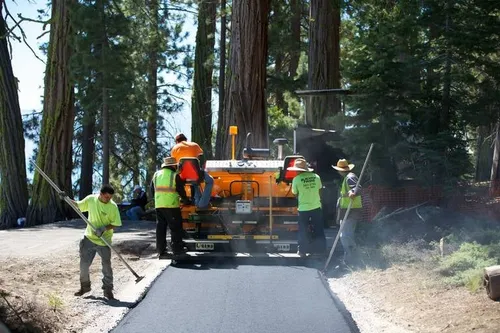
Blacktop Paving is a paving contractor based in Reno, NV, serving residential, commercial, and municipal clients across the Sierra Nevada and Northern California. Established in 1979, the company offers a wide range of services including asphalt paving, parking lot striping, sealcoating, resurfacing, and repair. They specialize in durable asphalt solutions tailored to the unique climate challenges of the Tahoe and Reno areas, with capabilities such as cut-and-patch utility road restoration and ADA-compliant commercial paving. With over four decades of experience, Blacktop Paving continues to combine traditional craftsmanship with modern techniques under new leadership.
HD COATINGS
Reno, NV
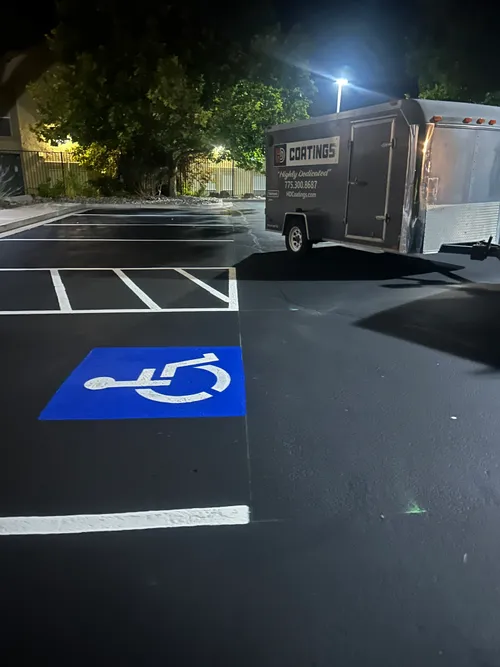
HD COATINGS is a parking lot striping, sealcoating, and repair company based in Reno, NV. They provide pavement maintenance services for both commercial and residential properties, including sealcoating, crack sealing, pothole repair, line striping, custom signage, and sports court surfacing. Their expertise includes applying preformed thermoplastic pavement markings for enhanced durability and visibility. The company uses high-quality materials and tailored solutions to extend the life of asphalt surfaces and improve safety. HD COATINGS is licensed, fully insured, and backed by expertise passed down through generations.
Apex Grading & Paving
294 E Moana Ln #26, Reno, NV 89502
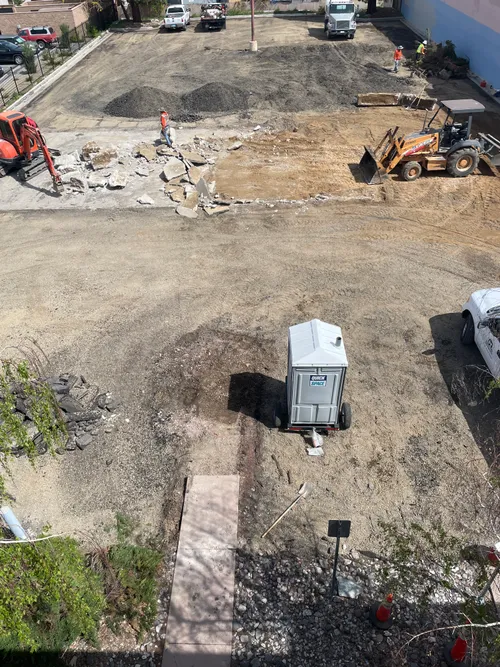
Apex Grading & Paving is a parking lot sealcoating, paving, and repair company based in Reno, NV. They handle projects from initial concept through long-term maintenance, specializing in asphalt paving, seal coating, and new asphalt parking lot construction. Apex is equipped with modern tools and technology to ensure quality work and focuses on addressing common asphalt issues such as cracking and potholes. The company has been serving the Reno area for over 50 years, emphasizing personalized service and customer satisfaction.
Affordable Striping & Sealing, LLC
4440 E Alexander Rd a, Las Vegas, NV 89115
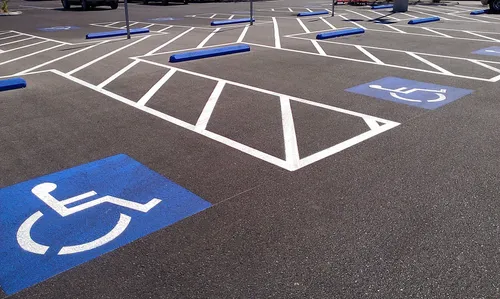
Affordable Striping & Sealing, LLC is a parking lot striping and sealcoating company based in Las Vegas, NV. They specialize in serving large commercial clients, including homeowners associations, with expertise in managing and executing extensive asphalt maintenance projects. Their services include parking lot striping and asphalt sealcoating, which helps protect pavement by bonding with the surface to prevent damage. The company emphasizes ethical standards and teamwork to deliver projects on schedule and within budget.

Andersen Asphalt & Striping LLC
Las Vegas, NV
Andersen Asphalt & Striping LLC provides asphalt paving, sealcoating, striping, and parking lot maintenance services in Las Vegas, NV. They serve residential, commercial, government, and institutional clients across Nevada. Their capabilities include asphalt paving with heavy machinery for efficient project completion, asphalt patching to extend pavement life, sealcoating tailored to local climate conditions, precise parking lot striping, and installation of speed humps and wheel stops. Andersen Asphalt & Striping LLC employs certified paving contractors and uses high-quality materials to ensure durable results.
Why Sealcoating is Critical in Nevada's Climate
Nevada's arid, high-sunlight environment is particularly punishing on asphalt pavement. The primary threats are intense UV radiation and extreme heat, which work together to degrade asphalt binder-the "glue" that holds the pavement together. UV rays cause the asphalt to oxidize, making it brittle and prone to cracking 1. Simultaneously, surface temperatures on a black asphalt lot in Las Vegas can easily exceed 140°F in the summer, causing the material to expand and become more susceptible to deformation and rutting 2.
Sealcoating acts as a sacrificial barrier. It blocks UV rays, reflects some solar heat, and provides a waterproof layer that prevents moisture from seeping into cracks and causing further damage from freeze-thaw cycles in northern Nevada. It also protects against stains from oil, gasoline, and transmission fluid, which can break down the asphalt binder. For commercial properties, this preventive maintenance is not just about preservation; it's about safety, curb appeal, and protecting a significant capital investment. Regular sealcoating, as part of a comprehensive maintenance plan, is far more cost-effective than major repairs or full-depth reconstruction.
Optimal Timing and Seasonal Considerations
Timing is everything for a successful sealcoat application in Nevada. The goal is to apply the material under conditions that allow it to cure properly for maximum durability.
The Ideal Window: The best time to sealcoat is when ambient air temperatures are consistently between 50°F and 90°F and rising, with low humidity. In the Las Vegas area and much of Southern Nevada, this window typically falls between May and September, with early morning applications being most common to avoid the peak afternoon heat 3. In Reno and Northern Nevada, the season may be shorter, focused on late spring through early fall.
Critical Factors to Avoid:
- Excessive Heat: Applying sealant when pavement temperatures exceed 140°F can cause it to cure too quickly, leading to a brittle finish that may crack or fail to bond properly 4.
- Monsoon Rains: Southern Nevada experiences a monsoon season from July into August. Sealcoating must be scheduled to avoid any chance of rain for at least 24-48 hours after application, as water can wash away uncured sealant.
- Cooling Temperatures: Sealcoat should not be applied when temperatures are falling, especially near freezing at night, as this prevents proper curing.
For most commercial lots in Nevada, a sealcoating frequency of every 18 to 24 months is recommended to maintain adequate protection 5. High-traffic areas like retail storefronts or convenience stores may require annual applications 6.
Recommended Maintenance Schedule for Nevada Parking Lots
Sealcoating is one component of a systematic asphalt maintenance plan. Following a schedule prevents minor issues from becoming major expenses.
- New Asphalt: Wait 6 to 12 months after installation to allow the new pavement to fully cure before the first sealcoat application 7.
- Annual Inspection: Visually inspect the lot each spring. Look for new cracks, alligator cracking, potholes, and areas where the previous sealcoat is wearing thin.
- Crack Sealing: Annually, or as needed, fill all cracks wider than 1/4 inch with a hot-applied rubberized crack filler. This is a mandatory step before sealcoating.
- Sealcoating: Apply a fresh coat every 18-24 months for standard commercial lots 8.
- Restriping: Pavement markings typically need refreshing every 2-3 years. This is most efficiently done in conjunction with sealcoating, as the new striping adheres best to a fresh sealcoat surface.
Find the perfect parking lot sealcoating companies for your needs
Get personalized recommendations and expert advice
Essential Preparation Steps for Lasting Results
A sealcoat is only as good as the surface preparation. Skipping or rushing prep work is a leading cause of sealant failure. Professional contractors follow a meticulous process:
- Thorough Cleaning: The entire surface must be free of dirt, dust, sand, and debris. This is often achieved with powerful blowers and mechanical brooms.
- Oil and Grease Removal: Stubborn fluid stains are a major problem. They must be treated with a commercial degreaser or a specialized oil spot primer. If not properly treated, the sealant will not adhere to these spots and will quickly wear away 9.
- Crack Filling: All significant cracks are cleaned and filled with an appropriate hot-pour sealant. This prevents water intrusion and stops the cracks from reflecting through the new sealcoat.
- Vegetation Control: Weeds and grass growing through cracks or along edges should be trimmed or removed.
- Moisture Management: The asphalt must be completely dry. Irrigation systems should be turned off for at least 24 hours prior to application, and the project should not be scheduled if rain is forecast 10.
Application Standards and Local Regulations
For a durable, professional-grade result, specific materials and methods are recommended, especially for Nevada's demanding conditions.
- Material Quality: Use a commercial-grade, polymer-modified asphalt emulsion sealant. These formulations offer enhanced flexibility, durability, and resistance to fuel spills compared to basic coal-tar or asphalt emulsions.
- Application Method: A two-coat application is standard for commercial parking lots. The first coat penetrates and seals the surface, while the second builds a uniform, protective layer. Spray application is common for large areas, followed by back-dragging with squeegees to ensure even coverage.
- Environmental Compliance: In Clark County, sealcoating materials must comply with local air quality regulations regarding Volatile Organic Compound (VOC) emissions 11. Reputable contractors use compliant, low-VOC products.
- Curing and Safety: The sealed area must be barricaded and kept free of traffic and pedestrians for a minimum of 24 to 48 hours to allow for full curing. Driving on uncured sealcoat will track the material and ruin the finish.
Understanding Costs for Nevada Projects
The cost of professional sealcoating in Nevada is typically calculated per square foot. The total price depends on the lot's size, condition, and required prep work.
- Average Cost Range: Professional sealcoating generally costs between $0.17 and $0.30 per square foot 12.
- Example for a Standard Lot: For a 50,000 square foot commercial parking lot, a two-coat application would typically range from $8,500 to $15,000 13.
- Factors Influencing Price:
- Lot Condition: Extensive crack filling, pothole repair, and oil spot treatment will increase the price.
- Accessibility: Lots with complex layouts, tight turns, or numerous light poles may take longer to prepare and coat.
- Contractor Expertise: Established, insured contractors with a track record of quality work may charge a premium.
It is highly advisable to obtain detailed, written estimates from multiple licensed and insured contractors. These estimates should include a clear scope of work: preparation steps, materials to be used, number of coats, and the curing time required before the lot can be reopened.
Frequently asked questions
Sources
Footnotes
-
How Does Heat Affect Your Asphalt Parking Lot? - Affordable Striping - https://affordablestriping.com/ahd_faq/how-heat-affect-asphalt-parking-lot/ ↩
-
How Does Hot Weather Affect Asphalt Parking Lots? - https://www.a1asphaltinc.com/how-does-hot-weather-affect-asphalt-parking-lots.php ↩
-
Las Vegas Parking Lot Striping: Essential Facilities Maintenance ... - https://www.myshyft.com/blog/parking-lot-striping-services-las-vegas-nevada-2/ ↩
-
Can You Sealcoat in Hot Weather? | Affordable Striping & Sealing - https://affordablestriping.com/ahd_faq/sealcoat-hot-weather/ ↩
-
How Often Should You Sealcoat an Asphalt Paving Lot? - https://affordablestriping.com/ahd_faq/should-sealcoat-asphalt-paving-lot/ ↩
-
How Often Should You Sealcoat Your Commercial Parking Lot - https://thepavementgroup.com/commercial-parking-lot-sealcoat/ ↩
-
How Often Should You Seal Coat Asphalt? - Elcor Construction - https://elcorconstruction.com/how-often-should-you-seal-coat-asphalt/ ↩
-
How Often Should You Sealcoat Your Parking Lot? - American Asphalt - https://americanasphalt.com/how-often-should-you-sealcoat-your-parking-lot/ ↩
-
How Do You Prep Asphalt Before Sealcoating in Seven Hills ... - https://www.andersenasphalt.com/how-do-you-prep-asphalt-before-sealcoating-in-seven-hills-nv-clean-remove-oil-stains-more/ ↩
-
Seal Coating and Other Asphalt Surface Treatments - https://ltap.engr.wisc.edu/wp-content/uploads/2019/12/Bltn_010_Seal_Coating.pdf ↩
-
section 130: voc emissions control for architectural and - https://www.clarkcountynv.gov/assets/documents/government/departments/environment_and_sustainability/division_of_air_quality/rules___regulations/130-20250204-aqr.pdf ↩
-
Parking Lot Seal Coating Costs for Asphalt : 2025 Pricing Guide - https://www.fixasphalt.com/blog/how-much-does-it-cost-to-sealcoat-an-asphalt-parking-lot ↩
-
Sealcoating a Parking Lot: When, Why & How Much - https://strikeforcestriping.com/sealcoating-parking-lot-guide ↩