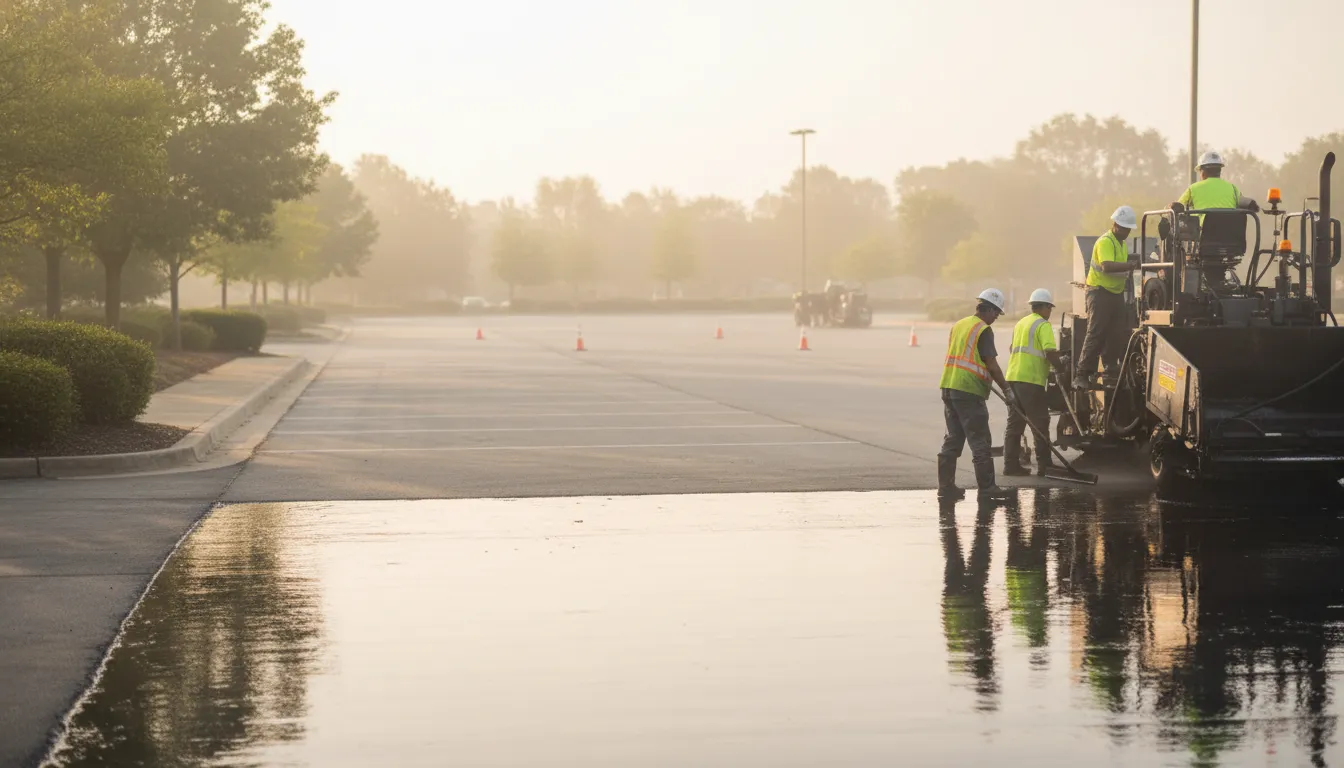
Find the Best Parking Lot Sealcoating Companies for Your Business
No obligation • Fast responses • Nationwide coverage

Why you can trust Tidy Parking
Tidy Parking is a leading U.S. source for parking lot maintenance services, including striping, sealcoating, sweeping, paving, resurfacing, and repairs. Our content is created independently, and providers cannot pay to influence ratings or recommendations.
Search providers near you
Top Parking Lot Sealcoating Companies in Bellevue, Nebraska Ranked
Parking lot sealcoating is a critical maintenance service that applies a protective coating to asphalt pavement. In Nebraska, this process is essential for shielding surfaces from the state's extreme weather, UV radiation, water damage, and chemical spills. A well-sealed lot extends pavement life, improves safety, and enhances curb appeal. This guide explains the local considerations, best practices, and timing for a successful project, helping property managers and business owners make informed decisions when seeking professional sealing services.
Parking Area Maintenance Inc
9580 Ida St, Omaha, NE 68122
Parking Area Maintenance Inc is a veteran-owned company based in Omaha, NE, offering a broad range of paving and concrete services. Their expertise includes asphalt paving, parking lot striping, sealcoating, crack sealing, concrete care, and snow removal. With over 40 years of experience, they serve both residential and commercial clients in Omaha and surrounding areas. The company provides a one-year warranty on their work, reflecting their commitment to lasting results and client satisfaction.
Affordable Asphalt LLC
56630 225th St, Glenwood, IA 51534
Affordable Asphalt LLC is a family-owned asphalt company based in Glenwood, Iowa, serving residential, commercial, industrial, and government clients in Omaha, NE, and surrounding areas. They offer a range of asphalt services including parking lot sealcoating, paving, and repairs, with expertise in private roads and driveways. With over 25 years of experience and more than 2,500 projects completed, Affordable Asphalt LLC emphasizes durable materials and craftsmanship to ensure lasting results.
Black Top Maintenance LLC
Omaha, NE
Black Top Maintenance LLC is an asphalt paving and maintenance company based in Omaha, NE. They provide a range of services including asphalt paving, sealcoating, crack and pothole repair, resurfacing, and driveway repair for residential and commercial properties. Their team handles projects of various sizes, focusing on durable and professional results. The company emphasizes quality workmanship and offers solutions designed to extend the lifespan and appearance of asphalt surfaces.
Midwest Striping and Surfaces LLC
Omaha, NE
Midwest Striping and Surfaces LLC provides parking lot striping, sealcoating, and resurfacing services in Omaha, NE. The company serves properties statewide, offering expertise in maintaining and improving parking lot surfaces. Their capabilities include detailed striping and surface treatments designed to extend pavement life and enhance safety.
Why Sealcoating is Essential for Nebraska Pavement
Nebraska's climate presents unique challenges for asphalt. The intense summer sun, coupled with harsh winters featuring frequent freeze-thaw cycles, accelerates pavement deterioration. Water from rain and snowmelt seeps into tiny cracks, freezes, expands, and thaws, a relentless process that leads to cracking, potholes, and base failure 1 2. Sealcoating acts as a waterproof barrier, blocking moisture penetration and protecting the asphalt binder from oxidation caused by UV rays. For commercial properties, it also provides a fresh, dark finish that improves visibility for striping and creates a more professional appearance. Regular sealing is not just a cosmetic upgrade; it's a cost-effective strategy to delay far more expensive repairs like full-depth patching or complete reconstruction.
The Optimal Season for Sealcoating in Nebraska
Timing is everything for a durable sealcoat application. The material requires specific conditions to cure properly and form a strong bond with the existing asphalt.
- Temperature Requirements: Sealcoat must be applied when both air and pavement temperatures are at least 50°F and rising. Crucially, temperatures must remain above 50°F for a minimum of 24 to 48 hours after application to prevent cracking, peeling, and premature failure 3 4.
- Prime Application Window: The best time for sealcoating in Nebraska is from late spring through early fall. The prime season typically runs from late May through early September, though favorable conditions can sometimes extend from mid-April to late October 5.
- Weather Considerations: Ideal conditions include low humidity and light wind. High humidity can significantly delay the curing process, while high winds can cause uneven drying and application issues 6. Projects should always be scheduled with a reliable 24-48 hour dry forecast, as rain can wash away uncured sealer.
Attempting to sealcoat outside this window, especially as fall temperatures become unpredictable, risks a failed application that will not provide the intended protection through the winter.
Recommended Sealcoating Frequency
A consistent maintenance schedule is key to maximizing your pavement investment. The frequency depends on several factors:
- New Asphalt: Freshly laid asphalt should cure for 6 to 12 months before receiving its first sealcoat application.
- Routine Maintenance: For most standard commercial parking lots, a 2 to 3-year resealing cycle is recommended to maintain a continuous protective barrier 7.
- High-Traffic & High-Exposure Areas: Lots with heavy vehicle traffic (like shopping centers or distribution warehouses) or those exposed to frequent oil and fuel spills (like gas stations or auto shops) may require sealing every 1 to 2 years 8.
- Annual Inspections: Regardless of the schedule, a professional inspection each spring is advised to identify cracks, raveling, or oil spots that need addressing before the next sealcoat application.
Find the perfect parking lot sealcoating companies for your needs
Get personalized recommendations and expert advice
The Critical Role of Surface Preparation
A successful sealcoating project is 80% preparation and 20% application. Proper surface prep ensures the new coating adheres correctly and lasts for its full intended lifespan 9.
- Thorough Cleaning: All dirt, debris, sand, and vegetation must be removed. This is typically done with industrial brooms, power blowers, and often high-pressure washing to achieve a clean surface profile for strong adhesion 10 11.
- Oil Spot Treatment: Oil and grease stains are a primary cause of sealcoat failure. These spots must be treated with a specialized oil spot primer to prevent them from bleeding through the new sealant.
- Crack Sealing and Patching: All cracks wider than 1/8 inch should be cleaned and filled with a hot-applied rubberized crack sealant. Any potholes or alligator-cracked areas require full-depth repair. Sealcoating over unrepaired cracks is a temporary fix at best 12 13.
Skipping or rushing these preparatory steps is a common mistake that leads to peeling and rapid deterioration of the new sealcoat.
Materials, Regulations, and Professional Application
- Common Materials: The most common sealant is asphalt emulsion, a mixture of asphalt particles, water, and additives. For enhanced durability and adhesion, some professionals may use polymer-modified emulsions or materials like cationic rapid-setting (CRS-2P) sealants, which are noted for their performance in chip seal applications in Nebraska 14 15.
- Environmental Regulations: The Nebraska Department of Environment and Energy (NDEE) regulates air quality, including emissions from surface coatings. Professional applicators must be aware of and comply with regulations concerning Volatile Organic Compound (VOC) levels in sealcoating products 16.
- Professional Application: A quality job involves applying two thin, even coats rather than one thick coat. Professionals use specialized squeegee machines or spray systems to ensure consistent coverage. They also manage the critical details of mixing, material temperature, and proper demarcation of the work area.
Understanding Sealcoating Costs in Nebraska
The cost for professional parking lot sealcoating in Nebraska is typically calculated per square foot. Prices can vary based on the lot's condition, required prep work, and the contractor's expertise.
- Cost per Square Foot: Professional, two-coat application typically ranges from $0.17 to $0.30 per square foot.
- Example Project: For a standard 50,000 square foot commercial parking lot, the total cost for sealing would generally fall between $8,500 and $15,000 17 18.
- Factors Influencing Price:
- Amount of Preparation: Extensive cleaning, numerous oil spots, and large areas of crack sealing will increase the price.
- Repair Scope: The need for pothole patching or other asphalt repairs before sealing adds to the project cost.
- Lot Accessibility and Complexity: Small, obstructed, or intricately shaped lots may have a higher service cost due to increased labor for maneuvering and hand-work.
Frequently asked questions
Sources
Footnotes
-
Asphalt Sealcoating: A Wise Winter Preparation Strategy - https://paveconnect.com/blog/sealcoating-a-wise-winter-preparation-strategy/ ↩
-
How Often Should You Seal Your Driveway? - https://www.blackshotsealcoat.com/how-often-should-you-seal-your-driveway/ ↩
-
Is It Too Cold to Sealcoat My Parking Lot? - PaveConnect - https://paveconnect.com/blog/is-it-too-cold-to-sealcoat-my-parking-lot/ ↩
-
Step-by-Step Process of Parking Lot Sealcoating - https://asphaltcoatingscompany.com/blog/step-by-step-process-of-parking-lot-sealcoating/ ↩
-
When to Sealcoat Your Parking Lot - G-FORCE® - https://www.gogforce.com/news/sealcoating-your-parking-lot/ ↩
-
Sealcoat Parking Lots: What is the Best Temperature ... - ACPLM - https://acplm.net/sealcoat-parking-lots/ ↩
-
How Often Should You Seal Coat Asphalt? - Elcor Construction - https://elcorconstruction.com/how-often-should-you-seal-coat-asphalt/ ↩
-
How Often to Sealcoat an Asphalt Driveway & Parking Lot? - https://sipesasphaltconcrete.com/how-often-should-you-sealcoat-your-commercial-driveway-and-parking-lot/ ↩
-
10 Considerations Before Sealcoating Your Parking Lot - https://carolinaasphalt.com/10-considerations-before-scheduling-your-parking-lot-for-a-seal-coat/ ↩
-
Surface Prep Standards - A Quick Summary - https://blogs.ampp.org/protectperform/surface-prep-standards-a-quick-summary ↩
-
2024 Nebraska Asphalt Paving Conference - https://dot.nebraska.gov/media/cgfl4boc/d-cleaning-and-tack-coats.pdf ↩
-
The Complete Maintenance Plan Guide - parking lot - PaveConnect - https://paveconnect.com/blog/how-to-tell-what-your-parking-lot-needs-the-complete-maintenance-plan-guide/ ↩
-
The Importance of Surface Preparation in Sealcoating - https://exteriorservicetn.com/the-importance-of-surface-preparation-in-sealcoating/ ↩
-
NEBRASKA COUNTY ROADS ´ARMOR COATEDµ - https://www.pavementpreservation.org/wp-content/uploads/2011/02/Nebraska-Chip-Sealing.pdf ↩
-
Parking Lot Seal Coating: How to Maintain Your Parking Lot Through Seal Coating - https://www.themonrazcompany.com/parking-lot-seal-coating ↩
-
air quality general construction permit - https://dee.nebraska.gov/sites/default/files/publications/Surface_Coating.pdf ↩
-
Sealcoating a Parking Lot: When, Why & How Much - https://strikeforcestriping.com/sealcoating-parking-lot-guide ↩
-
Sealcoating Cost Planning Guide for Commercial Parking Lots - Daniel B. Krieg - https://dbkrieginc.com/blog/sealcoating-cost-planning-guide-for-commercial-parking-lots/ ↩