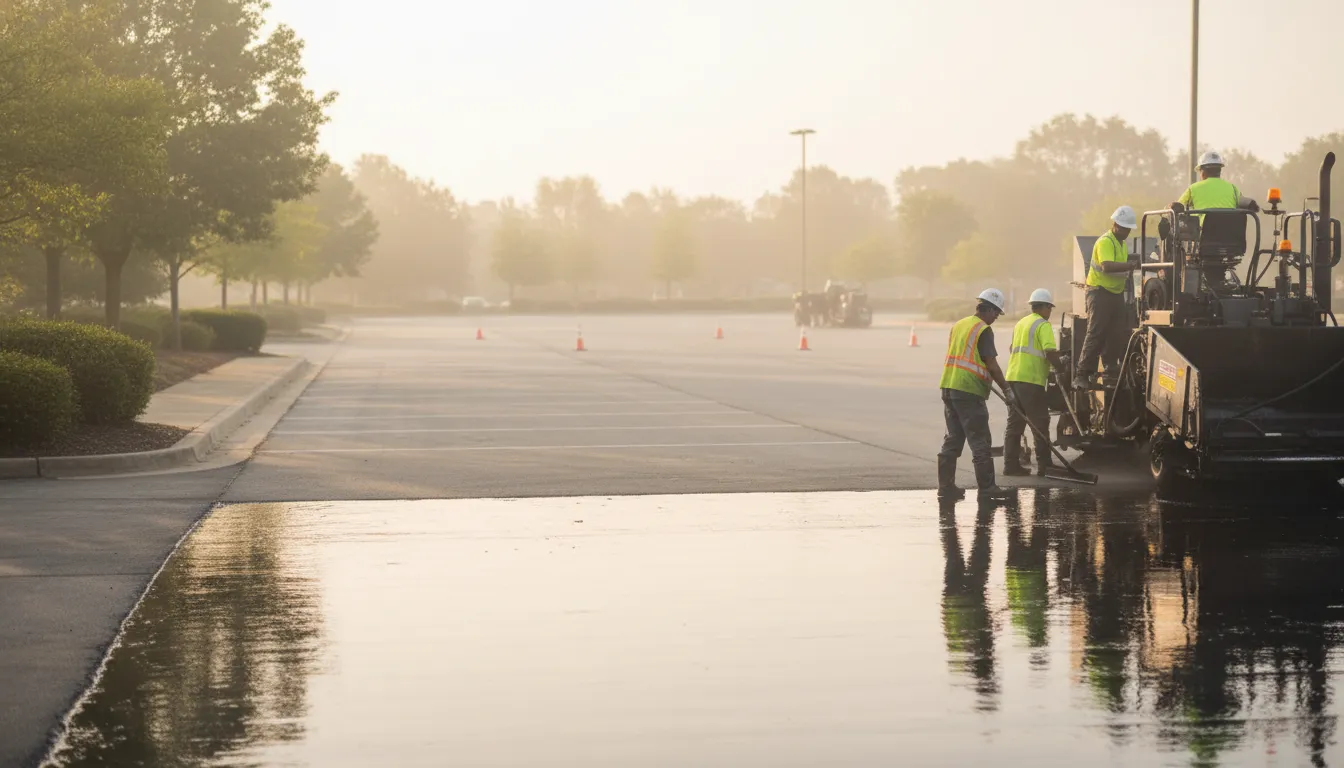
Find the Best Parking Lot Sealcoating Companies for Your Business
No obligation • Fast responses • Nationwide coverage
Why you can trust Tidy Parking
Tidy Parking is a leading U.S. source for parking lot maintenance services, including striping, sealcoating, sweeping, paving, resurfacing, and repairs. Our content is created independently, and providers cannot pay to influence ratings or recommendations.
Search providers near you
Top Parking Lot Sealcoating Companies in Blue Springs, Missouri Ranked
Protecting your asphalt investment in Blue Springs is a critical part of property maintenance. Parking lot sealcoating is the process of applying a protective layer over asphalt pavement to shield it from damaging elements like UV rays, water, chemicals, and vehicle fluids. This preventative maintenance is especially vital in Missouri's climate, where seasonal extremes can rapidly deteriorate unprotected pavement. For property managers and business owners, understanding the local best practices for asphalt sealing can help you find qualified professionals, plan your maintenance schedule, and ensure your lot remains safe, functional, and visually appealing for years to come.
Nicks Sealcoating
10420 England St, Overland Park, KS 66212
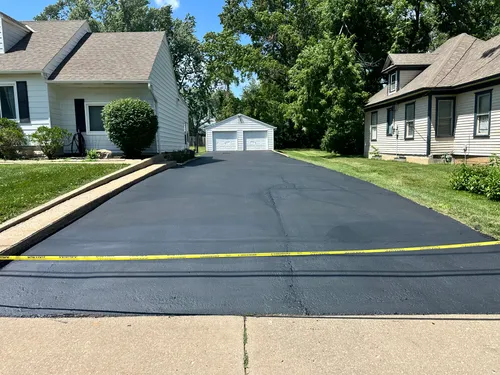
Nicks Sealcoating is an asphalt contractor based in Kansas City, MO, serving both residential and commercial clients across the greater Kansas City area. They offer a range of services including driveway installation, asphalt patching, pothole filling, parking lot striping, and sealcoating. The company emphasizes careful workmanship, ensuring projects are completed with attention to detail and customer satisfaction. Nicks Sealcoating is known for its thorough crack filling and sealcoating capabilities, aiming to protect and enhance asphalt surfaces. They focus on building long-term client relationships through consistent service quality and aggressive pricing.
Fountain City Asphalt Co.
3600 N Wabash Ave, Kansas City, MO 64116
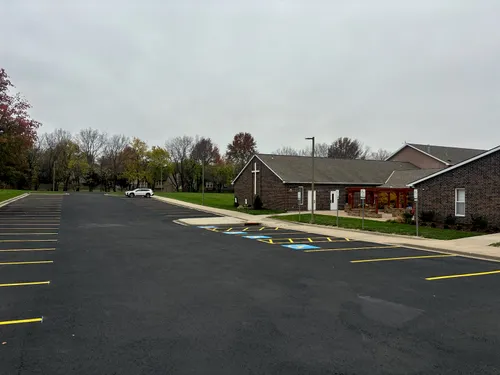
Fountain City Asphalt Co. is an asphalt service provider based in Kansas City, MO, offering a range of services including parking lot striping, sealcoating, paving, resurfacing, and repair. The company serves the Kansas City metro area and nearby communities such as Overland Park, Olathe, and Lawrence. Their expertise covers both residential and commercial projects, focusing on durable asphalt paving, resurfacing to extend surface life, and repairs like crack filling and pothole maintenance. Founded by Nathan Athans, who developed his skills working alongside his father, Fountain City Asphalt Co. combines decades of experience with modern techniques to deliver reliable asphalt solutions.
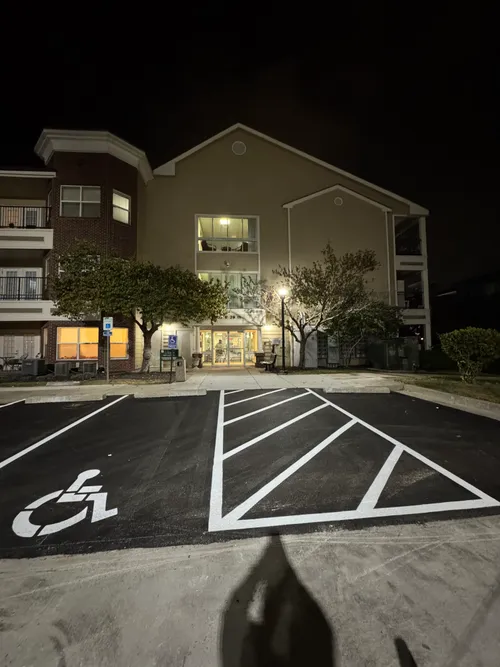
Platinum Paving
832 Cheyenne Ave, Kansas City, KS 66105
Platinum Paving is a full-service asphalt paving company based in Kansas City, MO, offering comprehensive parking lot services including new asphalt paving, sealcoating, striping, repairs, and concrete work. They serve over 50 communities across the Kansas City metro area, handling everything from milling and resurfacing to ADA compliance and line striping. With over 1,500 projects completed since their founding in 2019, Platinum Paving provides a one-year warranty on all work and manages projects with in-house crews to maintain quality and coordination.
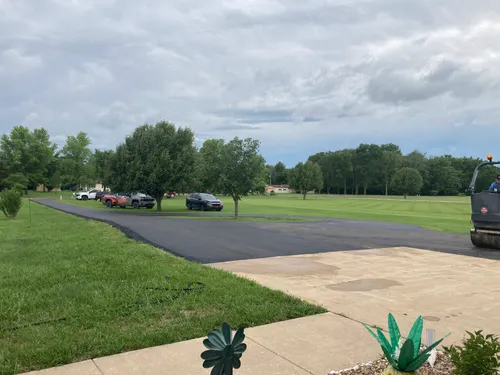
Road co asphalt
Kansas City, MO
Road co asphalt is a family-owned and operated asphalt paving company serving Kansas City, MO. Since 1982, they have offered a variety of services including asphalt paving, sealcoating, and asphalt patching. Their team provides personalized attention to meet specific project needs and handles complex sealcoating jobs. With over four decades of experience, Road co asphalt focuses on delivering dependable asphalt solutions.
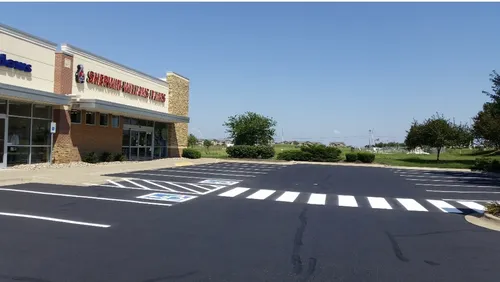
SmartPrice Asphalt Sealcoating
10650 Roe Ave Ste 150, Overland Park, KS 66207
SmartPrice Asphalt Sealcoating is a third-generation asphalt maintenance company based near Kansas City, MO. They provide a range of services including parking lot striping, sealcoating, paving, resurfacing, crack filling, pothole patching, and hot tar filler application. The company has been serving the area since 1995 and handles projects from small repairs to large-scale asphalt work.
Why Sealcoating is Non-Negotiable in Blue Springs
The local climate in Blue Springs presents a unique challenge for asphalt surfaces. The area experiences significant freeze-thaw cycles, where water seeps into tiny cracks in the pavement. When temperatures drop, this water freezes and expands, widening the cracks. As it thaws, it leaves gaps, allowing more water to enter-a cycle that quickly leads to potholes and structural failure. Furthermore, intense summer sun subjects asphalt to high levels of UV radiation, which breaks down the binding oils (asphalt cement) that hold the aggregate together, causing the surface to become brittle, fade to gray, and ravel 1.
A quality sealcoat acts as a barrier against these forces. It prevents water penetration, blocks UV rays, and resists degradation from gasoline, oil, and de-icing salts. For commercial properties, this isn't just about curb appeal; it's about safety, liability reduction, and protecting a significant capital asset from premature, costly replacement.
Determining Your Sealcoating Schedule
How often should you apply a fresh coat of sealant? The standard recommendation for most commercial lots in Blue Springs is every 2 to 3 years 2. However, this is a general guideline, and your specific frequency depends heavily on usage:
- High-Traffic Lots (18-24 months): Retail centers, restaurants, warehouses, and medical facilities with constant vehicle flow, including turning movements that stress the asphalt, may require reapplication every 1 to 2 years 3.
- Moderate to Light-Traffic Lots (2-3 years): Office parks, churches, or lots with mostly stationary parking often fit the standard schedule.
- New Asphalt: Fresh pavement needs time to cure, allowing oils and gases to escape. It's generally advised to wait 6 to 12 months before the first sealcoat application 4.
Regular inspections are key. If your asphalt is fading significantly, showing small cracks, or becoming rough, it's likely time for a new protective coating.
The Ideal Time for Asphalt Sealing Projects
Timing your sealcoating project correctly is crucial for a successful, long-lasting result. The application is highly dependent on weather conditions.
- Best Season: The optimal window in Blue Springs runs from late spring through early fall. This period typically offers the consistent, warm weather needed for proper curing.
- Temperature Requirements: Sealant requires a minimum temperature of 50°F (10°C) and rising for application and curing. The ideal temperature range is between 70°F and 85°F 5 6. Applying sealcoat when temperatures are falling or near the minimum can lead to improper curing, resulting in a soft, tacky, or non-adherent finish.
- Weather Forecast: Contractors need a clear forecast of at least 24 to 48 hours without rain. Moisture on the surface or rain shortly after application can wash away the sealant or cause it to blister.
Find the perfect parking lot sealcoating companies for your needs
Get personalized recommendations and expert advice
Critical Steps: Surface Preparation is Everything
A common misconception is that sealcoating is simply about spraying a black coating. In reality, 90% of a successful job is in the preparation. Proper prep ensures the sealant bonds correctly and delivers its full protective value. Reputable contractors will follow a thorough process 7 8:
- Cleaning: The entire surface must be free of dirt, debris, leaves, and vegetation. This is typically done with power blowers, push brooms, and industrial sweepers.
- Degreasing: Oil and fluid stains are not just unsightly; they prevent sealant adhesion. These spots must be scrubbed with a commercial degreaser and often treated with a specialized oil-spot primer to block the stain from bleeding through the new sealcoat 9.
- Crack Filling: All cracks wider than 1/4 inch must be filled. This is usually done with a hot-applied rubberized sealant. Filling cracks before sealcoating prevents water from entering the sub-base and stops the cracks from reflecting through the new surface.
- Pothole Patching: Any existing potholes or alligator-cracked areas need to be removed and patched with hot-mix asphalt. This repair must be compacted and allowed to settle before the sealcoat is applied.
Skipping or rushing any of these steps will compromise the longevity and effectiveness of the sealcoating job.
The Relationship Between Sealcoating and Striping
A freshly sealed lot needs new pavement markings. The order of operations is critical: Always sealcoat first, then stripe.
Applying paint over old sealcoat or bare asphalt and then sealing over it will trap the paint, causing it to peel and flake off quickly. The correct process is:
- Complete the sealcoating application and allow it to cure fully.
- Wait 24 to 48 hours before applying new traffic paint or thermoplastic markings 10 11.
- In cooler or more humid conditions, it's safer to wait closer to 48 hours to ensure the sealant is completely dry and hard. A simple test is to walk on the surface; if it feels firm and doesn't leave a footprint, it's ready for striping.
Understanding Sealcoating Costs in Blue Springs
Pricing for asphalt sealing is primarily quoted by the square foot, with the final cost influenced by the lot's condition, required repairs, and size. Larger projects often benefit from a lower per-square-foot rate due to efficiencies of scale.
Based on local and industry data, here is a general cost framework for the Blue Springs area 12 13 14 15:
- Per-Square-Foot Range: Basic sealcoating typically ranges from $0.10 to $0.30 per square foot.
- Small Lot Example (5,000 sq ft): Could cost between $750 and $1,500.
- Large Lot Example (50,000 sq ft): May range from $11,000 to $19,000, with significant variance based on the amount of crack filling and patching needed.
- Additional Services:
- Crack Filling: Often priced separately at $1.00 to $3.00 per linear foot.
- Degreasing/Oil Spot Treatment: Usually an added cost per spot or included in a prep package.
The most accurate way to budget is to obtain detailed quotes from local contractors that itemize preparation work, square footage, and materials.
Choosing a Local Sealcoating Provider
When evaluating professionals for your asphalt preservation project, look for more than just the lowest price. Consider these factors:
- Local Experience: A contractor familiar with Blue Springs weather patterns and soil conditions will know how to time the project and which materials perform best.
- Detailed Quotes: Insist on a written estimate that details all preparation steps (cleaning, degreasing, crack filling), the type of sealant to be used, the number of coats, and a clear timeline.
- Insurance and References: Verify the company carries liability and workers' compensation insurance. Ask for references from recent commercial projects in the area.
- Communication: A professional contractor will clearly explain the process, discuss weather dependencies, and provide guidance on curing times before you can reopen the lot to traffic.
Frequently asked questions
Sources
Footnotes
-
Sealing a Parking Lot: the Difference between Sealcoating and Paving - https://acplm.net/sealing-a-parking-lot-2/ ↩
-
Asphalt Preservation | City of Blue Springs, MO - Official Website - https://www.bluespringsgov.com/167/Asphalt-Preservation ↩
-
How Often Should a Parking Lot Be Sealcoated? - American Asphalt - https://americanasphalt.com/how-often-should-a-parking-lot-be-sealcoated/ ↩
-
Liquid Road® Bituminous Surface Treatment for Parking Lots - https://sealmaster.net/wp-content/uploads/2014/11/SMR-WhitePaper-LiquidRoadBituminousSurface.pdf ↩
-
Can I Sealcoat My Asphalt Driveway in the Fall? - https://www.a1asphaltinc.com/can-i-sealcoat-my-asphalt-driveway-in-the-fall.php ↩
-
What Temperature is Best for Driveway Sealcoating? | MI - https://www.alliedasphalt.com/what-temperature-is-best-for-driveway-sealcoating.php ↩
-
Step-by-Step Process of Parking Lot Sealcoating - https://asphaltcoatingscompany.com/blog/step-by-step-process-of-parking-lot-sealcoating/ ↩
-
How to Prepare Your Parking Lot for Sealcoating - Arrow Paving - https://arrowpavinginc.com/blog/prepare-parking-lot-for-sealcoating/ ↩
-
Commercial & Residential Sealcoating FAQs - https://www.bigjoessealcoating.com/about/faqs/ ↩
-
Should You Sealcoat Before or After Striping? - 1-800-striper - https://1800striper.com/sealcoat/ ↩
-
How soon can you stripe after sealcoating? - Asphalt Parking Lot Pros - https://asphaltparkinglotpros.com/2025/05/20/how-soon-can-you-stripe-after-sealcoating/ ↩
-
How Much Does it Cost to Sealcoat an Asphalt Parking Lot or ... - https://www.pavemanpro.com/article/sealcoating-cost/ ↩
-
How Much Does It Cost To Sealcoat An Asphalt Parking Lot? - https://absoluteblacktop.com/how-much-does-it-cost-to-sealcoat-an-asphalt-parking-lot/ ↩
-
How Much Does It Cost to Sealcoat a 50,000 Sq. Ft. Parking Lot? ( ... - https://www.fixasphalt.com/testblog/how-much-does-it-cost-to-sealcoat-a-50000-sq.-ft.-parking-lot-2026-pricing-guide ↩
-
Cost of Driveway Resealing in Blue Springs, MO - https://bluespringsasphaltsealing.com/cost-of/driveway-resealing ↩