Find the Best Parking Lot Sealcoating Companies for Your Business
No obligation • Fast responses • Nationwide coverage

Why you can trust Tidy Parking
Tidy Parking is a leading U.S. source for parking lot maintenance services, including striping, sealcoating, sweeping, paving, resurfacing, and repairs. Our content is created independently, and providers cannot pay to influence ratings or recommendations.
Search providers near you
Top Parking Lot Sealcoating Companies in East Honolulu, Hawaii Ranked
Maintaining your asphalt pavement in East Honolulu is more than just an aesthetic choice-it's a critical investment in protecting your property from the unique challenges of a tropical climate. Parking lot sealcoating is the process of applying a protective layer over asphalt to shield it from damaging UV rays, moisture, and chemical spills. This maintenance is essential for preventing costly structural repairs, extending the lifespan of your pavement, and keeping your commercial or residential property looking its best. This guide will help you understand the specific needs for asphalt protection in East Honolulu and how to connect with qualified local professionals for your project.
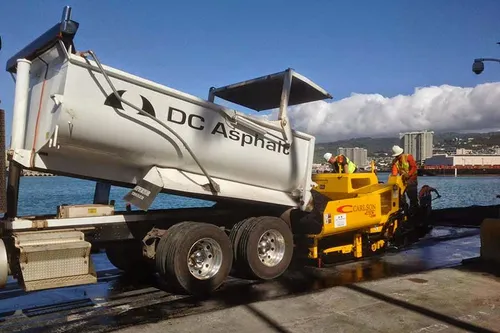
DC Asphalt Services Inc
91-315 Kaiholo St, Kapolei, HI 96707
DC Asphalt Services Inc is a full-service asphalt paving contractor based in Honolulu, HI. They provide a wide range of paving services including sealcoating, paving, and repair for parking lots across Honolulu, Oahu, and all of Hawaii. Known as Hawaii's original pavement maintenance experts, they offer comprehensive solutions tailored to each project's needs, including crack filling and scheduled maintenance programs to extend pavement life.

Grace Pacific LLC
949 Kamokila Blvd # 200, Kapolei, HI 96707
Grace Pacific LLC is a paving contractor based in Honolulu, HI, specializing in parking lot sealcoating and paving services. Serving the Hawaiian Islands, the company offers a broad range of construction-related materials and services, including asphalt paving for roads, airport runways, harbor facilities, and parking lots. Grace Pacific operates quarries and asphalt plants, enabling them to supply quality materials and perform large-scale projects that meet state highway standards. With over 75 years of experience since the 1930s, the company has contributed to many infrastructure developments across Hawaii.
Alakona Corporation
2906 Kaihikapu St, Honolulu, HI 96819
Alakona Corporation is a licensed asphalt paving and maintenance contractor based in Honolulu, HI. Serving commercial, industrial, government, and residential clients on Oahu and the neighbor islands, they offer a wide range of services including asphalt paving, cold milling, overlay, seal coating, crack filling, and pavement repairs. The company also operates an aggregate crushing plant that recycles asphalt, coral, and concrete for use in projects. Established in 1982, Alakona has decades of experience and is known for handling emergency repairs within 72 hours.
Seal Pro's Hawaii
1019 Waimanu St # 207, Honolulu, HI 96814
Seal Pro's Hawaii is a parking lot striping, sealcoating, paving, and repair company based in Honolulu, HI. They offer a range of asphalt services including paving driveways and roadways, applying sealcoating to protect asphalt surfaces, striping parking lots, and performing asphalt repairs to extend pavement life. The company also provides civil construction services such as site development, drainage systems, and earthwork. Seal Pro's Hawaii uses quality tools and machinery to ensure effective results and emphasizes proper asphalt maintenance to prevent costly replacements. Their team consists of dedicated professionals focused on delivering consistent workmanship.
Grace Pacific Corporation
110 Puuhale Rd, Honolulu, HI 96819
Grace Pacific Corporation is a leading parking lot sealcoating and paving contractor based in Honolulu, HI. Serving the entire state of Hawaii, the company offers a broad range of construction-related materials and services, including asphalt paving for airport runways, highways, bridges, and parking lots. With over 75 years of experience since the 1930s, Grace Pacific operates quarries, asphalt plants, and provides protective coatings to extend pavement life. The company is also known for recycling large amounts of concrete and asphalt to reduce landfill waste.
Why Sealcoating is Essential in East Honolulu
The Hawaiian climate presents a double threat to asphalt surfaces. The intense, year-round sun subjects pavement to powerful UV radiation, which oxidizes the asphalt binder, making it brittle and prone to cracking 1. Simultaneously, high humidity and frequent rain showers create constant moisture exposure. Without a protective seal, water can seep into tiny cracks and pores, leading to erosion, base failure, and accelerated deterioration 2. A quality sealcoat acts as a waterproof barrier, blocking UV rays and repelling moisture, oil, and gasoline. For property owners and managers, this translates directly into long-term cost savings by delaying the need for expensive asphalt repairs or full-depth replacement 3 4.
Determining the Right Sealcoating Schedule
There is no one-size-fits-all schedule for asphalt sealing. The frequency depends heavily on your parking lot's usage and exposure.
- High-Traffic Commercial Lots: Shopping centers, retail plazas, restaurants, and drive-thrus in areas like Kāhala or ʻĀina Haina experience constant vehicle stress. For these lots, a more frequent application cycle of every 1 to 2 years is often recommended to combat premature wear and maintain a pristine appearance 5.
- Moderate to Low-Traffic Areas: Office complexes, smaller business parks, condominiums, and homeowner association (HOA) properties may follow a standard 2 to 3-year cycle. This schedule provides adequate protection while optimizing maintenance budgets.
- Initial Sealcoating: New asphalt should typically cure for at least 6 to 12 months before its first sealcoat application allows oils to fully evaporate and the surface to stabilize.
An annual visual inspection is the best practice. Look for signs of fading from gray to a lighter, brittle-looking surface, fine cracking (alligator cracking), or areas where aggregate is becoming exposed. These are clear indicators that your protective coating is wearing thin.
The Sealcoating Process: Preparation is Key
A successful sealcoating project hinges on meticulous preparation. Reputable contractors follow a detailed process to ensure the coating adheres properly and lasts.
- Cleaning: The pavement must be completely clean, dry, and free of oil, grease, and debris. This is often achieved through high-pressure washing or specialized cleaning solutions 6.
- Repair: Any existing damage must be addressed first. This includes filling cracks with a hot-pour or cold-applied filler and patching potholes. Sealcoating over cracks will not fix them; it will only temporarily mask the problem while water continues to damage the base 7 8.
- Application: The sealant-typically a coal tar or asphalt-based emulsion, often with polymer additives for flexibility-is applied using spray systems or squeegees. In East Honolulu, polymer-modified sealants are particularly valuable for enhanced durability against thermal expansion and contraction.
- Curing: This is the most critical phase in a humid climate. The lot must remain closed to all traffic for a minimum of 24 to 48 hours to allow for full curing. In periods of very high humidity (above 90%), this curing time can extend significantly 9 10.
Navigating Hawaii's Weather for Optimal Results
Timing your sealcoating project correctly is crucial for a durable finish. The ideal conditions are during warm, dry weather. Contractors aim for days with temperatures above 50°F and rising, with no rain in the forecast for at least 24-48 hours after application 11.
- Humidity Challenge: East Honolulu's high humidity is the primary scheduling challenge. Humidity slows the evaporation process, prolonging curing time. Professional contractors manage this by using drying additives and carefully monitoring weather forecasts to select optimal project windows.
- Rain Threat: Rain falling on an uncured sealcoat will wash it away, requiring a complete and costly redo. A reliable contractor will never apply sealant if there is a significant chance of precipitation.
Find the perfect parking lot sealcoating companies for your needs
Get personalized recommendations and expert advice
Integrating Sealcoating with Pavement Markings
A freshly sealcoated lot provides the perfect canvas for new, highly visible pavement markings. Re-striping is recommended every 18 to 24 months to ensure safety and compliance with local codes 12 13. For maximum efficiency and coating longevity, the ideal sequence is to schedule parking lot striping immediately after the sealcoat has fully cured. This ensures the best possible adhesion of the paint to the fresh, sealed surface, resulting in longer-lasting lines 14. Planning these two services together can streamline maintenance and often provide scheduling and cost efficiencies.
Understanding Costs in East Honolulu
Sealcoating costs are typically calculated per square foot, with price influenced by the project size, condition of the existing pavement, and the quality of materials used.
- Large Commercial Lots: For big box stores, shopping centers, or large apartment complexes, economies of scale apply. Prices generally range from $0.20 to $0.50 per square foot 15.
- Smaller Lots & Driveways: Smaller projects, such as those for small offices, retail shops, or private driveways, often have a higher per-square-foot cost due to fixed setup expenses, typically ranging from $0.40 to $0.70 per square foot 16 17.
The final quote will depend on the amount of preparatory work (cleaning, crack filling), the type of sealant (standard vs. polymer-modified), and the contractor's expertise. Always ensure estimates detail the scope of prep work included.
A Simple Maintenance Checklist for Property Managers
Staying ahead of pavement deterioration saves money and hassle. Here's a straightforward annual plan:
- Spring Inspection: Visually inspect the entire lot for new cracks, fading, or areas of standing water.
- Schedule Cleaning & Repairs: Power wash the surface and fill any cracks or minor damage.
- Plan Your Sealcoating: Based on your traffic levels (1-4 years), schedule sealcoating for a predicted dry, sunny period.
- Re-stripe: Coordinate line repainting soon after sealcoating or on its own 18-24 month cycle.
- Winter Prep: While mild, check drainage to ensure no new standing water issues have developed after seasonal rains.
By following a proactive maintenance schedule tailored to Hawaii's environment, you protect one of your property's most valuable and visible assets.
Frequently asked questions
Sources
Footnotes
-
How Weather Conditions Impact Sealcoating Quality - https://asphaltcoatingscompany.com/blog/how-weather-conditions-impact-sealcoating-quality/ ↩
-
Sealcoating Services in Honolulu | Pacific Paving & Asphalt - https://pacificpaving.net/service/seal-coating/ ↩
-
How Often Should a Parking Lot Be Sealcoated? - American Asphalt - https://americanasphalt.com/how-often-should-a-parking-lot-be-sealcoated/ ↩
-
How Often Should You Sealcoat Your Parking Lot? - American Asphalt - https://americanasphalt.com/how-often-should-you-sealcoat-your-parking-lot/ ↩
-
How Often Should You Seal Coat Asphalt? - Elcor Construction - https://elcorconstruction.com/how-often-should-you-seal-coat-asphalt/ ↩
-
Seal Coating - Honolulu, Hawaii - G P Maintenance Solutions - https://www.gpmaintenancesolutions.com/content/seal-coating ↩
-
How Often Should You Sealcoat Your Commercial Parking Lot - https://thepavementgroup.com/commercial-parking-lot-sealcoat/ ↩
-
How Often Should You Sealcoat a Driveway or Parking Lot? - https://coastalpipelineinc.com/how-often-should-i-sealcoat-a-driveway-or-parking-lot/ ↩
-
Best Weather Conditions for Sealcoating - D.B.Krieg, Inc. - https://dbkrieginc.com/blog/best-temperature-weather-for-sealcoating/ ↩
-
When Is It Too Hot for Sealcoating? - All Pro Asphalt - https://allproasphaltkc.com/when-is-it-too-hot-for-sealcoating/ ↩
-
What Weather Conditions Are Suitable for Sealcoating? - RDC Paving - https://rdcpaving.com/weather-conditions-sealcoating/ ↩
-
How often should a parking lot be restriped? - Seton - https://www.seton.com/when-to-restripe-a-parking-lot ↩
-
How Often Should You Repaint Parking Lot Lines? - https://ottospm.com/how-often-should-you-repaint-parking-lot-lines/ ↩
-
Precision Parking Lot Striping | Hoerr's Blacktop - https://www.hoerrsblacktop.com/pavement-maintenance-repair/parking-lot-striping/ ↩
-
Parking Lot Seal Coating Costs for Asphalt : 2025 Pricing Guide - https://www.fixasphalt.com/blog/how-much-does-it-cost-to-sealcoat-an-asphalt-parking-lot ↩
-
How Often Should You Seal Coat Asphalt? | Expert Asphalt Maintenance Tips - https://elcorconstruction.com/how-often-should-you-seal-coat-asphalt/ ↩
-
Parking Lot Seal Coating Costs for Asphalt : 2025 Pricing Guide - https://www.fixasphalt.com/blog/how-much-does-it-cost-to-sealcoat-an-asphalt-parking-lot ↩