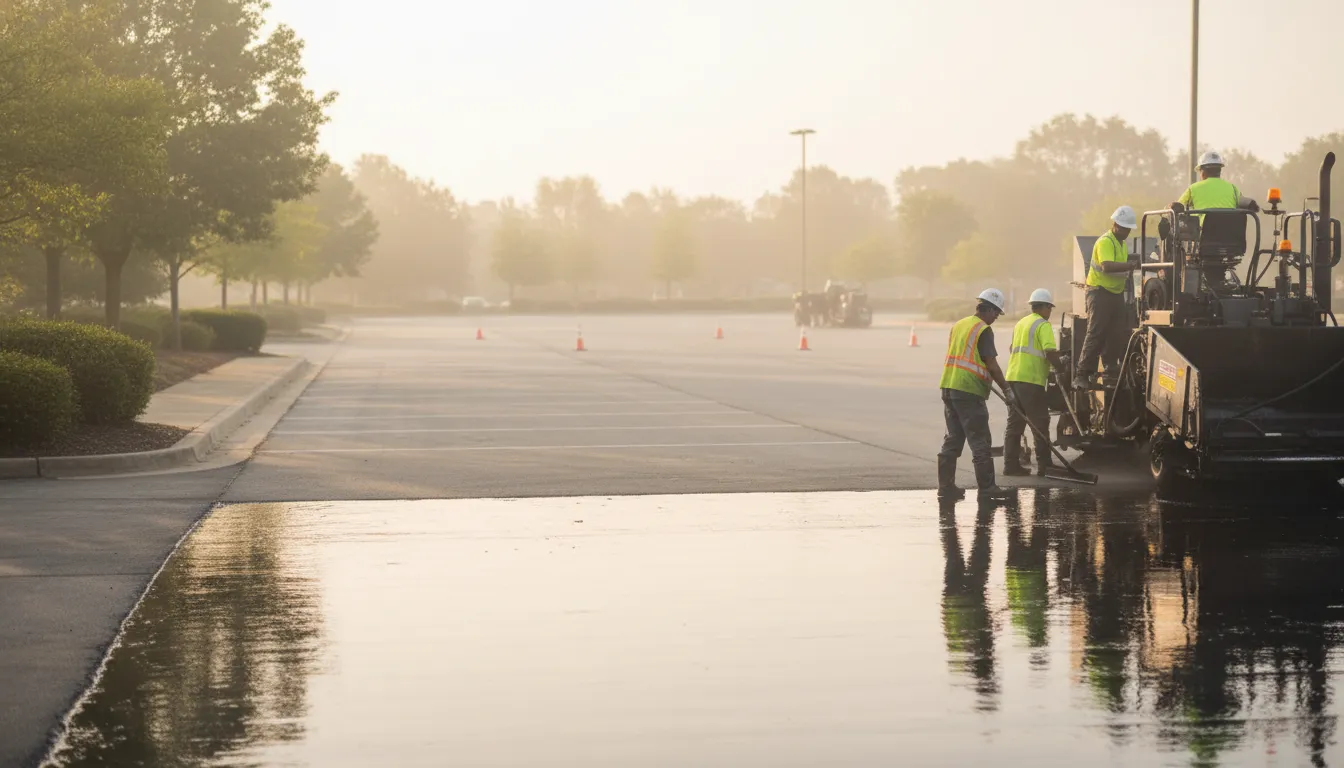
Find the Best Parking Lot Sealcoating Companies for Your Business
No obligation • Fast responses • Nationwide coverage
Why you can trust Tidy Parking
Tidy Parking is a leading U.S. source for parking lot maintenance services, including striping, sealcoating, sweeping, paving, resurfacing, and repairs. Our content is created independently, and providers cannot pay to influence ratings or recommendations.
Search providers near you
Top Parking Lot Sealcoating Companies in Apopka, Florida Ranked
Protecting your asphalt investment in Apopka is not just a maintenance task; it's a critical defense against Central Florida's punishing climate. Parking lot sealcoating is the process of applying a protective coating to asphalt pavement to shield it from the sun's UV rays, water intrusion, and chemical spills. This service matters because it significantly extends the life of your pavement, enhances curb appeal, and prevents costly, premature repairs. For property managers and business owners, finding a qualified local provider for this essential asphalt maintenance is the first step in implementing a cost-effective, long-term pavement management plan.
DMI Paving & Sealcoating
677 Fairvilla Rd, Orlando, FL 32808
DMI Paving & Sealcoating is a parking lot paving contractor based in Orlando, FL. They provide services including asphalt paving, sealcoating, striping, and parking lot repairs. The company has experience working with various property types such as shopping centers, residential communities, and hotels, addressing issues like asphalt deterioration, flooding, and resurfacing needs. Their work includes extensive asphalt repairs, sealcoating, and re-striping to improve both function and appearance.
Orlando Asphalt Paving Company
Orlando, FL
Orlando Asphalt Paving Company is a family-owned business providing asphalt paving, resurfacing, repair, and sealcoating services in Orlando, FL. They use top-quality materials and modern equipment to deliver durable and well-crafted asphalt surfaces for driveways, parking lots, and roads. With many years of experience, the company emphasizes thorough preparation, precise paving, and final quality checks to ensure long-lasting results. Their services include asphalt milling, resurfacing, crack repair, and sealcoating to protect surfaces from weather damage and extend their lifespan.
Asphalt Icons
2301 Cameron Ave, Sanford, FL 32771
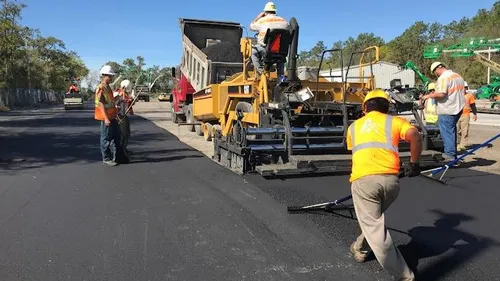
Asphalt Icons is a paving contractor based in Orlando, FL, specializing in asphalt and concrete services for both commercial and residential properties. They offer a wide range of services including asphalt paving, sealcoating, resurfacing, repair, striping, and concrete work. Their team handles projects such as driveways, parking lots, walkways, patios, municipal roads, and industrial spaces, providing comprehensive solutions from new construction to long-term pavement care. Asphalt Icons is certified as a Women's Business Enterprise and accredited by the BBB, reflecting their established presence in Central Florida.
Pothole Heroes
11052 Satellite Blvd, Orlando, FL 32837
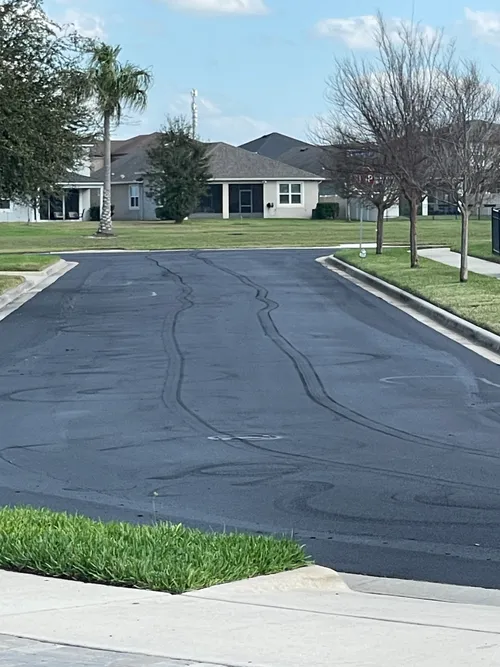
Pothole Heroes is a parking lot maintenance company based in Orlando, FL, specializing in asphalt repair, sealcoating, striping, and concrete services. They serve clients across the Southeastern US, including Florida, Alabama, Georgia, South Carolina, and North Carolina. The company uses advanced infrared patching technology for durable pothole repairs and offers services such as stamped asphalt, ADA compliance striping, oil spot repair, and emergency repairs. With over 20 years of experience, Pothole Heroes focuses on eco-friendly solutions and efficient project execution. Their team is available for emergency repairs and can respond within 24 hours to urgent needs.
Sealcoat Florida Inc.
1031 W Michigan St, Orlando, FL 32805
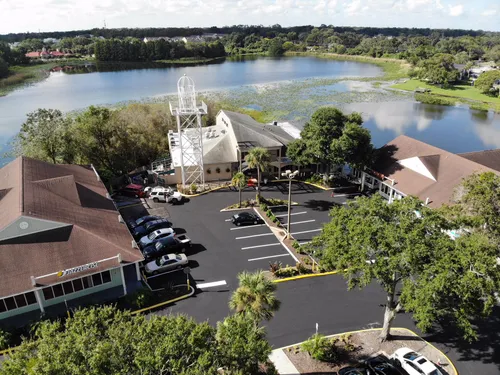
Sealcoat Florida Inc. is a parking lot maintenance company based in Orlando, FL, specializing in sealcoating, striping, and resurfacing. They serve Central Florida and surrounding areas, including Winter Park, Maitland, and Tampa. With over 20 years of experience, they focus on asphalt preservation and offer services such as sealcoating to protect and extend the life of asphalt surfaces. The company is locally owned and minority-operated, providing several warranty programs for their work.
Why Apopka's Climate Demands Vigilant Sealcoating
The weather in Apopka and the greater Central Florida region creates a uniquely harsh environment for asphalt pavement. Two primary factors accelerate degradation far faster than in northern states: intense ultraviolet radiation and high humidity combined with heavy rainfall 1.
- Intense UV & Heat: Central Florida's UV index frequently reaches "extreme" levels. This relentless sun accelerates a process called oxidation, which turns the flexible, black asphalt binder gray and brittle. Surface temperatures on an unprotected lot can exceed 140°F. This is why a two-coat application is often considered the standard for proper protection in this area, as a single coat may not provide sufficient barrier thickness.
- Rain & Humidity: Apopka's heavy summer rains, concentrated from June through September, drive moisture into every tiny crack and pore. Once water penetrates the asphalt surface, it can weaken the base layer, leading to base failure, alligator cracking, and potholes. Furthermore, the region's consistently high humidity can slow the curing time of sealants, often requiring 48 to 72 hours for the coating to fully set, compared to drier climates.
Neglecting a regular sealcoating schedule in this environment can lead to pavement failures that cost 10 to 20 times more to repair. Proactive maintenance like sealcoating costs between $0.15-$0.25 per square foot, while full-depth asphalt replacement can run $3.00-$7.00 per square foot.
Determining Your Sealcoating Schedule
A one-size-fits-all schedule doesn't work for pavement sealing. The right frequency for your property depends on several key factors.
- General Guideline: For most commercial lots in Apopka, a 2 to 3-year re-application cycle is standard. This balances protection with budget considerations.
- Usage Patterns: High-traffic areas like retail shopping center lots, restaurant parking, or plazas with frequent delivery trucks experience more wear and fuel/oil spills. These lots often need sealcoating closer to the 2-year mark, or at least an annual inspection. Lower-traffic office parking or storage facilities may successfully stretch to a 3-year cycle.
- Visual Inspection: Regardless of the calendar, regular visual checks are essential. Telltale signs it's time for a new sealcoat include widespread fading to a light gray color, a rough or sandy texture (aggregate loss), and the appearance of small surface cracks.
The Critical Importance of Proper Preparation
A successful asphalt sealing project is 80% preparation and 20% application. Skipping or rushing the prep work is the most common reason for sealant failure, such as peeling or premature cracking. A professional service will include these essential steps:
- Thorough Cleaning: The surface must be completely free of dirt, debris, sand, and vegetation. This is typically done with power blowers and mechanical sweepers.
- Crack Filling: All cracks, even hairline ones, should be cleaned and filled with a hot-pour or cold-applied crack sealant. This prevents water from entering the base material.
- Oil & Chemical Spot Treatment: Oil-saturated areas are a major problem. They must be thoroughly cleaned and then treated with a specialized oil spot primer. This primer bonds with the contaminated asphalt and creates a stable surface for the new sealcoat to adhere to, preventing future peeling.
- Pothole Repair: Any potholes must be repaired with fresh asphalt patch material and compacted before the sealing process begins.
Application Methods: Spray vs. Squeegee
The method used to apply the sealant can impact the quality and longevity of the job.
- Spray Application: This is the most common method for large, smooth, and newer parking areas. It's fast and provides a very even, thin coat. For the two-coat system recommended in Florida, the spray method is highly efficient 2.
- Squeegee Application: For older, rougher, or more porous pavement, the squeegee method is often superior. It involves pushing the sealant into the surface with a rubber squeegee, which can provide a thicker coating and better fill minor surface imperfections. Some contractors use a hybrid "spray-and-squeegee" technique for optimal coverage 3.
Find the perfect parking lot sealcoating companies for your needs
Get personalized recommendations and expert advice
Timing Your Project: Apopka's Ideal Sealcoating Season
Scheduling is crucial for a durable finish. The sealant requires dry, warm conditions for proper application and curing.
- Best Season: The ideal window for parking lot sealing in Apopka is during the drier months, from October through May. This period offers more predictable weather with lower humidity and minimal rain, allowing for proper curing 4.
- Season to Avoid: The summer wet season (June-September) is generally avoided due to daily pop-up thunderstorms. However, experienced local contractors can sometimes work within narrow weather windows if necessary, but this carries higher risk of rain damage during the critical curing phase 5.
The Essential Link Between Sealcoating and Striping
Parking lot striping and sealcoating are interconnected maintenance activities. The correct sequence ensures both jobs last.
- Cure Time is Key: You must wait 24 to 48 hours after the final coat of sealant is applied before re-striping your lot. Applying paint to a sealcoat that is not fully cured will result in poor adhesion and fast fading of the lines 6 7.
- Synergistic Schedule: Since sealcoating is recommended every 2-3 years and parking lot striping is generally needed every 18-24 months for safety and compliance, planning them together is efficient. A common strategy is to schedule re-striping immediately after a new sealcoat application, ensuring bright, fresh lines on a protected surface 8 9.
Understanding Costs for Apopka Properties
The cost of commercial sealcoating in Apopka is typically quoted per square foot and varies based on several factors:
- Size of the Lot: Larger commercial lots usually benefit from a lower per-square-foot cost (typically between $0.15 to $0.25 per sq ft) due to economies of scale. Smaller lots or driveways often have a higher per-square-foot price due to fixed mobilization and setup costs 10 11.
- Condition & Preparation: The single biggest variable in cost is the amount of preparatory work required. A lot that needs extensive crack filling, numerous oil spot treatments, and pothole repair will cost more than a well-maintained lot that just needs cleaning and sealing 12.
- Material Quality: The type and grade of sealant used (e.g., coal tar emulsion vs. asphalt emulsion, polymer-modified blends) can also affect the price. Higher-quality, more durable materials may come at a premium.
Frequently asked questions
Sources
Footnotes
-
Sealcoating Weather Guide: Central Florida - https://www.floridasealcoating.com/blog/2026/sealcoating-weather-guide-for-central-florida.html ↩
-
Sealcoating - Southwide Industries Serving South & Central Florida - https://southwideindustries.com/sealcoating/ ↩
-
SCOPE OF WORK AND SCHEDULE OF SERVICES - https://www.oxnard.gov/wp-content/uploads/pdfs/departments/finance/sd-26-34-scope-of-work.pdf ↩
-
Sealcoating Weather Guide: Central Florida - https://www.floridasealcoating.com/blog/2026/sealcoating-weather-guide-for-central-florida.html ↩
-
How Often Should You Seal Coat in Florida's Climate? - https://www.bryncoimprovements.com/asphalt-repair-and-maintenance-tips/how-often-should-you-seal-coat-in-floridas-climate ↩
-
Should You Sealcoat Before or After Striping? - 1-800-STRIPER® - https://1800striper.com/sealcoat/ ↩
-
6 Steps For an Effective Sealing Process & Drying Time - https://dcplm.com/blog/6-steps-for-an-effective-sealing-process-drying-time/ ↩
-
When Should I Restripe My Parking Lot in Florida? - SAE - https://southernasphaltengineering.com/when-to-restripe-parking-lots-in-florida/ ↩
-
Parking Lot Striping & Maintenance Benefits - Exit 7 Sealcoating - https://exit7sealcoating.com/2024/06/benefits-of-business-parking-lot-striping/ ↩
-
How Often to Sealcoat Your Commercial Lot in Lake County, FL - https://www.rpmpavement.com/blog/2026/how-often-to-sealcoat-your-commercial-lot-in-lake-county-fl.html ↩
-
How Much Does Sealcoating a Parking Lot Cost? - https://neyrapaving.com/asphalt-sealcoat-price/ ↩
-
Cost Factors For Asphalt Sealcoating - https://affordablestriping.com/ahd_faq/cost-factors-asphalt-sealcoating/ ↩