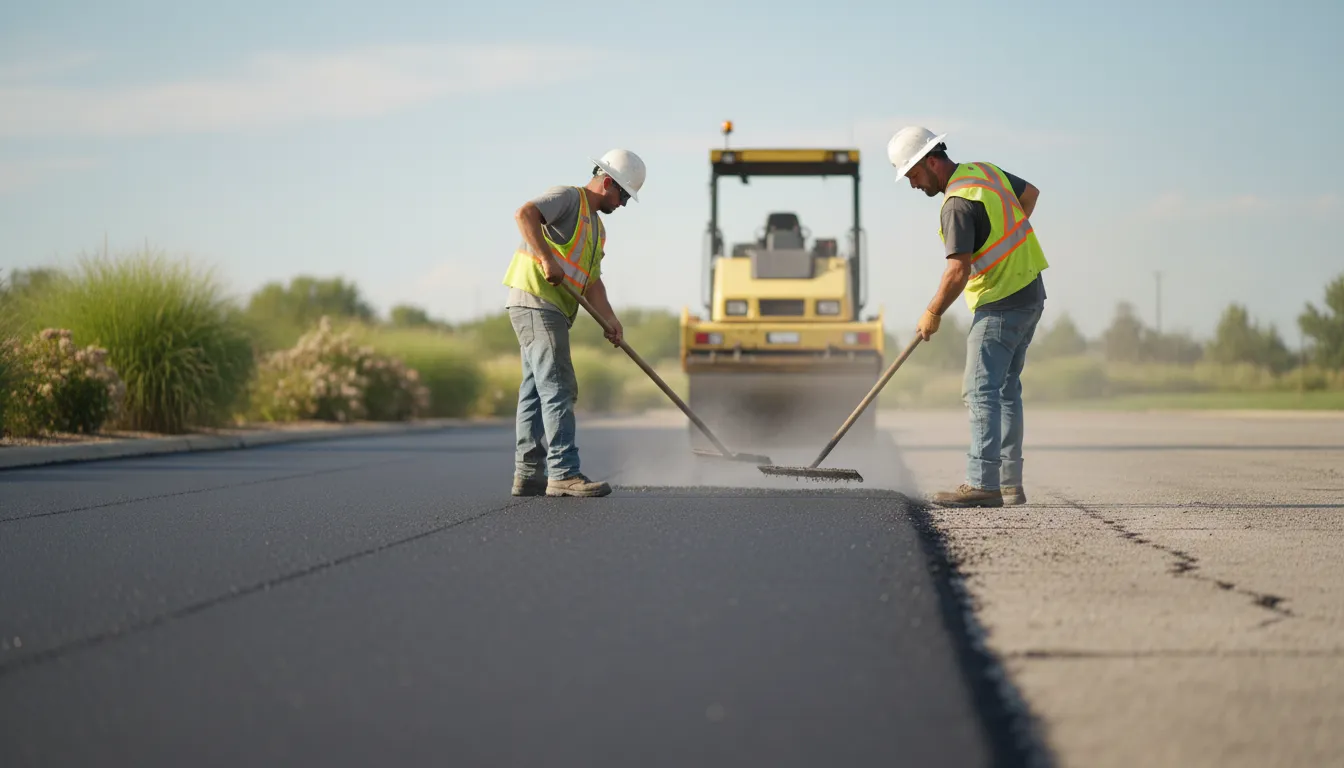
Find the Best Parking Lot Paving Contractors for Your Business
No obligation • Fast responses • Nationwide coverage
Why you can trust Tidy Parking
Tidy Parking is a leading U.S. source for parking lot maintenance services, including striping, sealcoating, sweeping, paving, resurfacing, and repairs. Our content is created independently, and providers cannot pay to influence ratings or recommendations.
Search providers near you
Best Parking Lot Paving Contractors in Virginia Ranked
A well-paved parking lot is a critical asset for any Virginia business or property, providing a safe, durable, and professional first impression. In Virginia, successful asphalt paving requires navigating specific environmental challenges and adhering to rigorous state and local standards. This guide explains the key considerations for commercial parking lot paving in the Commonwealth, from design and materials to costs and regulations, helping you understand the process and connect with qualified local paving professionals for your project.
Sierra Paving LLC
Richmond, VA
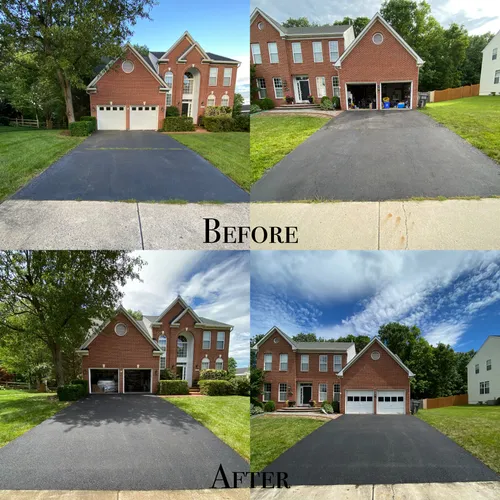
Sierra Paving LLC is a family-owned paving company serving Richmond, VA, and surrounding Northern Virginia counties. With over 25 years of experience, they provide services including parking lot sealcoating, paving, resurfacing, and repair. Their expertise covers driveway overlays, complete removals, and new installations, focusing on durable and quality asphalt work. The company emphasizes treating each project with care and offers a one-year warranty on their work.
R C Paving & Son LLC,
1436 Holland Rd, Suffolk, VA 23434
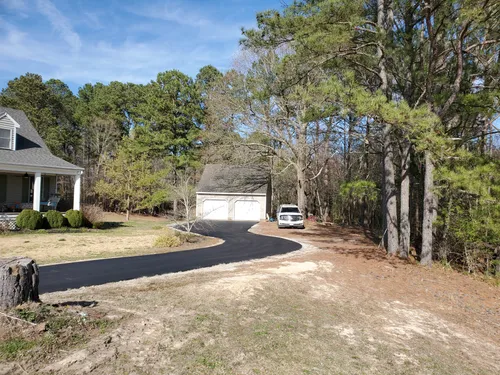
R C Paving & Son LLC is a family-owned parking lot paving contractor based in Chesapeake, VA. They provide asphalt paving services to Suffolk and the surrounding areas. With over 40 years of experience, the company focuses on delivering quality paving work and offers onsite evaluations to ensure projects meet client needs.
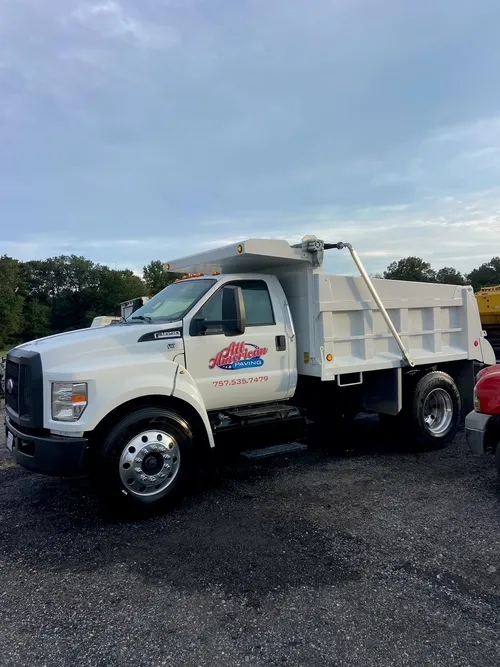
All American Paving
Virginia Beach, VA
All American Paving is a locally owned and operated company based in Virginia Beach, VA, providing asphalt paving, repair, sealcoating, and parking lot striping services. They serve Eastern Virginia and North Carolina, including Hampton Roads and the Outer Banks. With over 29 years of experience, they offer commercial and residential paving, pothole and crack repairs, sealcoating for pavement protection, and precise line striping to ensure ADA compliance and efficient traffic flow. Their work is backed by licensing, insurance, and warranties.
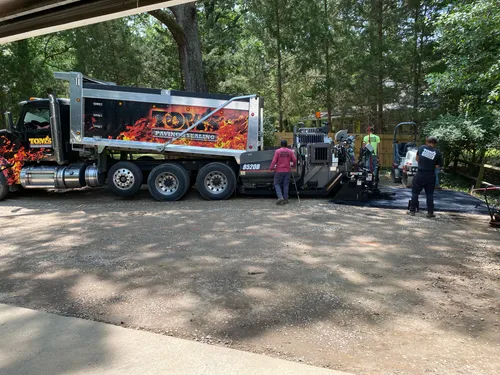
Tom's Paving & Sealing, LLC
Virginia Beach, VA
Tom's Paving & Sealing, LLC is a parking lot sealcoating and paving contractor based in Virginia Beach, VA. The company provides services including sealcoating and paving for parking lots. They serve a wide area including Gloucester, Mathews, West Point, Deltaville, Hartfield, Saluda, King & Queen, King William, Williamsburg, James City County, Toano, Yorktown, Poquoson, Newport News, Hampton, Middlesex County, Lancaster County, White Stone, Kilmarnock, Heathsville, Reedville, Northumberland, Essex, Richmond County, Warsaw, Tappahannock, and other surrounding counties and cities.
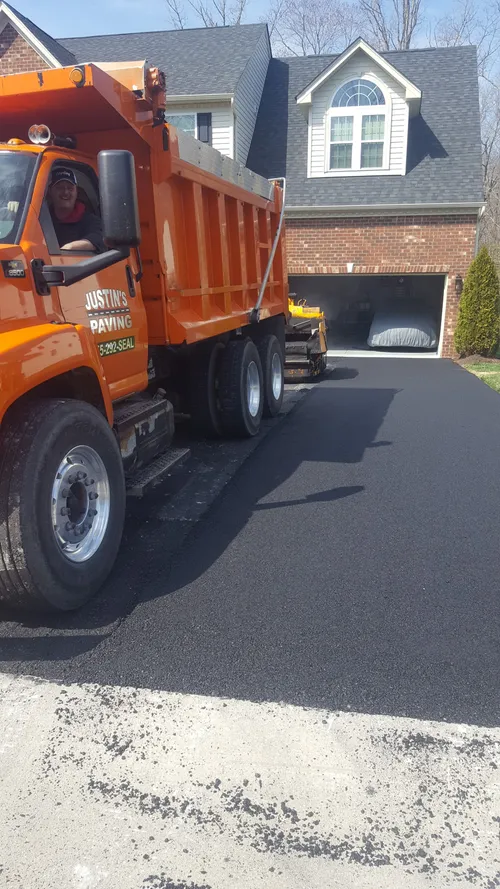
Justin's Paving
9291 Laurel Grove Rd, Mechanicsville, VA 23116
Justin's Paving is a parking lot sealcoating and paving contractor serving Richmond, VA. They specialize in asphalt paving, sealing, and driveway design, focusing on operational excellence and attention to detail throughout each project. The company is licensed, bonded, insured, and OSHA approved, ensuring compliance and protection for clients. Justin's Paving works closely with customers from permits to scheduling to deliver thorough project management.
Virginia's Paving Environment: Climate and Standards
Virginia's climate presents unique challenges for pavement longevity. The state experiences significant freeze-thaw cycles, particularly in regions like Northern Virginia and the Shenandoah Valley. When water seeps into pavement cracks and subgrade, it freezes and expands, causing cracks, potholes, and structural failure. This makes robust drainage design and proper material selection non-negotiable for a durable lot.
Paving standards in Virginia are heavily influenced by the Virginia Department of Transportation (VDOT) guidelines, which are often adopted or referenced by local municipalities for commercial projects. These standards ensure pavements can handle both passenger vehicles and the heavy truck traffic common in commercial and industrial settings. Key governing documents include the VDOT Pavement Design Guide and local Public Facilities Manuals, such as Fairfax County's, which provide detailed specifications for subgrade, base, and asphalt layers 1.
Design and Structural Requirements
A parking lot is a structural system, and its design dictates its lifespan. Virginia standards provide clear guidance on layer thickness, slope, and layout.
Pavement Thickness and Structure
The required thickness depends on the expected traffic load, categorized as light or heavy duty.
- Light Duty (Standard Commercial Lots): For lots serving typical retail or office traffic, the standard design is 2.5 to 3 inches of asphalt surface placed over a minimum 6-inch compacted aggregate base course.
- Heavy Duty (Industrial/High-Traffic Lots): For areas expecting frequent delivery trucks or heavy equipment, the asphalt thickness increases to 4 to 6 inches, often split into a binder course and a surface course. The aggregate base may also be increased to 6 to 8 inches for added stability.
Critical Subgrade Preparation
The soil beneath the pavement, or subgrade, must be properly prepared. It should be graded and compacted to at least 100% of standard proctor density to prevent settling 2. In areas with weak, silty, or clayey soils, additional measures are required. This can include "undercutting" (removing and replacing poor soil) or adding a stabilized subbase layer3. For very weak soils, contractors may use geosynthetic fabrics or grids to reinforce the subgrade and improve load distribution, which can sometimes allow for a reduced base thickness 4.
Slope and Drainage Design
Proper drainage is the first defense against Virginia's freeze-thaw damage. Design standards mandate a minimum surface slope of 2% (a 2-foot rise over 100 feet) to prevent water ponding 5. For lots with curb and gutter systems, a slope of 2% to 5% (approximately 1 inch of fall per 4 feet) is typical to efficiently channel water to drains 6 7. Inadequate slope is a leading cause of premature pavement failure.
Stall and Aisle Dimensions
While not strictly a paving specification, layout affects functionality. Standard parking stall dimensions in Virginia are generally 9 feet wide by 18 feet long. Aisle widths vary based on the parking angle (e.g., 60-degree, 90-degree).
Find the perfect parking lot paving contractors for your needs
Get personalized recommendations and expert advice
Asphalt Mix Selection for Virginia
Choosing the right asphalt mix is crucial for performance. VDOT specifies various Superpave (SP) mixes, designed to perform within specific temperature ranges. The common suffix (e.g., -22) indicates the mix is rated for temperatures as low as -22°C (-7.6°F) 8.
- SM-9.5A/D (Surface Mix): This is a fine-graded, 3/8-inch nominal maximum aggregate size mix commonly used as the final surface course for parking lots. The "A" designation often uses a PG 64S-22 binder, which provides a good balance of durability and flexibility for Virginia's temperature swings 9.
- SM-12.5D/E (Surface/Intermediate Mix): A medium-graded, 1/2-inch mix used where higher structural capacity is needed. It can serve as a surface course or as a binder course beneath a finer SM-9.5 mix 10.
- Stone Matrix Asphalt (SMA): A gap-graded mix with a high stone-on-stone content and cellulose or polymer-modified binder. SMA is highly resistant to rutting and wear, making it ideal for high-traffic commercial entrances or truck maneuvering areas, though it costs approximately 20% more than standard mixes.
- Warm Mix Asphalt (WMA): This technology allows asphalt to be produced and placed at temperatures 50-100°F lower than traditional hot mix (around 200-250°F). Benefits include the ability to pave effectively in cooler shoulder seasons (expanding the paving window), better compaction, and reduced fuel consumption.
Binder Performance Grades
The binder (asphalt cement) is graded for performance (PG). For most of Virginia:
- PG 64S-22: A common, standard-grade binder suitable for many applications.
- PG 70-22: A stiffer binder often specified in areas with higher traffic loads or where increased resistance to rutting (from standing traffic) is desired 11 12.
The Paving Process and Timeline
Understanding the process helps in planning and communicating with contractors.
- Site Evaluation & Demolition: The contractor assesses the existing pavement and subgrade. Old asphalt is milled or removed.
- Grading & Subgrade Prep: The soil is graded to the precise contours needed for drainage, compacted, and treated if necessary (e.g., lime stabilization, geotextiles).
- Base Installation: The aggregate base course (typically VDOT #21A or #21B stone) is spread in lifts (layers) and thoroughly compacted to form a stable platform 13.
- Binder Course Installation (if needed): For heavy-duty designs, a thicker layer of asphalt (often an SM-12.5 mix) is placed and compacted.
- Surface Course Installation: The final layer of fine-graded asphalt (SM-9.5) is placed. Proper compaction while the mix is hot is critical to achieve density and prevent future raveling or water infiltration.
- Drainage & Curbing: Catch basins, pipes, and concrete curb are installed as per the engineered site plan.
- Striping & Markings: Once the new asphalt has cured sufficiently, traffic lines, stall markings, symbols, and signage are applied.
The ideal paving season in Virginia runs from late spring through early fall, when ambient temperatures are reliably at 50°F and rising. Paving should be avoided when temperatures are falling or below 40°F, unless using Warm Mix Asphalt technologies 14 15.
Cost Considerations for Virginia Projects
Parking lot paving costs in Virginia are influenced by project size, site conditions, material choice, and regional labor rates. Prices are typically quoted per square foot for the complete installation.
- Small to Medium Lots (Light Duty, ~5,000 sq ft): Costs typically range from $3.50 to $5.00 per square foot. Smaller projects have higher per-unit costs due to fixed mobilization and equipment expenses 16 17.
- Large Commercial Lots (Heavy Duty, >20,000 sq ft): Economies of scale apply, with prices often ranging from $2.50 to $3.50 per square foot18.
- Tar and Chip (Chip Seal): As a lower-cost alternative for very low-traffic or rural lots, tar and chip can range from $2.00 to $5.00 per square foot, but it requires more maintenance and has a shorter lifespan than asphalt 19 20.
Key Factors Affecting Final Cost:
- Site Preparation: Extensive excavation, removal of poor soil (undercutting), or significant grading adds cost 21.
- Asphalt Thickness & Mix: Heavy-duty designs and premium mixes like SMA increase material costs.
- Drainage Complexity: Installing new stormwater infrastructure (inlets, pipes, detention areas) is a significant cost driver.
- Access & Logistics: Tight urban sites or locations with limited access can increase time and equipment requirements.
- Asphalt Binder Prices: Fluctuate with the crude oil market and can impact overall project bids.
Permitting and Regulations
Most commercial parking lot paving projects in Virginia require permits. Requirements vary by county or city but generally involve:
- Land Disturbing Activity (LDA) Permit: For projects over a certain size (often 2,500 sq. ft. of disturbance), a permit and an approved Erosion and Sediment Control (ESC) plan are required to prevent runoff during construction.
- Grading Permit: For the earthwork and grading portion of the project.
- Stormwater Management Compliance: New or replaced impervious surfaces may trigger requirements for on-site stormwater management, such as retention ponds or permeable pavers, under Virginia's Stormwater Management Program regulations.
- Zoning/Building Permit: For the construction of the pavement itself. A professional site plan stamped by a licensed engineer or surveyor is almost always required for commercial projects.
A reputable local paving contractor will be familiar with the specific requirements in your municipality and can often manage the permitting process.
Maintenance for Long-Term Performance
Protecting your investment starts as soon as the pavement is cured.
- Sealcoating: Apply a protective coal tar or asphalt-based sealer every 2-3 years to shield the surface from fuel, oil, and UV oxidation.
- Prompt Crack Sealing: Fill cracks with hot-pour rubberized sealant annually to prevent water from infiltrating the base.
- Pothole Repair: Address potholes immediately with full-depth patching to prevent further deterioration.
- Regular Cleaning: Keep drains clear and sweep the lot regularly to remove debris and abrasives.
Frequently asked questions
Sources
Footnotes
-
Chapter 7 (Streets, Street Lights, Parking and Driveways) - https://www.fairfaxcounty.gov/landdevelopment/sites/landdevelopment/files/assets/documents/pdf/pfm/de-1-combined.pdf ↩
-
VDOT ~ Pavement Design Guide for Subdivision and Secondary ... - https://www.vdot.virginia.gov/media/vdotvirginiagov/doing-business/tools/geotechnical/2025-VDOT-Pavement-Design-Guide-for-Subdivisions-and-Secondary-Roads-in-Virginia_acc01272025_PM.pdf ↩
-
Best Practices for Design of Low Volume Asphalt Parking Lots - https://theasphaltpro.com/articles/best-practices-for-design-of-low-volume-asphalt-parking-lots/ ↩
-
Fairfax County's Public Facilities Manual - enCodePlus - https://online.encodeplus.com/regs/fairfaxcounty-va-pfm/doc-viewer.aspx?secid=357 ↩
-
24VAC30-91-110. Design and agreement requirements. - Virginia Law - https://law.lis.virginia.gov/admincode/title24/agency30/chapter91/section110/ ↩
-
2018 Asphalt Parking Lot Design Guide - http://www.wispave.org/wp-content/uploads/dlm_uploads/2018-0-WAPA-Parking-Lot-Guide-2018-02-16.pdf ↩
-
Chapter 18.125 MINIMUM OFF-STREET PARKING ... - https://www.codepublishing.com/VA/Staunton/html/Staunton18/Staunton18125.html ↩
-
» Asphalt Mixes - Virginia Asphalt Association - https://vaasphalt.org/vdot-asphalt-mixes/ ↩
-
VDOT-Mix-Selection-Guidelines.pdf - https://www.vaasphalt.org/wp-content/uploads/2012/11/VDOT-Mix-Selection-Guidelines.pdf ↩
-
Asphalt Production - Virginia Paving Company - https://virginiapaving.com/services/asphalt-production/ ↩
-
VDOT Mixes & Guidelines - https://vaasphalt.org/pavement-guide/vdot-mix-guidelines/ ↩
-
Parking Lots | Washington Asphalt Pavement Association - https://www.asphaltwa.com/parking-lots/ ↩
-
Fairfax County's Public Facilities Manual - enCodePlus - https://online.encodeplus.com/regs/fairfaxcounty-va-pfm/doc-viewer.aspx?secid=357 ↩
-
How Hot Is Asphalt? Understanding Paving Temperatures - https://vfpaving.com/how-hot-is-asphalt/ ↩
-
4 Essential Best Practices for Municipal Paving Projects - https://www.espinapaving.com/best-practices-municipal-paving-projects/ ↩
-
Commercial Parking Lot Paving Costs and Timelines - KNL Industries - https://www.kandlindustries.com/commercial-parking-lot-paving-costs/ ↩
-
Asphalt Paving Cost - DEVCO Development and Engineering - https://developmentandengineering.com/asphalt-paving-cost/ ↩
-
Climate change impacts on asphalt road pavement construction and ... - https://onlinelibrary.wiley.com/doi/10.1111/jiec.12936 ↩
-
What is the cheapest form of paving for commercial projects? - https://www.welovepaving.com/what-is-the-cheapest-form-of-paving/ ↩
-
Parking Lot Paving Contractor - Virginia - espina paving - https://www.espinapaving.com/parking-lot-paving-contractor/ ↩
-
How to Prepare Your Property for Professional Parking Lot Paving - https://www.raffertypavingteam.com/blog/2025/april/how-to-prepare-your-property-for-professional-pa/ ↩