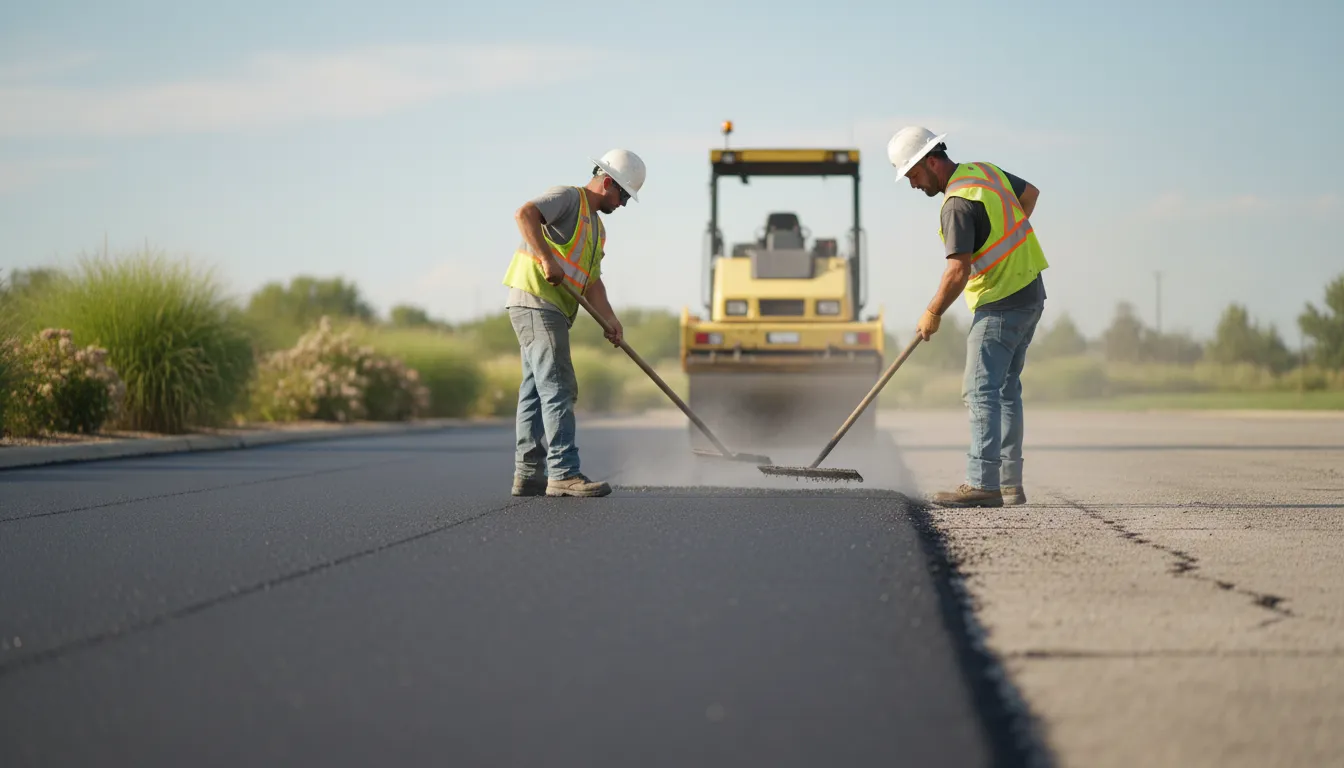
Find the Best Parking Lot Paving Contractors for Your Business
No obligation • Fast responses • Nationwide coverage
Why you can trust Tidy Parking
Tidy Parking is a leading U.S. source for parking lot maintenance services, including striping, sealcoating, sweeping, paving, resurfacing, and repairs. Our content is created independently, and providers cannot pay to influence ratings or recommendations.
Search providers near you
Best Parking Lot Paving Contractors in New York Ranked
A well-paved parking lot is a critical asset for any New York business or property, providing a safe, durable, and professional first impression. In New York's demanding climate, proper asphalt installation is not just about appearance-it's about engineering a surface that can withstand severe freeze-thaw cycles, heavy snow, and commercial traffic for years to come. This guide outlines the essential standards, materials, and processes for parking lot paving in New York, helping you understand what goes into a quality project so you can effectively evaluate local paving professionals.
Mid-State Sealcoating
Syracuse, NY
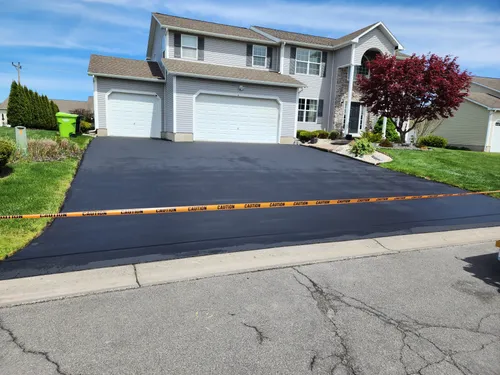
Mid-State Sealcoating is a parking lot and driveway maintenance company based in Syracuse, NY. They offer services including paving, asphalt crack filling and repair, sealcoating, and parking lot striping for commercial properties. Their paving process involves excavation, crusher run and binder application, followed by a top coat of asphalt, with milling services available as needed. They use high-quality commercial grade asphalt materials and apply sealcoating with a specific brush technique to enhance adhesion. The owner personally inspects each job to ensure quality.
Pave N Save
176 Maple Ave Suite 302, Monsey, NY 10952
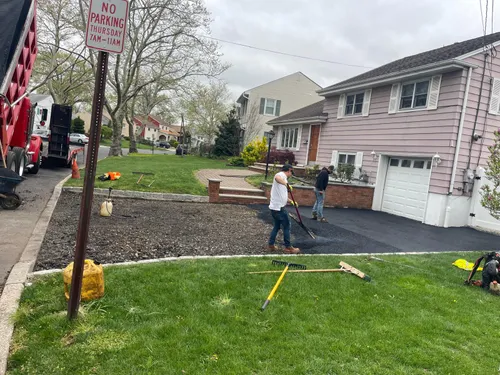
Pave N Save is a parking lot paving contractor based in New York, NY, serving the Hudson Valley region and surrounding areas including Orange County NY and Bergen County NJ. Since 2000, they have provided commercial and residential asphalt paving, concrete, and masonry services. Their capabilities include designing and installing complex projects such as sports courts and large commercial parking lots, with a focus on minimizing disruptions during work.
United Blacktop
New York, NY
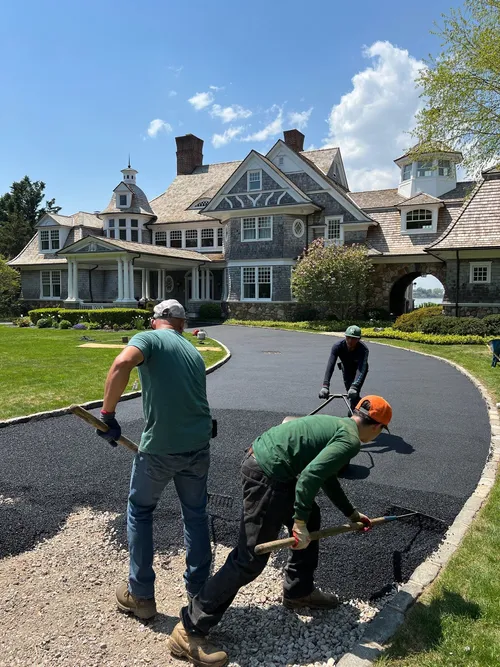
United Blacktop is a family-owned asphalt and paving company serving New York, NY, with over 20 years of industry experience. They provide a range of services including driveway sealcoating, crack filling and repair, sports court resurfacing, asphalt paving, concrete and brick pavers, as well as commercial parking lot maintenance. Their team is known for using premium materials and offering warranties on all workmanship and materials.
Pavement Specialist Inc
8 Campus Dr #106, Parsippany, NJ 07054
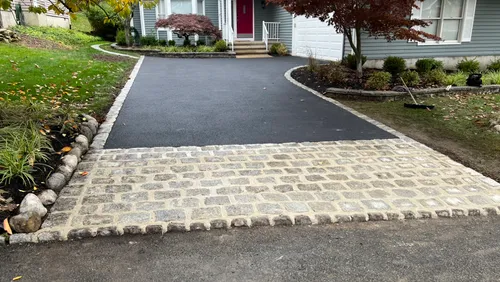
Pavement Specialist Inc provides paving, masonry, waterproofing, and repair services for residential and commercial properties in New York, NY. They specialize in installing and maintaining driveways, patios, walkways, retaining walls, and other exterior features using durable materials and proven methods suited for seasonal weather. Their capabilities include asphalt and paver driveway installation, masonry construction, foundation and basement waterproofing, and structural repairs. Serving communities throughout New Jersey, they focus on practical solutions to enhance and protect properties.
Cement Tech,LLC
31-00 47th Ave Suite 3100, Long Island City, NY 11101
Cement Tech, LLC is a concrete contractor based in New York, NY, specializing in residential and commercial concrete services including parking lot paving and resurfacing. They serve Astoria, Queens, and the greater New York City area, handling projects of various sizes with expert crews. Their capabilities include concrete grinding and polishing, ensuring precise workmanship and attention to detail. Cement Tech, LLC operates without contracts or seasonal fees, providing services as needed to meet client schedules.
New York's Climate & Paving Seasons
New York's weather is one of the most significant factors in parking lot construction and longevity. The state experiences harsh winters with freeze-thaw cycles that can rapidly degrade improperly installed asphalt by allowing water to penetrate, freeze, expand, and cause cracks and potholes. Heavy snow and the use of de-icing salts further stress the pavement surface.
Consequently, the paving season is strictly limited by temperature. Hot mix asphalt, the standard for durable parking lots, requires specific ambient and ground temperatures to be placed and compacted correctly. Official guidelines typically restrict top course paving from April 1st to the third Saturday of November in downstate areas (NYC, Long Island, Westchester) and from May 1st to the third Saturday of October in upstate regions. Paving outside these windows risks premature failure, as the asphalt cannot achieve proper density and bond.
Essential Design & Thickness Standards
A parking lot is a structural system, and its design begins below the surface. New York specifications are robust to ensure longevity under heavy use and extreme weather.
Subgrade & Base Preparation: The soil underneath, or subgrade, must be properly prepared. This involves clearing all organic material (roots, stumps) and compacting the native soil to at least 95% of its maximum density to prevent future sinking 1. On top of this, a base layer of 6 to 12 inches of compacted crushed stone or gravel (such as NYSDOT 304 Subbase Course) is installed 2 3. This base is crucial for drainage and load distribution. A final "proof roll" with a heavy vehicle ensures the base is stable and ready for asphalt 4.
Asphalt Thickness Guidelines: Total asphalt thickness varies based on expected traffic 5 6.
- Standard Commercial Lots: For passenger vehicles, a total thickness of 3 to 4 inches is typical. This is usually installed in two layers: a binder course and a surface course.
- Heavy-Duty & Truck Routes: For areas expecting delivery trucks, garbage trucks, or frequent heavy traffic, 4 to 6 inches-and sometimes up to 8 inches for industrial sites-is recommended 7. The surface course, typically 1.25 to 2 inches thick, uses a finer "Superpave" mix for smoothness and weather resistance, while the underlying binder course provides structural strength.
Approved Asphalt Materials & Mixes
The type of asphalt used is specified for performance in the local environment.
- Hot Mix Asphalt (HMA): The traditional and most common choice, produced and laid at temperatures around 300°F. It offers excellent durability and density for long-lasting parking lots.
- Warm Mix Asphalt (WMA): An increasingly common and often specified option (like NYSDOT 404) 8. Produced at 200-250°F, it is more environmentally friendly, allows for longer haul distances, and can extend the paving season into cooler shoulder months 9.
- Polymer-Modified Binders: To combat thermal cracking in winter and rutting in summer, New York often recommends performance-graded (PG) asphalt binders like PG 64S-22. These polymers add flexibility and stability to the asphalt 10.
- Cold Mix Asphalt: This is only suitable for temporary, emergency repairs like filling potholes during winter when hot mix plants are closed. It is not a material for permanent parking lot construction 11.
Critical Drainage & Slope Requirements
Water is asphalt's primary enemy. Proper drainage is non-negotiable in New York to prevent premature deterioration and safety hazards like ice patches.
The pavement must be sloped to direct water toward drains or permeable areas. While a minimum slope of 0.4% is often cited, a 2% to 5% slope is strongly preferred to effectively prevent water from pooling ("ponding") on the surface 12 13. Furthermore, New York State Department of Environmental Conservation (DEC) regulations may require a formal Stormwater Pollution Prevention Plan (SWPPP) for larger projects. This can mandate the inclusion of specific features like catch basins, trench drains, or even permeable pavement systems to manage runoff 13.
Find the perfect parking lot paving contractors for your needs
Get personalized recommendations and expert advice
The Paving Process: Step-by-Step
Understanding the sequence of work helps you ensure your contractor is following best practices.
- Site Demolition & Clearing: Existing pavement is removed, and all debris, vegetation, and organic matter are excavated.
- Grading & Sloping: The subgrade is graded to establish the precise slope and elevation for drainage.
- Subgrade Compaction: The native soil is thoroughly compacted to the required 95% density standard.
- Base Installation: The 6-12 inch gravel base course is spread in layers and compacted.
- Proof Rolling: The compacted base is inspected and tested for soft spots.
- Binder Course Installation: The first layer of hot asphalt is placed and compacted to the specified thickness.
- Surface Course Installation: The final, smoother layer of fine-graded asphalt is placed and compacted.
- Drainage & Curbing: Catch basins, pipes, and concrete curbs are installed as per the site plan.
- Striping & Markings: Once the asphalt has cured, traffic lines, handicap stalls, and other markings are applied.
Cost Considerations for New York Parking Lots
The cost to pave a parking lot in New York is highly variable, generally ranging from $5 to $12+ per square foot for a full installation 14. Key factors influencing price include:
- Site Conditions: Poor soil requiring excavation and stabilization, or the need for significant new drainage infrastructure, will increase costs substantially 15.
- Lot Size: Smaller lots (e.g., 5,000 sq. ft.) often have a higher per-square-foot cost ($8 - $14) due to fixed mobilization expenses for equipment. Larger lots (20,000+ sq. ft.) benefit from economies of scale, bringing the per-square-foot cost down ($5 - $9) 16.
- Asphalt Thickness & Mix: Heavy-duty thickness specifications and the use of polymer-modified mixes will increase material costs.
- Access & Timing: Tight urban sites with limited access or projects scheduled during the peak of the paving season may incur higher labor costs.
Maintenance & Longevity Expectations
Even a perfectly installed parking lot requires maintenance. In New York's climate, a proactive plan is essential. This includes:
- Sealcoating: Applied every 2-3 years to protect the surface from oxidation, fuel spills, and water penetration.
- Crack Sealing: Filling cracks annually before winter to prevent water intrusion and freeze-thaw damage.
- Prompt Pothole Repair: Addressing damage immediately to maintain safety and prevent the problem from spreading.
With proper construction and maintenance, a commercial parking lot in New York can have a service life of 15-20 years before requiring major rehabilitation or full-depth reconstruction 17.
Frequently asked questions
Sources
Footnotes
-
The Ultimate Guide to Asphalt Paving for Parking Lots in ... - https://albanypavingcontractors.com/the-ultimate-guide-to-asphalt-paving-for-parking-lots-in-saratoga-springs-ny/ ↩
-
Date: General Paving Specification Guide* Project Name - https://www.rd.usda.gov/files/ME_MFH_paving%20spec_fillable.pdf ↩
-
How many layers of asphalt do I need for a parking lot on ... - https://dumorconstruction.com/how-many-layers-of-asphalt-do-i-need-for-a-parking-lot-on-long-island-ny/ ↩
-
Driveway Installation - South Fork Asphalt - https://www.southforkasphalt.com/driveway-installation/ ↩
-
The Essential Guide To Asphalt Thickness For Parking Lots - https://www.royalpavementsolutions.com/the-essential-guide-to-asphalt-thickness-for-parking-lots/ ↩
-
How Thick Should Asphalt Paving Be? Complete Guide 2025 - https://sspaving.com/blog/how-thick-should-asphalt-paving-be/ ↩
-
Section 400 BITUMINOUS PAVEMENTS - https://www.dot.ny.gov/main/business-center/engineering/specifications/specs-repository/msb_400.pdf ↩
-
revisions to the comprehensive pavement design manual ( ... - nysdot - https://www.dot.ny.gov/portal/pls/portal/mexis_app.pa_ei_eb_admin_app.show_pdf?id=14097 ↩
-
» The Differences Between Summer Asphalt and Winter ... - https://asphaltindustriesny.com/2021/06/the-differences-between-summer-asphalt-and-winter-asphalt/ ↩
-
An In-Depth Guide to New York Asphalt: Standards, Grades ... - https://www.alibaba.com/product-insights/new-york-asphalt.html ↩
-
Hot Mix Asphalt Vs. Cold Mix Asphalt - Clifton Paving Co - https://albanypavingcontractors.com/hot-mix-asphalt-vs-cold-mix-asphalt-which-is-better-for-albany-ny/ ↩
-
Best Practices for Commercial Parking Lot Design - rePAVE LLC - https://repavellc.com/best-practices-for-commercial-parking-lot-design/ ↩
-
Key Requirements of Parking Lot Design Standards in New York - https://www.royalpavementsolutions.com/key-requirements-of-parking-lot-design-standards-in-new-york-what-you-need-to-know/ ↩ ↩2
-
How Much Does Paving an Asphalt Driveway Cost? (2026) - HomeGuide - https://homeguide.com/costs/asphalt-driveway-cost ↩
-
Asphalt Paving Calculator - What Goes Into The Cost Of Asphalt - https://morganpavement.com/blog/asphalt-paving-calculator-what-goes-into-the-cost-of-asphalt/ ↩
-
Commercial Asphalt Paving Cost Guide: Pricing Breakdown - https://asphaltrepairsolutions.com/how-much-does-commercial-asphalt-paving-cost-a-pricing-breakdown/ ↩
-
How Often Should Parking Lots Be Repaved in New York's Climate - https://mrblacktop.net/how-often-should-parking-lots-be-repaved-in-new-yorks-climate ↩