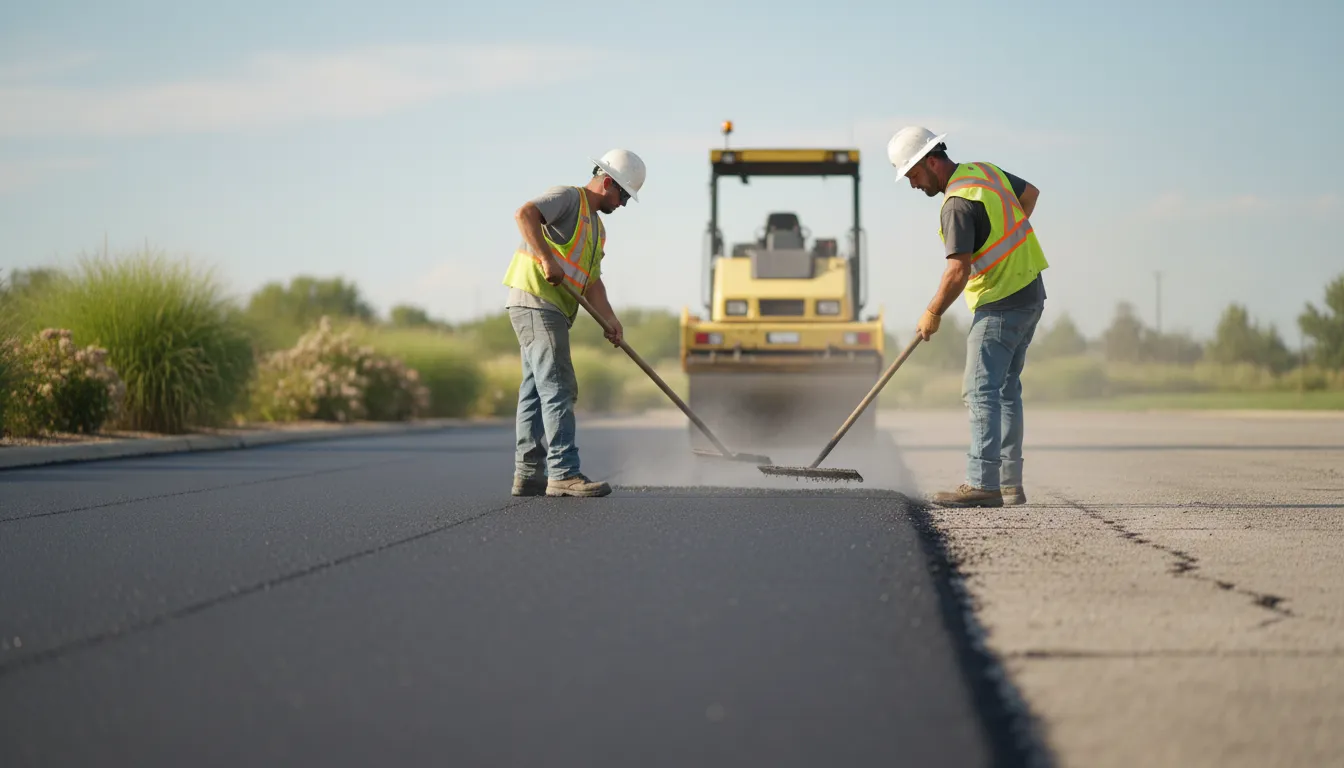
Find the Best Parking Lot Paving Contractors for Your Business
No obligation • Fast responses • Nationwide coverage
Why you can trust Tidy Parking
Tidy Parking is a leading U.S. source for parking lot maintenance services, including striping, sealcoating, sweeping, paving, resurfacing, and repairs. Our content is created independently, and providers cannot pay to influence ratings or recommendations.
Search providers near you
Top Parking Lot Paving Contractors in Franklin, New Jersey Ranked
Parking lot paving is a critical investment for any commercial property in New Jersey, directly impacting safety, curb appeal, and long-term maintenance costs. The state's demanding wet-freeze climate, with its numerous annual freeze-thaw cycles, makes proper material selection and installation techniques non-negotiable for a durable surface. This guide explains the key considerations for asphalt pavement in NJ, from climate-specific mixes and structural standards to drainage and cost factors, helping you make informed decisions when planning your project.
Pave N Save
176 Maple Ave Suite 302, Monsey, NY 10952
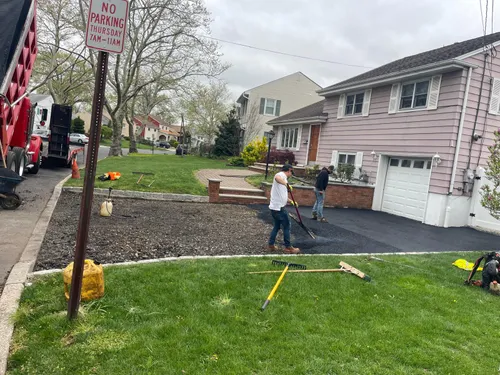
Pave N Save is a parking lot paving contractor based in New York, NY, serving the Hudson Valley region and surrounding areas including Orange County NY and Bergen County NJ. Since 2000, they have provided commercial and residential asphalt paving, concrete, and masonry services. Their capabilities include designing and installing complex projects such as sports courts and large commercial parking lots, with a focus on minimizing disruptions during work.
Pavement Specialist Inc
8 Campus Dr #106, Parsippany, NJ 07054
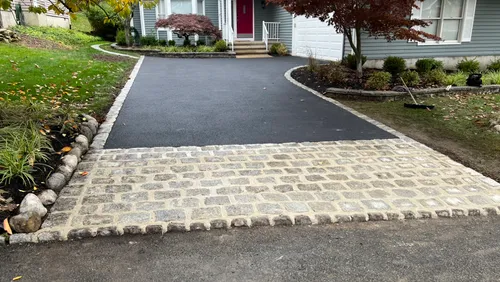
Pavement Specialist Inc provides paving, masonry, waterproofing, and repair services for residential and commercial properties in New York, NY. They specialize in installing and maintaining driveways, patios, walkways, retaining walls, and other exterior features using durable materials and proven methods suited for seasonal weather. Their capabilities include asphalt and paver driveway installation, masonry construction, foundation and basement waterproofing, and structural repairs. Serving communities throughout New Jersey, they focus on practical solutions to enhance and protect properties.
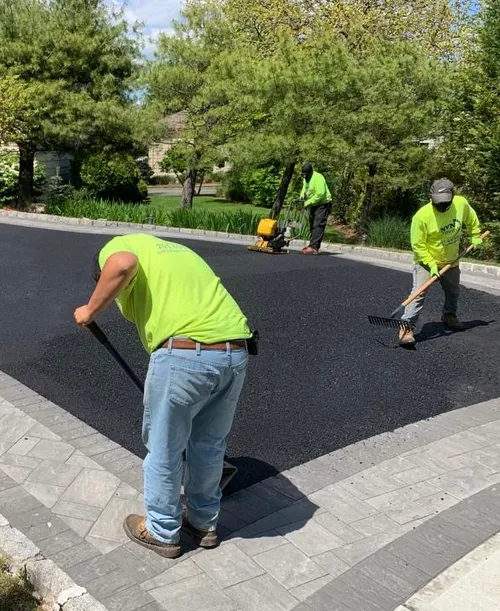
NVN PAVING
431 Wagaraw Rd, Fair Lawn, NJ 07410
NVN PAVING is a parking lot paving contractor based near New York, NY, specializing in a wide range of paving services. They serve diverse markets including property managers, golf and tennis clubs, shopping centers, places of worship, multi-family properties, and industrial parks across New Jersey. Their services include parking lot maintenance and sidewalk repairs, helping clients maintain safe and functional outdoor spaces.
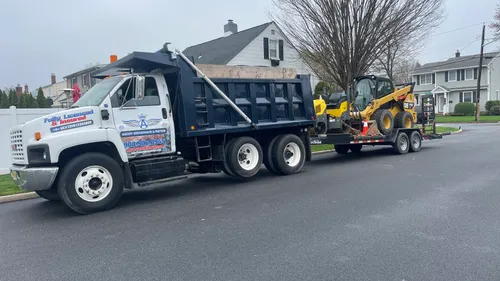
Ascot Driveways and Patios
55 Madison Ave suite 400 #4342, Morristown, NJ 07960
Ascot Driveways and Patios is a paving and masonry contractor serving New York, NY, and the surrounding Morris County area. They specialize in asphalt and concrete driveway installation, sealcoating, repairs, masonry wall building, patio construction, and landscaping hardscaping services. The company is experienced in restoring asphalt driveways with high-strength seal coating and offers a wide range of driveway and patio solutions tailored to customer needs. Ascot Driveways and Patios is a family-operated business known for its skilled craftsmanship and attention to detail, with a history of satisfied clients and completed projects in the region.

Accurate Paving
46 Barkley Ave, Clifton, NJ 07011
Accurate Paving is a paving contractor based in New York, NY, offering residential and commercial paving services. They handle projects such as asphalt repair, new driveways, parking lots, courtyards, and patios. The company has over 50 years of experience across three generations of the Mitchell family, bringing extensive knowledge and proven techniques to each job. Their services include paving stone installation and decorative hardscapes, with a focus on quality workmanship and detailed project quotes.
Understanding New Jersey's Climate Challenge
New Jersey's climate is one of the most punishing in the country for asphalt surfaces. Winters are characterized by constant temperature fluctuations, typically cycling between 20-28°F (freezing) and 38-45°F (thawing) 1. This can lead to 55 or more freeze-thaw cycles annually 2. The damage occurs when water seeps into small cracks or pores in the asphalt. When this water freezes, it expands by approximately 9%, exerting tremendous pressure that widens cracks and breaks apart the pavement structure from within 1 2. This process, not snow plowing or salt, is the primary cause of severe asphalt deterioration in the state. A paving project that doesn't account for this specific environmental stress is likely to fail prematurely, requiring costly repairs.
Recommended Asphalt Mix Specifications for NJ
To combat freeze-thaw damage, the asphalt mix itself must be engineered for resilience. The New Jersey Department of Transportation (NJDOT) provides specifications that serve as the standard for commercial work.
- NJDOT I-5 Mix: This is the most commonly specified hot-mix asphalt (HMA) for standard commercial parking lots in New Jersey. It provides a good balance of durability and workability.
- NJDOT I-4 Mix: A heavier-duty mix recommended for areas expecting higher stress, such as loading docks, delivery zones, fire lanes, or sections with constant turning traffic.
- Performance-Graded (PG) Binders: For superior resistance to thermal cracking, polymer-modified asphalt binders are highly recommended. Specifying a PG 64-22 or PG64E-22 binder ensures the asphalt remains flexible in cold temperatures and stable in the heat, directly countering the stresses of freeze-thaw cycles 3 4. Superpave mix designs, which use these performance-graded binders, are considered best practice for longevity.
Structural Standards: Thickness and Base Preparation
A strong pavement structure begins below the surface. Proper sub-base preparation is crucial in New Jersey to prevent structural failure from ground movement and water infiltration 5.
Standard Thickness: For a typical commercial parking lot with passenger vehicles, a compacted thickness of 3 to 4 inches of asphalt is standard 6. Areas designated for heavy trucks or industrial use may require 4 to 6 inches or more.
Base Construction Process:
- Excavation and Subgrade: The native soil (subgrade) must be properly graded and compacted. It often requires the addition of a 6 to 8-inch layer of compacted gravel (aggregate base) to provide a stable, well-draining foundation.
- Compaction: Proper compaction is vital. A 3-10 ton vibratory roller is typically used to compact the asphalt layers, creating a dense, impermeable surface that resists water penetration.
- Fabric Interlayer: In areas with a history of cracking or underlying water issues, installing a paving fabric (like PetroMat) between asphalt layers or over an existing cracked pavement can significantly reduce reflective cracking 7. This adds $0.14 - $0.22 per square foot but can greatly extend pavement life.
Critical Drainage and Slope Design
Water is asphalt's greatest enemy. Ensuring it flows off the pavement quickly is the most effective preventive maintenance you can design into your lot.
- Cross-Slope: Pavement must be installed with a consistent slope to direct water toward drains or perimeters. A minimum slope of 1% to 2% (a 1 to 2-foot drop per 100 feet) is standard 8 9.
- Drainage Systems: Depending on the lot size and configuration, catch basins, trench drains, or swales are often necessary for positive drainage. The system must be designed to handle New Jersey's rainfall intensity.
- Pervious Pavement Option: For projects aiming to manage stormwater runoff, pervious asphalt systems are an option. NJDEP guidelines specify these must be installed over a deep bed of washed, open-graded stone (like AASHTO No. 2) that allows stored water to drain into the subsoil within 72 hours 10.
- Correcting Problems: Existing lots with standing water (birdbaths) can often be corrected with techniques like profile milling or applying an asphalt leveling course to restore proper pitch 11.
Find the perfect parking lot paving contractors for your needs
Get personalized recommendations and expert advice
Cost Guide for Parking Lot Paving in New Jersey
Costs for asphalt installation in NJ vary widely based on size, site conditions, materials, and structural requirements. For new construction, prices generally range from $3.50 to $7.00 per square foot 12. The table below provides estimated cost ranges for common project scopes.
| Parking Lot Type | Size (Square Feet) | Estimated Total Cost Range | Key Notes |
|---|---|---|---|
| Small Lot | ~5,000 | $17,500 - $35,000 | Standard 3-inch application for light traffic. |
| Medium Lot | ~17,500 (50 cars) | $45,000 - $175,000 | Includes comprehensive base preparation and standard paving. |
| Large Lot | ~60,000+ (200 cars) | $180,000 - $700,000+ | May require heavier-duty mixes (4"+) for high traffic volumes. |
| Overlay/Resurfacing | Varies | $2.00 - $4.00 per sq. ft. | Applying new asphalt over an existing, sound pavement base. |
Additional Cost Factors:
- Heavy-Duty Areas: Sections designed for industrial or constant truck traffic can cost $5.00 - $8.00 per square foot for thicker, 4-6 inch layers.
- Site Work: Extensive excavation, poor soil conditions requiring additional base material, or complex drainage installations will increase costs.
- Geotextile Fabric: Adding a crack-relief fabric interlayer adds approximately $0.14 - $0.22 per square foot to the project 13.
The Professional Paving Process
A quality pavement installation follows a meticulous sequence:
- Planning & Design: This includes surveying, determining drainage plans, selecting the appropriate asphalt mix, and establishing thickness specifications.
- Demolition & Excavation: Existing pavement is removed (if necessary), and the subgrade is excavated to the required depth for the base and asphalt layers.
- Grading & Base Installation: The subgrade is graded to the precise slope. The aggregate base course is then spread and thoroughly compacted.
- Binder Course Installation: For thicker pavements, a base or binder layer of asphalt is laid and compacted.
- Surface Course Installation: The final, smooth wearing course of asphalt is placed. For lots with fabric, it is installed between layers.
- Compaction: Each asphalt layer is rolled with heavy vibratory rollers to achieve the required density 14.
- Finishing: Joints are sealed, and the perimeter is finished. The new pavement must cool and cure before being opened to traffic.
Maintenance for Longevity
Protecting your investment starts immediately after paving. A new asphalt surface should be allowed to cure for at least 30-90 days before applying a high-quality sealcoat. Regular sealcoating every 2-3 years, along with prompt crack sealing, is essential to block water and UV oxidation, dramatically slowing the aging process and the onset of freeze-thaw damage.
Frequently asked questions
Sources
Footnotes
-
Asphalt Driveway Cost 2026 | NJ Pricing Guide & Estimates - https://randysealcoatingandstriping.com/asphalt-paving-cost ↩ ↩2
-
Snow Doesn't Damage Asphalt in New Jersey - Freeze ... - https://www.fixasphalt.com/testblog/snow-doesnt-damage-asphalt-in-new-jersey-freeze-thaw-cycles-do-2026-guide ↩ ↩2
-
Choosing the Right Asphalt Mix for Your Climate - https://www.sunriseasphaltaz.com/2025/06/17/choosing-the-right-asphalt-mix-for-your-climate/ ↩
-
NJAPA Pavement Guide 2009.102408.FINAL.qxp - https://www.njapa.com/wp-content/uploads/2016/10/NJAPA-Design-Guide-2013-64E-Rev-11-4-13.pdf ↩
-
IAPA :: Parking Lots - https://www.il-asphalt.org/asphalt-info/private-commercial/parking-lots/ ↩
-
The Essential Guide To Asphalt Thickness For Parking Lots - https://www.royalpavementsolutions.com/the-essential-guide-to-asphalt-thickness-for-parking-lots/ ↩
-
The Parking Lot Paving Process - https://www.fixasphalt.com/blog/the-asphalt-paving-process-0 ↩
-
Our New Jersey Parking Lot Paving Process - Fix Asphalt - https://www.fixasphalt.com/blog/the-asphalt-paving-process-0-0 ↩
-
Parking Lot Drainage Design Strategies - Bolson Engineering and Environmental Services - https://bolson.ca/drainageandparking/ ↩
-
9.7 pervious paving systems - NJDEP - https://dep.nj.gov/wp-content/uploads/stormwater/archived_nj_swbmp_9.07.pdf ↩
-
NJ Parking Lot Paving Cost Factors in Somerset County - Fix Asphalt - https://www.fixasphalt.com/blog/nj-commercial-parking-lot-paving-1-1 ↩
-
How Much Does It Cost to Pave a Parking Lot in NJ? (2025 ... - https://www.fixasphalt.com/blog/how-much-does-it-cost-to-pave-a-parking-lot-in-nj-2025-guide ↩
-
NJ Commercial Parking Lot Paving Cost Factors - Fix Asphalt - https://www.fixasphalt.com/blog/nj-commercial-parking-lot-paving- ↩
-
Hot Mix Asphalts 101 - https://dot.nj.gov/transportation/eng/pavement/pdf/HotMix0709.pdf ↩