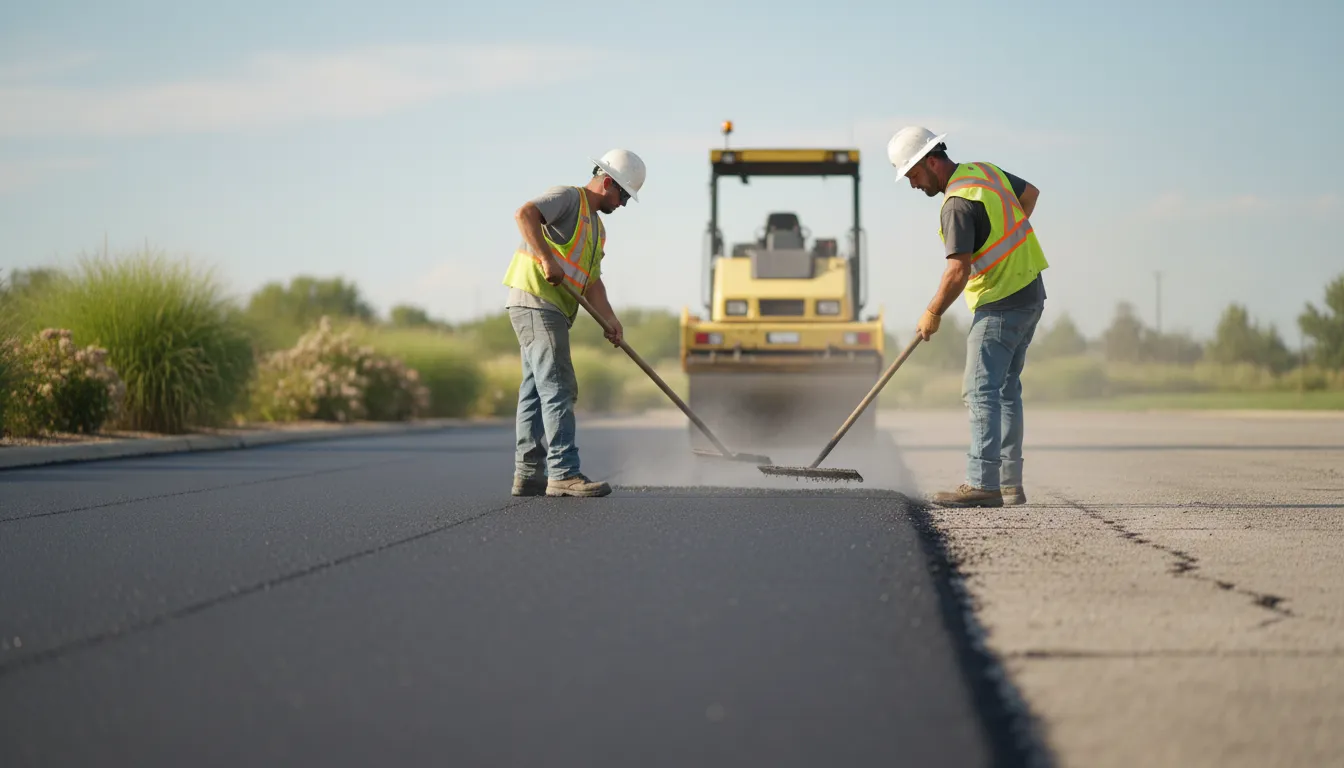
Find the Best Parking Lot Paving Contractors for Your Business
No obligation • Fast responses • Nationwide coverage
Why you can trust Tidy Parking
Tidy Parking is a leading U.S. source for parking lot maintenance services, including striping, sealcoating, sweeping, paving, resurfacing, and repairs. Our content is created independently, and providers cannot pay to influence ratings or recommendations.
Search providers near you
Top Parking Lot Paving Contractors in Concord, North Carolina Ranked
A well-paved parking lot is a critical asset for any North Carolina business or property, providing a safe, durable, and professional first impression. Proper asphalt paving protects your investment from the state's variable climate and heavy traffic while ensuring compliance with local standards. This guide explains the key considerations, from materials and drainage to costs and construction layers, to help you understand the process and connect with qualified local paving professionals for your project.
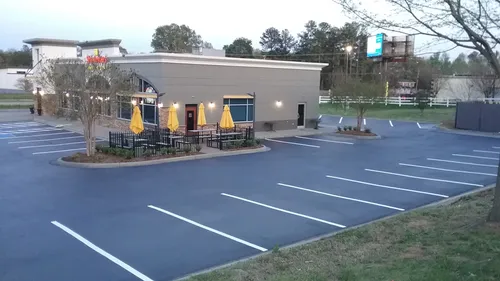
Crocker Asphalt Services
4609 Coronado Dr I, Charlotte, NC 28212
Crocker Asphalt Services is a parking lot repair and maintenance company based in Charlotte, NC. They provide a range of services including parking lot striping, sealcoating, paving, resurfacing, and repair. Their offerings cover asphalt replacement, hot crack filling, chipseal application, pothole repair, line striping, asphalt milling and paving, and new asphalt installation. Serving Mecklenburg County and surrounding areas, Crocker Asphalt Services handles projects of various sizes with a focus on efficient completion. The company emphasizes both maintenance and full replacement services for asphalt surfaces.
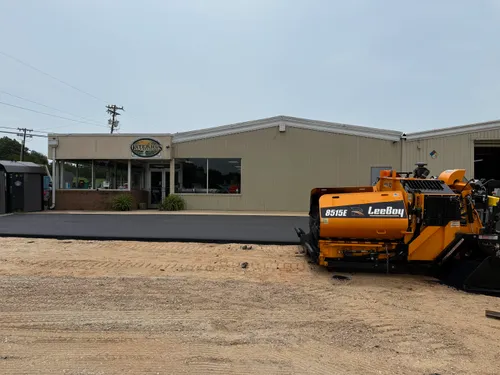
Regional Asphalt Services
115 Corina Ln, Mooresville, NC 28115
Regional Asphalt Services is a third-generation asphalt paving company serving Charlotte, NC. They provide a range of pavement improvement services including milling, repair, resurfacing, sealcoating, and maintenance for residential, commercial, and government clients. Their team uses state-of-the-art technology and offers hands-on management from inspection through project completion. The company serves Charlotte and surrounding areas such as Huntersville, Harrisburg, Matthews, Asheville, Concord, and more.
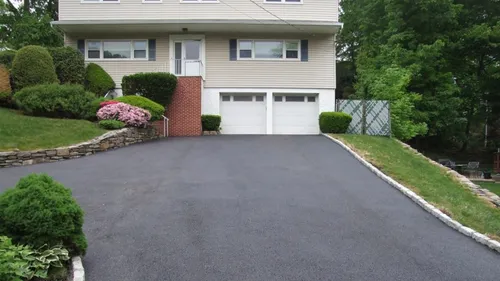
Armor Asphalt
6601 E Independence Blvd, Charlotte, NC 28212
Armor Asphalt is a family-owned paving company based in Charlotte, NC, specializing in residential and commercial asphalt paving, sealcoating, resurfacing, and repair. They provide services designed to handle heavy traffic and extend pavement life, including custom driveway installations and expert parking lot paving. With decades of experience, Armor Asphalt understands local soil, traffic, and weather conditions to deliver durable and functional pavement solutions tailored to the Charlotte area.
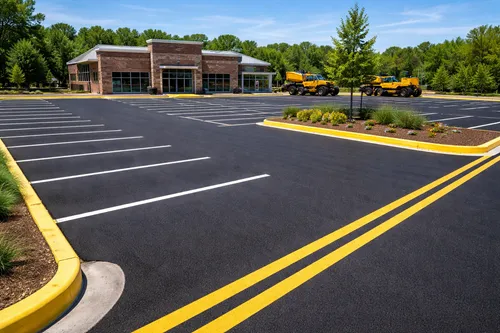
Around Town Paving
299 Perennial Dr NW, Concord, NC 28027
Around Town Paving is an asphalt contractor serving Charlotte, NC, and surrounding counties including Mecklenburg, Rowan, Iredell, and Cabarrus. They provide a range of services such as asphalt repair, paving, seal coating, grading, and parking lot striping for both residential and commercial properties. The company specializes in preparing land for asphalt projects and applying protective seal coatings to extend pavement life. With over 20 years of industry experience, Around Town Paving uses high-quality materials and is recognized by HomeAdvisor and the Better Business Bureau.
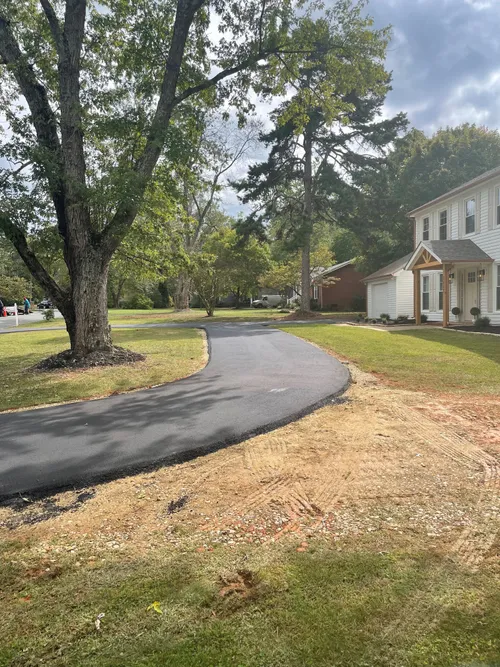
Asphalt Services NC
Charlotte, NC
Asphalt Services NC is a family-owned asphalt paving contractor serving Charlotte, NC, and the surrounding communities for over 20 years. They provide a range of services including parking lot paving, sealcoating, resurfacing, repair, and line striping. Their expertise includes using hot mix asphalt with precise site preparation and compaction to ensure durable, weather-resistant surfaces that enhance safety and functionality. Asphalt Services NC emphasizes customized solutions and attention to detail to meet the specific needs of residential and commercial projects.
Understanding North Carolina's Paving Climate and Drainage Needs
North Carolina's climate presents specific challenges for pavement longevity. The state experiences heavy rainfall and moderate freeze-thaw cycles, which can lead to water infiltration, base weakening, and surface damage like potholes and cracking if not properly addressed. The most critical defense is effective drainage.
A minimum slope of 1.5% (1.5 feet of fall per 100 feet) is widely recommended to ensure water drains away from building foundations and off the pavement surface 1. For stormwater management, some projects may utilize NCDOT Porous Paving specifications, which use an Open-Graded Friction Course (OGFC) mix with at least 16% air voids to allow water to pass through the surface 2 3. Proper planning for drainage is the first step in a pavement design that lasts.
Base Preparation: The Foundation for Longevity
A durable asphalt surface is entirely dependent on a stable, well-constructed foundation. Cutting corners on base preparation is the leading cause of premature pavement failure. The process typically follows these steps:
- Clearing and Grading: The site is cleared of debris and vegetation. The subgrade (native soil) is then graded to the precise contours needed for drainage and compacted.
- Aggregate Base Course: A layer of 6 to 8 inches of compacted Aggregate Base Course (ABC) is installed. This layer distributes loads, provides stability, and aids in frost protection. Proper compaction at this stage is non-negotiable.
Asphalt Materials and Thickness Standards
Following NCDOT and local municipal specifications ensures a quality installation. A standard commercial parking lot in North Carolina typically uses a multi-layer system:
- Surface Course: The top 1.5 to 2 inches. For light traffic areas, NCDOT Type SF9.5A mix is common. For moderate traffic, Type S9.5B is often specified 4. This layer provides smoothness, skid resistance, and weatherproofing.
- Binder Course: In some designs, a 2 to 3 inch intermediate layer of a stronger binder mix (like I19.0B) is used beneath the surface course for added structural strength 5 6.
- Total Thickness: For standard commercial parking, a total compacted asphalt thickness of 3 to 4 inches over the 6-8 inch aggregate base is typical 7.
Find the perfect parking lot paving contractors for your needs
Get personalized recommendations and expert advice
Cost Factors for Parking Lot Paving in NC
The cost of asphalt paving in North Carolina varies significantly based on project scope, site conditions, and material prices. Costs are generally discussed in price per square foot for larger projects.
- Small Lots & Driveways: Residential or small commercial jobs can range from $2,000 to $7,000, depending on size and complexity.
- Large Commercial Lots: For bigger parking areas, costs typically range from $2 to $7 per square foot 8 9. The final price for a large project can easily exceed $10,000 to $50,000, influenced by:
- Site Preparation: Extensive excavation, grading, or removal of old pavement adds cost.
- Base Requirements: Poor soil conditions may require additional base material.
- Drainage Infrastructure: Installing or upgrading catch basins, pipes, and curbing.
- Project Size: Economies of scale often apply; larger square footages may have a lower cost per unit.
- Asphalt Mix Type: Special mixes (like porous asphalt) or polymer-modified binders cost more.
The Professional Paving Process: What to Expect
Understanding the steps involved helps property owners manage expectations and ensure their project stays on track.
- Consultation and Estimate: A reputable contractor will visit your site, discuss needs, assess drainage and subgrade, and provide a detailed written estimate.
- Site Preparation: This includes final grading, compaction of the subgrade, and installation and compaction of the aggregate base.
- Asphalt Installation: The binder and surface asphalt layers are placed using a paving machine (paver) to ensure consistent thickness and grade. The material is laid hot and must be compacted with rollers before it cools.
- Finishing: After compaction, the area is sealed off to cool. Striping, signage, and landscaping restoration typically occur after the asphalt has fully cured.
Maintaining Your New Asphalt Pavement
Protecting your investment begins as soon as the pavement is cured. A proactive maintenance plan includes:
- Sealcoating: Apply a protective sealant every 2-3 years to shield against UV rays, gasoline, oil, and water.
- Prompt Repair: Address small cracks with crack filler immediately to prevent water from entering the base.
- Regular Cleaning: Keep the surface free of debris and standing water.
- Professional Inspections: Have a paving professional assess your lot annually to identify minor issues before they become major repairs.
Frequently asked questions
Sources
Footnotes
-
Drainage and Asphalt - https://suburbanasphalt.com/drainage-and-asphalt/ ↩
-
Pavement Design Manual.pdf - Connect NCDOT - https://connect.ncdot.gov/resources/Materials/MaterialsResources/Pavement%20Design%20Manual.pdf ↩
-
chapter 22 asphalt paving table of contents page no. - City of Charlotte - https://www.charlottenc.gov/files/sharedassets/cltwater/v/1/documents/developmentprojects/new-design-manual/22-asphalt-paving/chapter-22b_asphalt_paving_specifications_01.2025.pdf ↩
-
NC.indd - Carolina Asphalt Pavement Association - https://www.carolinaasphalt.org/aws/CAPA/asset_manager/get_file/383198?ver=223 ↩
-
The Essential Guide To Asphalt Thickness For Parking Lots - https://www.royalpavementsolutions.com/the-essential-guide-to-asphalt-thickness-for-parking-lots/ ↩
-
How to Calculate Asphalt Thickness for Driveways & Parking Lots - https://www.getonecrew.com/post/how-to-calculate-asphalt-thickness ↩
-
Parking Lot Paving, Asphalt Paving Charlotte NC - https://www.charlottencpaving.com/8203parking-lot-paving.html ↩
-
How Much Does Asphalt Paving Cost? Breaking Down Your ... - https://americanpavingnc.com/asphalt-paving-cost-breakdown/ ↩
-
How Much Should Asphalt Paving Cost? A Complete Guide - https://queencitypaving.com/asphalt-paving-cost-guide/ ↩