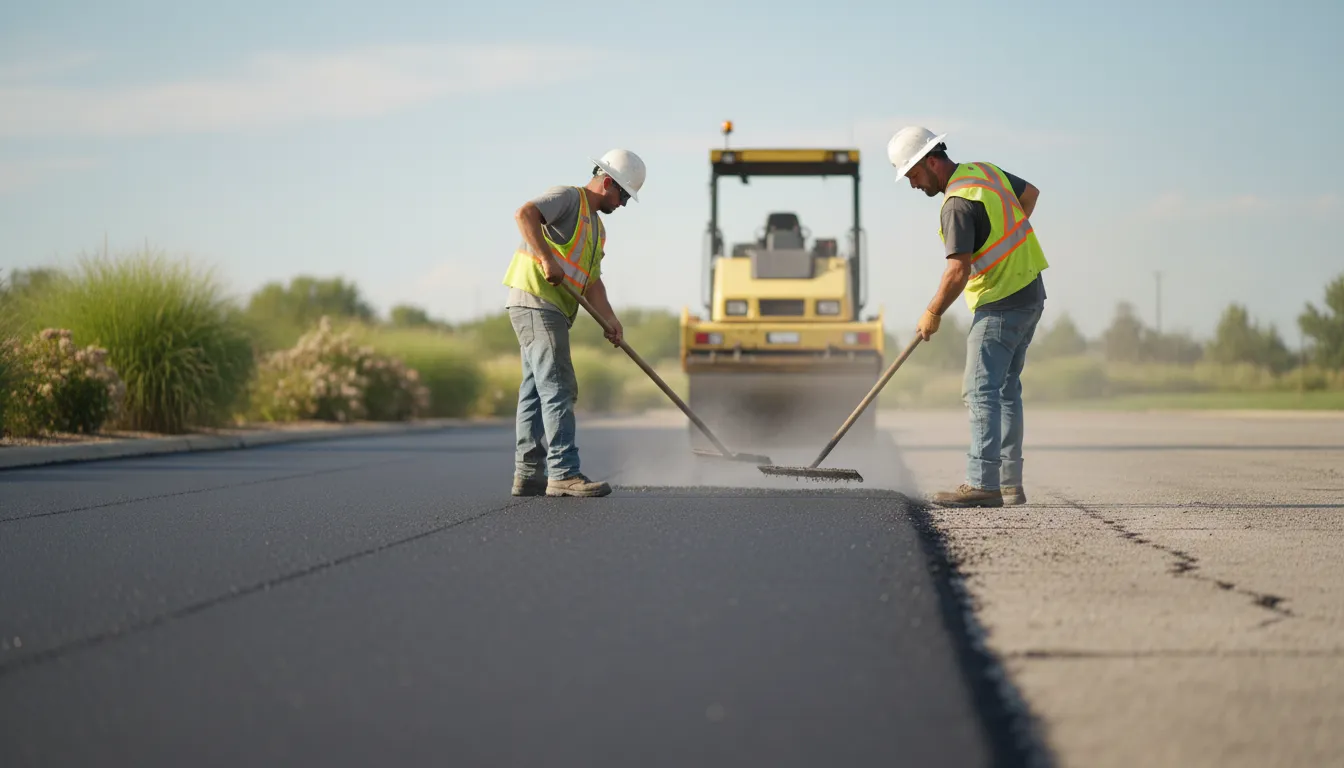
Find the Best Parking Lot Paving Contractors for Your Business
No obligation • Fast responses • Nationwide coverage
Why you can trust Tidy Parking
Tidy Parking is a leading U.S. source for parking lot maintenance services, including striping, sealcoating, sweeping, paving, resurfacing, and repairs. Our content is created independently, and providers cannot pay to influence ratings or recommendations.
Search providers near you
Top Parking Lot Paving Contractors in Lawrence, Kansas Ranked
A well-paved parking lot is a critical asset for any business or property in Lawrence, providing a safe, durable, and professional first impression for customers and tenants. Parking lot paving involves the construction of a new asphalt surface, a complex process that must account for local soil conditions and Indiana's challenging climate to ensure long-term performance. This guide explains the key considerations, steps, and costs for asphalt pavement installation in Lawrence, helping you understand what goes into a successful project and how to connect with qualified local paving professionals.
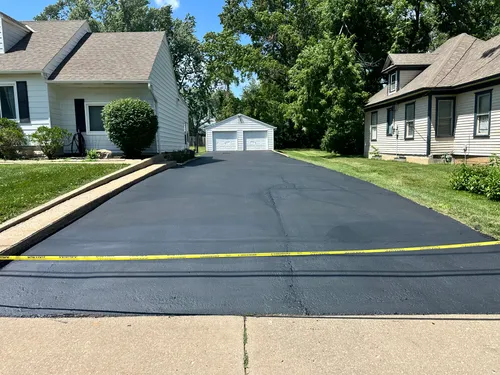
Nicks Sealcoating
10420 England St, Overland Park, KS 66212
Nicks Sealcoating is an asphalt contractor based in Kansas City, MO, serving both residential and commercial clients across the greater Kansas City area. They offer a range of services including driveway installation, asphalt patching, pothole filling, parking lot striping, and sealcoating. The company emphasizes careful workmanship, ensuring projects are completed with attention to detail and customer satisfaction. Nicks Sealcoating is known for its thorough crack filling and sealcoating capabilities, aiming to protect and enhance asphalt surfaces. They focus on building long-term client relationships through consistent service quality and aggressive pricing.
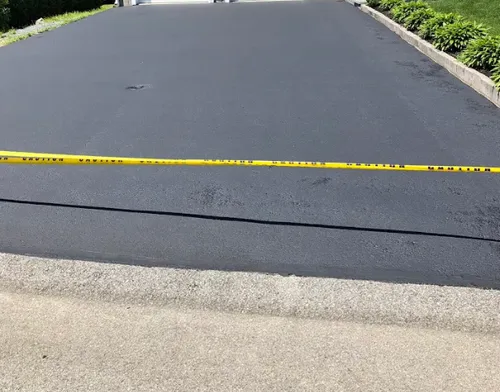
Olathe Asphalt Co
Topeka, KS
Olathe Asphalt Co is a parking lot paving contractor and repair company based in Topeka, KS. They provide detailed proposals that include site designs and clear explanations of repair work. Their services cover asphalt paving, maintenance, and repair, focusing on quality materials and proven techniques to ensure durable results. The company emphasizes a structured approach to maintenance and repairs, aiming for long-lasting pavement solutions rather than short-term fixes.
McNally asphalt llc
1010 SE California Ave #2, Topeka, KS 66607
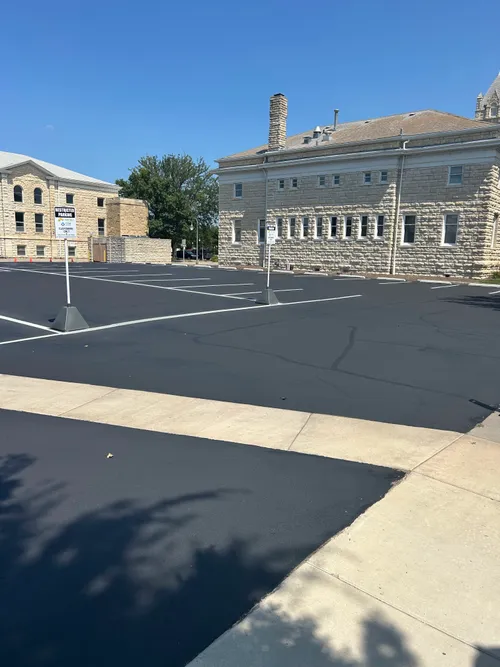
McNally Asphalt LLC provides a range of paving services in Topeka, KS, including commercial parking lot installation, residential sidewalk repairs, sealcoating, crack filling, striping, and asphalt driveway installation. The company serves both residential and commercial clients with experienced crews and quality materials, handling projects of various sizes. Their capabilities include pavement installation, repair, resurfacing, and maintenance to support vehicle and foot traffic.
Updike Paving Corporation
7211 Douglas Ave, Kansas City, KS 66106
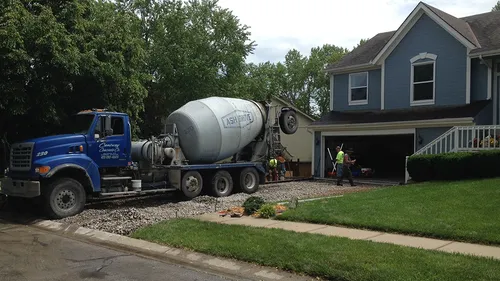
Updike Paving Corporation is a family-owned paving contractor based in Kansas City, MO. They provide asphalt and concrete repair and replacement services for both residential and commercial properties. With over 50 years of experience, they also offer snow removal services as part of their comprehensive outdoor maintenance solutions. Their work is licensed, bonded, and backed by a guarantee.
OC Paving & Services
15875 S Cherry Ct Suite # 2, Olathe, KS 66062
OC Paving & Services is a locally owned asphalt paving company based near Kansas City, MO, offering a wide range of services including parking lot striping, sealcoating, paving, resurfacing, and repair. With over 30 years of experience, they specialize in durable asphalt solutions tailored to withstand Kansas weather and soil conditions. Their commercial and residential services cover everything from new installations to maintenance, backed by a comprehensive two-year warranty. The bilingual team provides clear communication in English and Spanish and offers special discounts for seniors and veterans.
Understanding Lawrence's Paving Challenges: Clay and Climate
Successful asphalt installation in Lawrence isn't just about laying down hot mix; it's about engineering a solution for two persistent local challenges: expansive clay soils and dramatic freeze-thaw cycles.
Clay Soils and Drainage: Much of the soil in the Indianapolis area, including Lawrence, has a high clay content. Clay is problematic because it retains water. When this water freezes in the winter, it expands, causing the ground to heave upward-a process known as frost heave. This movement can crack and buckle even a newly laid asphalt surface from beneath. The solution is proactive drainage management. Since asphalt itself is impermeable, water must be directed away from the subgrade. This is achieved through proper site grading and a deep, well-compacted aggregate base that allows water to drain away from the pavement structure.
Midwest Freeze-Thaw Cycles: Indiana's winters subject pavement to constant stress as water repeatedly freezes and thaws. This can lead to surface cracks, which allow more water to infiltrate, leading to potholes and base failure. To combat this, contractors use a durable, flexible hot-mix asphalt (HMA) designed to withstand thermal expansion and contraction. Furthermore, a rigorous maintenance plan that includes timely sealcoating is non-negotiable in this climate, as it seals the surface against water intrusion.
The Step-by-Step Process for Asphalt Pavement Installation
A quality asphalt parking lot is built in layers, each with a specific function. Skipping or short-cutting any step can lead to premature failure.
-
Site Preparation and Grading: The existing surface is removed, and the area is cleared. The most critical part of this phase is grading-shaping the land to create a proper slope (typically a minimum of 2%) to direct all surface water toward drains or away from buildings 1. In Lawrence, ensuring positive drainage from the very beginning is the first defense against water-related damage 2 3.
-
Subgrade Preparation: This is where the battle against clay soil is fought. The native soil (subgrade) is thoroughly compacted to create a stable, unyielding platform. Proper compaction here prevents future sinking and soft spots that turn into potholes 4.
-
Base Layer Installation: A 4- to 8-inch layer of crushed stone or aggregate is spread and compacted on top of the subgrade. This base layer is the structural heart of the pavement, providing strength and, crucially, a drainage plane to channel water away from the asphalt above.
-
Asphalt Application: This is a two-lift process. First, a binder layer (1.5 to 2.5 inches thick) is applied. This coarse mix provides the main structural strength. Next, a smoother surface layer (about 1.5 inches thick) is laid, which creates the final driving surface.
-
Compaction and Finishing: While the asphalt is still hot, heavy steel-wheel and pneumatic rollers compact it to the required density, eliminating air pockets and ensuring a solid, unified mat. Once cooled, the final step is the application of pavement markings, symbols, and the installation of any wheel stops or signage.
Find the perfect parking lot paving contractors for your needs
Get personalized recommendations and expert advice
Cost Factors for Asphalt Paving in Lawrence
The cost of a new parking lot in Lawrence can vary significantly based on size, site conditions, and material costs. Understanding the typical price ranges and what influences them helps in budgeting effectively.
Typical Cost Ranges:
- New Construction: For a completely new asphalt pavement, including base preparation, average costs in the region often fall between $2.00 and $4.50 per square foot 5 6.
- Overlay (Resurfacing): If an existing stable pavement needs a fresh surface, a 2-inch overlay is a common solution, with costs typically around $1.33 to $1.51 per square foot.
- Patching and Repair: Spot repairs for potholes or damaged sections are usually more expensive per square foot due to the labor-intensive nature of the work, averaging around $2.82 per square foot for patching 7.
Key Factors Influencing Price:
- Project Size: Economies of scale apply. Very large projects (e.g., 100+ parking stalls) often see a lower cost per square foot, while small, complex projects have a higher relative cost due to fixed mobilization and equipment expenses 8 9.
- Site Conditions: Poor drainage, soft or unstable soil (like untreated clay), or significant amounts of existing debris or concrete to remove will increase site preparation costs 10.
- Drainage Requirements: In Lawrence, installing or tying into adequate stormwater management systems, such as catch basins and underground piping, is a necessary but added cost that directly impacts longevity 11.
- Material and Layer Thickness: The depth and quality of the aggregate base and the thickness of the asphalt layers are primary cost drivers. A thicker base and pavement, while more expensive upfront, provide greater durability 12.
Choosing the Right Materials and Specifications
Not all asphalt mixes are the same. For longevity in Lawrence's environment, specific specifications matter.
Hot-Mix Asphalt (HMA): This is the standard and recommended material for commercial parking lots. It is produced at high temperatures, which makes it more workable for proper compaction and results in a denser, more durable surface compared to cold mixes.
Aggregate Base: The crushed stone used for the base layer must be the correct type and size (gradation) to provide optimal load-bearing capacity and permeability. A well-graded aggregate compacts into a solid, stable layer that resists shifting 13.
Pavement Thickness: For a standard commercial parking lot accommodating passenger vehicles, a total asphalt thickness of 3 to 4 inches (binder + surface courses) over a 6-inch aggregate base is a common and robust specification. Heavier traffic areas may require additional thickness.
Long-Term Value and Maintenance
A properly installed asphalt pavement is a long-term investment. The key to maximizing its lifespan is a proactive maintenance regimen, especially given the local climate.
Sealcoating: This is the most important maintenance activity. Applying a protective coal tar or asphalt-based sealer every 2-3 years shields the surface from water, oil, gasoline, and UV oxidation. It is your best defense against the freeze-thaw damage prevalent in Indiana 14 15.
Prompt Crack Sealing: Small cracks are inevitable over time. Sealing them immediately with a hot-pour rubberized filler prevents water from seeping into the base, stopping small problems from becoming large, expensive repairs 16.
Regular Cleaning and Inspections: Keeping the lot free of debris and ensuring drainage inlets are clear allows water to flow away as designed. Annual inspections can identify minor issues before they escalate.
Frequently asked questions
Sources
Footnotes
-
What is Pavement Grading? | GPM - https://www.gpmpavement.com/blog/pavement-grading-services/ ↩
-
Stormwater Management Measures - Lawrence Township - https://www.lawrencetwp.com/media/Departments/EngineeringPlanningZoning/ActiveApplications/BMS%20Parking%20Expansion/Stormwater%20Management%20Measures.pdf ↩
-
Information About Parking Lot Site Preparation Services - https://parkinglotsitepreppros.com/parking-lot-site-preparation-service ↩
-
List of Post-Construction BMP Appendices - Boone County, Indiana - https://boonecounty.in.gov/wp-content/uploads/2021/06/2015-Stormwater-Technical-Standards-Apendix-D.pdf ↩
-
How Much Does An Asphalt Parking Lot Cost? [2025 Data] - HomeAdvisor - https://www.homeadvisor.com/cost/outdoor-living/pave-a-parking-lot/ ↩
-
Parking Lot Paving Contractor | Indianapolis, IN - https://www.precisioncontractors.us/parking-lot-paving-contractor-indianapolis-in ↩
-
Indiana Parking Lots Costs & Prices - ProMatcher Cost Report - https://parking-lots.promatcher.com/cost/indiana.aspx ↩
-
Commercial Parking Lot Paving Costs and Timelines - https://www.kandlindustries.com/commercial-parking-lot-paving-costs/ ↩
-
Key Factors That Influence Commercial Paving Costs in Central Kentucky - https://www.apmpaving.com/article/key-factors-that-influence-commercial-paving-costs-in-central-kentucky ↩
-
Key Factors for Asphalt Paving - Advantage Asphalt - https://www.advantageasphaltpaving.com/key-factors-for-asphalt-paving/ ↩
-
Rainwater Runoff Solutions: Permeable Pavers and French Drains for Indianapolis Homes - https://finetouchservices.com/rainwater-runoff-solutions-permeable-pavers-and-french-drains-for-indianapolis-homes/ ↩
-
How Thick is Parking Lot Asphalt? - https://theamericanasphalt.com/2021/05/13/how-thick-is-parking-lot-asphalt/ ↩
-
IAPA :: Parking Lots - Illinois Asphalt Pavement Association - https://www.il-asphalt.org/asphalt-info/private-commercial/parking-lots/ ↩
-
Repair or Replace? What To Do About Your Aging Asphalt Parking Lot - https://www.gleassociates.com/repair-or-replace-what-to-do-about-your-aging-asphalt-parking-lot/ ↩
-
Asphalt Driveway Cost 2026 | NJ Pricing Guide & Estimates - https://randysealcoatingandstriping.com/asphalt-paving-cost ↩
-
Midwestern Weather and its Effects on Asphalt Pavement - Libs Paving - https://www.libspaving.com/2020/02/14/midwestern-weather-and-its-effects-on-asphalt-pavement/ ↩