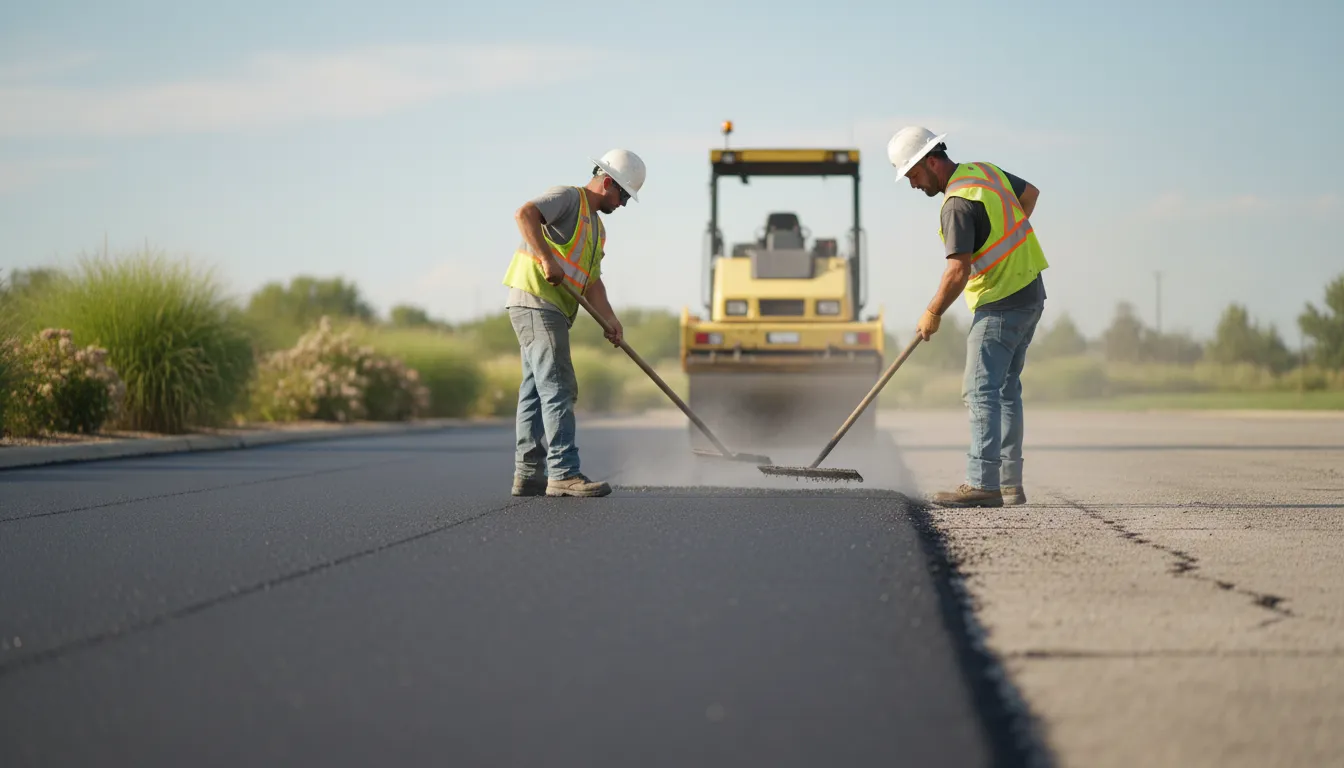
Find the Best Parking Lot Paving Contractors for Your Business
No obligation • Fast responses • Nationwide coverage

Why you can trust Tidy Parking
Tidy Parking is a leading U.S. source for parking lot maintenance services, including striping, sealcoating, sweeping, paving, resurfacing, and repairs. Our content is created independently, and providers cannot pay to influence ratings or recommendations.
Search providers near you
Top Parking Lot Paving Contractors in Westfield, Indiana Ranked
A durable, well-constructed parking lot is a critical asset for any Westfield business or property, providing a safe, professional first impression for customers and tenants. Parking lot paving is a complex construction process that involves careful planning, specialized materials, and expert installation to create a surface that can withstand Indiana's challenging climate and soil conditions. This guide explains the local paving process, common challenges, and cost considerations to help you make informed decisions for your property's pavement project.
Ox Asphalt
8070 Castleton Rd Unit 506, Indianapolis, IN 46250
Ox Asphalt is a veteran-owned company based in Indianapolis, IN, specializing in parking lot maintenance and repair services. They provide sealcoating, crack filling, line striping, pothole repair, resurfacing, and sweeping services tailored to commercial properties. Their sealcoating uses FAA-approved materials designed to protect surfaces from UV rays, water, and oil, helping asphalt last longer and look renewed. Ox Asphalt also offers precise cut-and-patch pavement restoration to extend the life of asphalt surfaces and improve their appearance.
AAA Sealcoating and Paving
5614 N Oxford St, Indianapolis, IN 46220
AAA Sealcoating and Paving is a paving company based in Indianapolis, IN, specializing in asphalt repairs and maintenance for driveways, parking lots, and roads. They provide a range of commercial asphalt services including patching, repaving, parking lot striping, and sealcoating. Their team handles asphalt crack repair, pothole fixing, and complete paving projects for commercial properties throughout Indianapolis.
Young & Sons Asphalt Paving Inc.
6280 Cozy Ln, Whitestown, IN 46075
Young & Sons Asphalt Paving Inc. is an asphalt paving company based in Indianapolis, IN, specializing in parking lot repair, maintenance, paving, resurfacing, patching, sealcoating, and striping. Serving Indianapolis, Whitestown, Boone County, and surrounding areas within a 30-mile radius, the company offers a full range of asphalt services including installation and comprehensive parking lot management. Established in 1977, Young & Sons Asphalt Paving Inc. brings over 35 years of experience to its projects, focusing on long-term maintenance and quality workmanship.
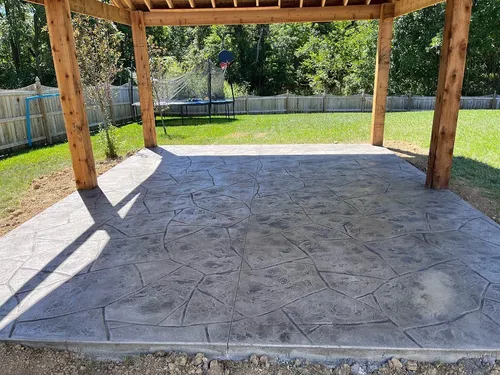
Silvers Concrete and Paving, LLC
1311 W 96th St, Indianapolis, IN 46260
Silvers Concrete and Paving, LLC is a parking lot paving contractor based in Indianapolis, IN. They provide concrete and asphalt paving services for both residential and commercial clients throughout Central Indiana, including areas like Fishers, Whitestown, Westfield, and Kokomo. The company specializes in durable concrete driveways, patios, pool decks, and asphalt installations engineered to withstand Indiana's weather conditions. With over 15 years of experience, Silvers Concrete and Paving offers a three-year structural warranty on their work and is fully insured and bonded. They also provide 24/7 availability to accommodate customer needs.
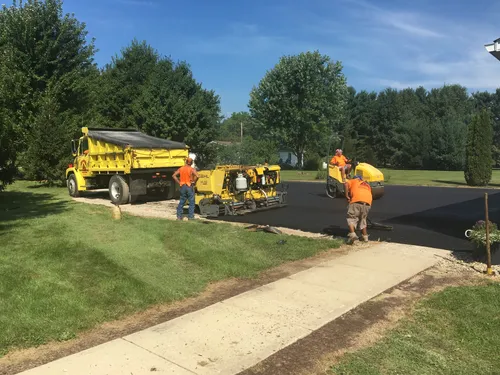
C.A.P.S. Road Materials
7195 Sheaf Ct, Plainfield, IN 46168
C.A.P.S. Road Materials is a paving contractor based in Indianapolis, IN, offering a wide range of asphalt services for residential and commercial projects. With over 30 years of experience and more than 5 million square feet of asphalt laid across Indiana, they provide comprehensive solutions including driveway paving, parking lot paving, road construction, chip seal applications, and sealcoating. The company is fully bonded and insured, serving communities throughout Indiana with proven techniques and quality materials to ensure durable and long-lasting surfaces.
Understanding the Paving Process in Westfield
Installing a new asphalt parking lot in Westfield is a multi-stage operation that goes far beyond simply laying down blacktop. A successful pavement installation requires addressing the unique subgrade conditions of Central Indiana to ensure long-term stability and performance 1.
The typical sequence for a commercial asphalt project begins with site preparation and demolition, where existing pavement, vegetation, and debris are cleared. The next, and arguably most critical step for our area, is soil stabilization. Westfield sits on a foundation of heavy, expansive clay soils that are prone to poor drainage. To combat this, contractors often use chemical modifiers like lime or cement to solidify the subgrade, preventing future shifting and sinking that can crack the pavement above 2.
Once stabilized, the site undergoes grading and drainage installation. Proper slope is engineered to direct water toward catch basins or other drainage structures. Given the region's propensity for standing water, integrating solutions like French drains or trench drains during this phase is essential for long-term pavement health 3. After grading, a thick layer of high-quality, compacted aggregate forms the base installation. This layer provides the structural support for the asphalt.
The paving phase itself involves laying a durable asphalt binder layer, followed by a smoother surface course. Each layer is meticulously compacted with heavy rollers to eliminate air pockets and create a dense, strong mat 4 5. Final steps, typically performed 6-12 months after the asphalt has cured, include sealcoating to protect against UV rays and chemical spills, and striping for traffic flow and safety.
Navigating Westfield's Unique Pavement Challenges
Two primary, interconnected factors threaten asphalt pavement in Westfield: problematic soils and water management. Understanding these challenges is key to specifying a pavement system that lasts.
Expansive Clay Soils: The clay-rich soil common in Hamilton County expands when wet and shrinks when dry. This constant movement exerts tremendous pressure on the pavement structure above, leading to settling, cracking, and base layer failure if not properly addressed during construction 6 7.
High Water Table and Poor Drainage: Clay soil naturally drains poorly, creating "swampy" conditions where water pools. A high water table can saturate the subgrade year-round. When water penetrates the asphalt and soaks the base, it can wash away the soil underneath-a process called subgrade failure. This leads to severe issues like sinkholes, potholes, and the distinctive "alligator" cracking pattern 8 9.
Clogged Drainage Systems: In autumn, leaves and debris can quickly block catch basins and drain inlets. When stormwater has nowhere to go, it stands on the pavement surface. This standing water accelerates wear and, in winter, becomes a major problem during freeze-thaw cycles.
Find the perfect parking lot paving contractors for your needs
Get personalized recommendations and expert advice
Climate Considerations for Asphalt in Indiana
Westfield's climate, with its hot, humid summers and cold, freeze-thaw winters, demands specific asphalt specifications and construction timing.
The Freeze-Thaw Cycle: This is the single greatest weather-related threat to asphalt in the Midwest. Water seeps into small cracks, freezes, and expands, forcing the crack to widen and deepen. Repeated cycles cause the pavement to heave, crack, and crumble 10.
High-Temperature Softening: Summer heat can cause standard asphalt to soften, leading to rutting and deformation under the weight of parked vehicles, especially in high-traffic areas.
To combat these forces, local paving contractors select asphalt mix designs engineered for Indiana. A high-quality hot-mix asphalt (HMA) is formulated to remain flexible in winter to resist brittle cracking while being stiff enough to resist rutting in summer 11. Furthermore, proper timing is crucial; asphalt must be placed and compacted when ambient and ground temperatures are within an ideal range (typically 50-90°F) to ensure proper density and curing 12.
Cost Factors for Parking Lot Paving Projects
Pricing for asphalt pavement installation in the Central Indiana area varies based on site conditions, material costs, project scope, and asphalt depth. The following table provides a general cost estimate per square foot for common services:
| Paving Service Type | Estimated Cost (Per Sq. Ft.) |
|---|---|
| New Installation (With proper base) | $7.00 - $13.00 |
| Full Removal & Replacement | $8.00 - $15.00 |
| Overlay (Resurfacing) | $3.00 - $7.00 |
| Sealcoating | $0.15 - $0.30 |
Several key factors influence where your project falls within these ranges:
- Base Repair: If the existing sub-base requires extensive excavation and stabilization, costs will increase significantly. However, this is a non-negotiable investment for longevity 13.
- Drainage Structures: Installing new catch basins, drain lines, or other water management systems adds to the upfront cost but dramatically reduces future maintenance and repair expenses 14 15.
- Project Scale: Larger parking lots often benefit from a lower cost per square foot due to economies of scale in material delivery and equipment use 16.
- Asphalt Thickness: Commercial lots require a thicker asphalt layer (often 3-4 inches for the surface on top of a several-inch binder and base course) than residential driveways, impacting material costs 17 18.
Maintaining Your Investment
A new asphalt pavement is a significant investment. Protecting it starts with a proactive maintenance plan. Sealcoating should be applied after the asphalt has fully cured (usually 6-12 months) and reapplied every 2-3 years. This coating shields the surface from gasoline, oil, water, and UV degradation 19. Promptly repairing cracks with a rubberized crack filler prevents water infiltration. Regularly cleaning drainage inlets, especially in fall, is a simple but critical task to prevent standing water 20. For lots experiencing minor surface issues, an asphalt overlay (resurfacing) can be a cost-effective way to extend the pavement's life for another 8-15 years before a full reconstruction is needed 21.
Frequently asked questions
Sources
Footnotes
-
Parking Lot Paving - Bi-State Asphalt Co. - https://www.bistateasphalt.com/services/parking-lot-paving/ ↩
-
Design Procedures for Soil Modification or Stabilization - IN.gov - https://www.in.gov/indot/engineering/files/Design_Procedures_for_Soil_Modification_2025.pdf ↩
-
Excavation & Drainage - Libs Paving - https://www.libspaving.com/services/excavation-drainage-services/ ↩
-
Parking Lot Paving Contractor | Indianapolis, IN - https://www.precisioncontractors.us/parking-lot-paving-contractor-indianapolis-in ↩
-
Parking Lot Paving - Hendricks County Paving - https://www.hendrickscountypaving.com/services/parking-lot-paving/ ↩
-
Clay County: County Surveyor - IN.gov - https://www.in.gov/counties/clay/county-offices/county-surveyor/ ↩
-
Expansive Soils - Indiana Foundation Service - https://www.indianafoundation.com/services/foundation-repair/causes/expansive-soils/ ↩
-
Why Standing Water is Freezing and Destroying Your Lot - https://asphaltinc.com/parking-lot-drainage-standing-water-freezing/ ↩
-
Parking Lot Drainage Repair - Signs Of Damage - https://landmarkpaving.com/parking-lot-drainage-repair-signs-of-damage/ ↩
-
Midwestern Weather and its Effects on Asphalt Pavement - https://www.libspaving.com/2020/02/14/midwestern-weather-and-its-effects-on-asphalt-pavement/ ↩
-
How Does Inclement Weather Affect My Asphalt Project? - https://bitroads.com/About-Us/Blog/entryid/96/how-does-inclement-weather-affect-my-asphalt-project ↩
-
Weather Considerations: How Climate Affects Your Asphalt Driveway - https://premierpavingmd.com/weather-considerations-how-climate-affects-your-asphalt-driveway/ ↩
-
Commercial Asphalt Paving Cost Guide: Pricing Breakdown - https://asphaltrepairsolutions.com/how-much-does-commercial-asphalt-paving-cost-a-pricing-breakdown/ ↩
-
Parking Lot Drainage Solutions: Common Drainage Issues - ACPLM - https://acplm.net/parking-lot-drainage-solutions/ ↩
-
Cost of Paving a Parking Lot - TRUEGRID Pavers - https://www.truegridpaver.com/parking-lot-construction-cost/ ↩
-
Cost to Pave a Parking Lot Price Guide [2026 Data] | Angi - https://www.angi.com/articles/cost-to-pave-parking-lot.htm ↩
-
Top Asphalt Paving Indianapolis - Expert Driveways & Parking - https://indianapolisconcretein.com/asphalt-paving-indianapolis/ ↩
-
IAPA :: Parking Lots - https://www.il-asphalt.org/asphalt-info/private-commercial/parking-lots/ ↩
-
Indiana Parking Lot Pothole Prevention and Repair Best Practices - https://www.asphaltsolutionsindy.com/indiana-parking-lot-pothole-prevention-and-repair-best-practices/ ↩
-
Parking Lot Storm Drainage Tips for Property Managers - Zoom Drain - https://www.zoomdrain.com/broward/about-us/blog/2025/june/stormwater-drainage-for-parking-lots-what-proper/ ↩
-
Asphalt Paving Cost in Indiana - HSC Pavement Maintenance - https://hscpavementmaintenance.com/asphalt-paving-cost-factors-indiana/ ↩