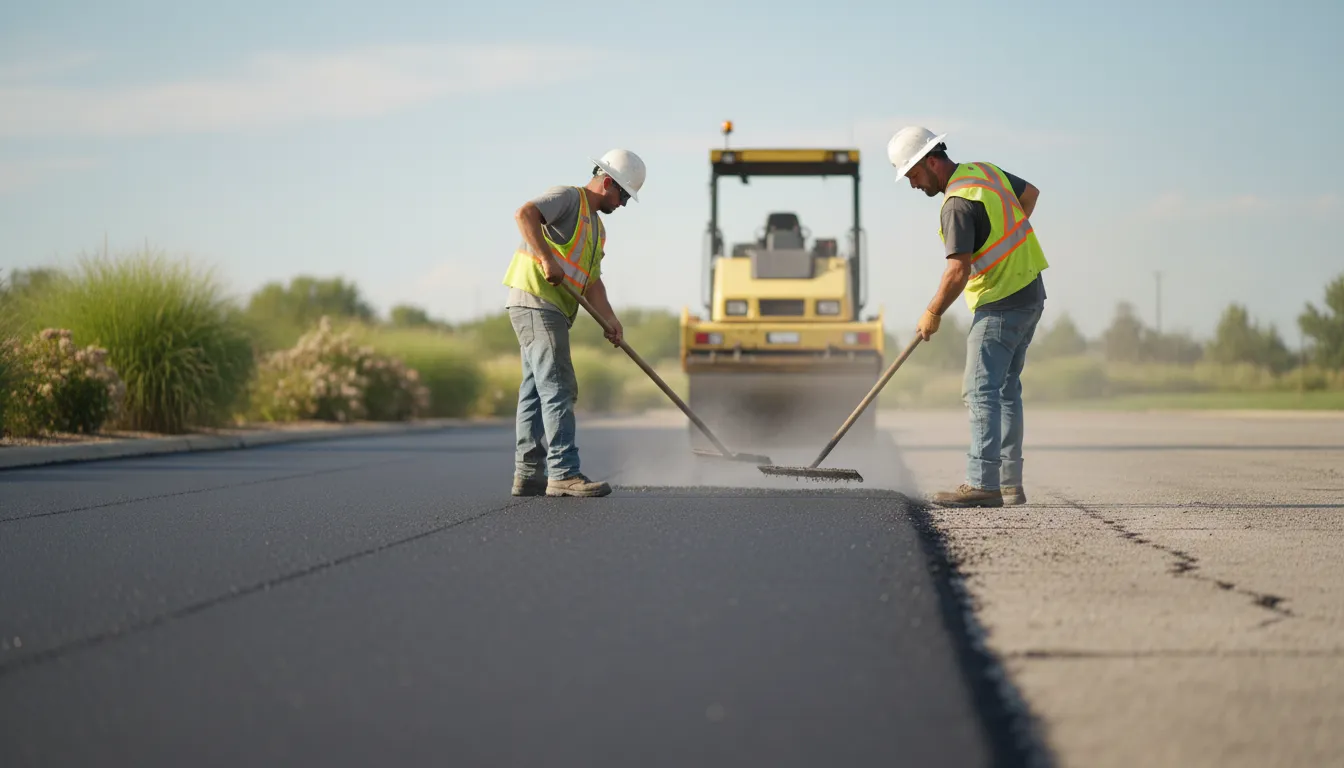
Find the Best Parking Lot Paving Contractors for Your Business
No obligation • Fast responses • Nationwide coverage

Why you can trust Tidy Parking
Tidy Parking is a leading U.S. source for parking lot maintenance services, including striping, sealcoating, sweeping, paving, resurfacing, and repairs. Our content is created independently, and providers cannot pay to influence ratings or recommendations.
Search providers near you
Top Parking Lot Paving Contractors in Des Plaines, Illinois Ranked
A well-paved parking lot is a critical asset for any Des Plaines business, providing a safe, durable, and professional first impression for customers and employees. The process of asphalt paving involves far more than simply laying down blacktop; it's a complex construction project that requires expert knowledge of local soil conditions, climate challenges, and proper engineering. This guide explains the specialized techniques needed for successful pavement installation in our area and how you can connect with qualified local contractors to ensure your project is built to last.
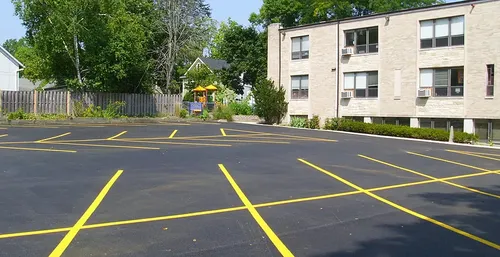
Parisi Paving & Sealing
28662 W Northwest Hwy, Barrington, IL 60010
Parisi Paving & Sealing is a parking lot paving and sealcoating company serving Chicago, IL. They offer services including driveway replacements, new paving, resurfacing, and asphalt sealing. The company emphasizes eco-friendly materials and quality repairs to extend the life of paved surfaces. With over 40 years of experience, Parisi Paving & Sealing has built a reputation for providing honest assessments and thorough project management from start to finish.
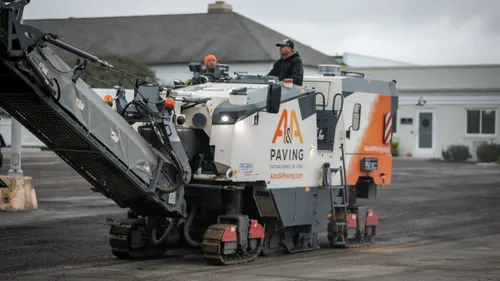
A&A Paving
251 N Garden Ave, Roselle, IL 60172
A&A Paving is a parking lot paving and repair company based in Chicago, IL. They provide services including asphalt paving, sealcoating, striping, resurfacing, and basin repair. The company is known for managing projects with clear communication and minimal disruption to business operations. A&A Paving has a history that traces back to its founder's early work in parking lot striping, growing over six decades into a well-established paving contractor. Their crews are highly trained and experienced, delivering quality workmanship across the Chicago area.
De la Rosa Paving and Sealcoating Inc.
Chicago, IL
De la Rosa Paving and Sealcoating Inc. is a parking lot paving and sealcoating company based in Chicago, IL. They provide asphalt paving, sealcoating, patching, and resurfacing services for residential and commercial properties. Their team uses quality materials and techniques to ensure durable and long-lasting pavement surfaces. De la Rosa Paving and Sealcoating Inc. also offers crack sealing and repair services to maintain and extend the life of asphalt surfaces.
Jet-Black North Shore Sealcoating, Asphalt Repair & Paving
2460 Dundee Rd #1324, Northbrook, IL 60065
Jet-Black North Shore Sealcoating, Asphalt Repair & Paving is a parking lot sealcoating and repair company serving Chicago, IL. They offer residential and commercial asphalt maintenance services including sealcoating, crack sealing, patchwork, and repairs to protect and extend the life of asphalt surfaces. Established in 1987, Jet-Black has completed over 500,000 projects nationwide and uses industrial-grade sealers and hot rubber crackfiller designed for durability and long-lasting protection.
JJ's Seal Coating & Striping Inc.
Chicago, IL
JJ's Seal Coating & Striping Inc. is a parking lot contractor based in Chicago, IL, offering services for both residential and commercial clients. They specialize in seal coating, crack filling, parking lot striping, asphalt paving, and patching to maintain and extend the lifespan of asphalt surfaces. With over 25 years of experience, the company uses premium materials and focuses on quality workmanship to deliver lasting value. Their services help improve curb appeal, safety, and organization of parking areas.
Understanding Des Plaines' Unique Paving Challenges
Successful parking lot construction in Des Plaines isn't a one-size-fits-all operation. The local environment presents specific, significant challenges that must be addressed during the design and installation phases to avoid premature failure and costly repairs.
Clay Soils and Frost Heave: Northern Illinois is known for its heavy clay soils, which are particularly problematic for pavement. Clay retains water like a sponge. During our cold winters, this trapped water freezes and expands by approximately 9%, creating upward pressure known as "frost heave." 1 This force can lift and crack even newly laid asphalt, leading to an uneven and unsafe surface.
Severe Freeze-Thaw Cycles: The Midwest climate subjects asphalt to dramatic temperature swings. These repeated freeze-thaw cycles cause the pavement material to constantly expand and contract. If the asphalt mix isn't formulated for flexibility or the base isn't stable, this stress results in extensive cracking.
High Water Tables and Drainage: Des Plaines' proximity to rivers and its generally flat topography can lead to high water tables and poor natural drainage. Standing water is the enemy of asphalt, as it slowly erodes the binder that holds the aggregate together, leading to raveling, alligator cracking, and potholes. 2 Proper slope and drainage systems are not optional extras here; they are fundamental requirements.
The Step-by-Step Process for Durable Asphalt Installation
To combat these local challenges, a meticulous, multi-stage construction process is essential. Cutting corners on any step can compromise the entire pavement's lifespan.
1. Site Preparation and Excavation: The project begins with clearing the site and removing any existing pavement or vegetation. Excavation then goes down to a stable subgrade. In many Des Plaines locations, this means removing unstable, organic topsoil and wet clay to reach a more compactible soil layer. 3
2. Soil Stabilization: This is a critical step for our clay-rich soil. The exposed subgrade is often treated with additives like lime or cement kiln dust. These materials chemically react with the clay to reduce its plasticity and water retention, creating a firm, stable platform that resists shifting and frost heave. 4 Proper compaction of this layer is also vital.
3. Aggregate Base Installation: On top of the stabilized subgrade, a thick layer of crushed stone aggregate is installed. This base course acts as the load-bearing foundation, distributing the weight of vehicles to prevent the asphalt from flexing and cracking. In Des Plaines, a base of 6 inches or more is common to ensure longevity. This layer must also be meticulously graded and compacted.
4. Binder Course Application: The first layer of hot-mix asphalt (HMA) applied is called the binder course. This layer, typically 1.5 to 2.5 inches thick, consists of a coarser, more durable asphalt mix designed for strength and stability. It forms the structural backbone of the parking lot surface. 5
5. Surface Course Finish: The final layer is the surface course or wear course. This 1.5-inch top layer uses a finer aggregate mix for a smooth, tight finish. It is designed to be durable against traffic wear, fuel spills, and UV radiation while providing proper skid resistance.
6. Drainage and Final Grading: Throughout the process, but finalized after paving, the surface must be graded to ensure positive drainage. A minimum slope of 2% (and often 4% near buildings) is required to direct water toward drains, catch basins, or landscaped areas. 6 7 Installing adequate drainage infrastructure is a non-negotiable part of a Des Plaines paving project to manage the region's precipitation and water table issues. 8
Find the perfect parking lot paving contractors for your needs
Get personalized recommendations and expert advice
Asphalt Pavement Solutions for Local Conditions
Given the environmental pressures, selecting the right materials and strategies is key. Local paving experts use specific approaches to maximize pavement life in our climate.
Hot-Mix Asphalt (HMA): This is the standard and recommended material for commercial parking lots. The mix is produced at high temperatures, which allows for better compaction and a denser, more waterproof final surface. The specific aggregate gradation and asphalt binder used can be tailored for flexibility to withstand temperature swings. 9 10
The Importance of Sealcoating: While not part of initial paving, a regular sealcoating schedule is the best defense for your investment. Applied every 2-3 years, sealcoat acts as a sunscreen and raincoat for your asphalt. It blocks UV rays that cause oxidation and brittleness, and it seals small cracks to prevent water infiltration into the base layers. 11 12
Addressing Edge Failure: A common issue in suburban parking lots is edge damage, where the pavement crumbles at the perimeter. This is often caused by water pooling along uncontained edges. Solutions include installing concrete curbs, ribbon curbs, or heavy-duty catch basins to contain the asphalt and channel water away. 13
Cost Considerations for Parking Lot Construction
The cost of a new asphalt parking lot in Des Plaines can vary widely based on the project's scope and specific site conditions. Understanding the factors involved helps in planning and budgeting.
Primary Cost Factors: The biggest variables are the size of the lot, the amount of site preparation needed (especially soil stabilization for clay), and the complexity of drainage work. Projects requiring extensive excavation, soil remediation, or new drain piping will be at the higher end of the scale.
Commercial Paving Cost Range: For a full-depth reconstruction with proper base and asphalt layers, commercial paving projects typically range from $2.75 to $5.50 per square foot. 14 15 16 Resurfacing an existing, stable lot (adding new asphalt over the old) is a lower-cost alternative, while a full excavation and rebuild is the most comprehensive and expensive option.
Long-Term Value: While initial costs are important, the true value lies in a properly engineered installation. A lot built with a stabilized base and excellent drainage can have a lifespan of 15-25 years with proper maintenance, whereas a shortcut job on unstable soil may fail in just a few years, leading to higher long-term costs.
Choosing the Right Contractor for Your Project
Given the technical demands, selecting a contractor with specific local experience is crucial. Look for a company that understands the need for soil stabilization and prioritizes drainage in their design. They should be able to explain their process for combating frost heave and use high-quality, locally sourced hot-mix asphalt. Always ask for references for similar commercial projects in the Des Plaines area and verify they are licensed and insured.
Frequently asked questions
Sources
Footnotes
-
How Illinois Winters Destroy Driveways and What You Can Do About It - https://totalpaving.com/winter-asphalt-driveway-repairs/ ↩
-
The Impact of Poor Drainage on Asphalt Parking Lot Longevity - https://www.bonnessinc.com/the-impact-of-poor-drainage-on-asphalt-parking-lot-longevity/ ↩
-
Site Excavation - Rabine Paving - https://rabinepaving.com/pavement-services/excavation/ ↩
-
Asphalt/Paving - Martin & Company - http://www.martincoinc.net/asphalt ↩
-
Parking Lot Paving | Top Grade Paving - https://topgradepaving.com/parking-lot-paving/ ↩
-
Landscape Drainage for Homeowners - Illinois Extension - https://extension.illinois.edu/blogs/good-growing/2020-02-12-landscape-drainage-homeowners ↩
-
Parking Lot Paving Services - https://landmarkpavingandmasonry.com/parking-lot-paving-services/ ↩
-
The Methods Of Chicago Parking Lot Drainage Contractors - https://blackhawkpaving.com/the-methods-of-chicago-parking-lot-drainage-contractors/ ↩
-
Parking Lot Paving With Elite Paving - https://www.elitepavingil.com/services/parking-lot-paving/ ↩
-
IAPA :: Parking Lots - Illinois Asphalt Pavement Association - https://www.il-asphalt.org/asphalt-info/private-commercial/parking-lots/ ↩
-
Effect Of The Seasons On Asphalt Parking Lots - https://standardpaving.com/effect-of-the-seasons-on-asphalt-parking-lots/ ↩
-
How Weather Affects Parking Lot Surfaces - https://ottospm.com/how-weather-affects-parking-lot-surfaces/ ↩
-
How Serious Are Asphalt Parking Lot Drainage Issues? - https://blackhawkpaving.com/how-asphalt-parking-lot-drainage-issues/ ↩
-
How Much Does Parking Lot Paving Cost in 2025? - Eli's Paving - https://elispaving.com/how-much-does-parking-lot-paving-cost-in-2025/ ↩
-
Everything You Need To Know About Paving a Parking Lot - Elite Asphalt - https://eliteasphalt.net/paving-a-parking-lot/ ↩
-
What is the Typical Life Cycle of an Asphalt Parking Lot? - https://www.superioraggregates.net/what-is-the-typical-life-cycle-of-an-asphalt-parking-lot/ ↩