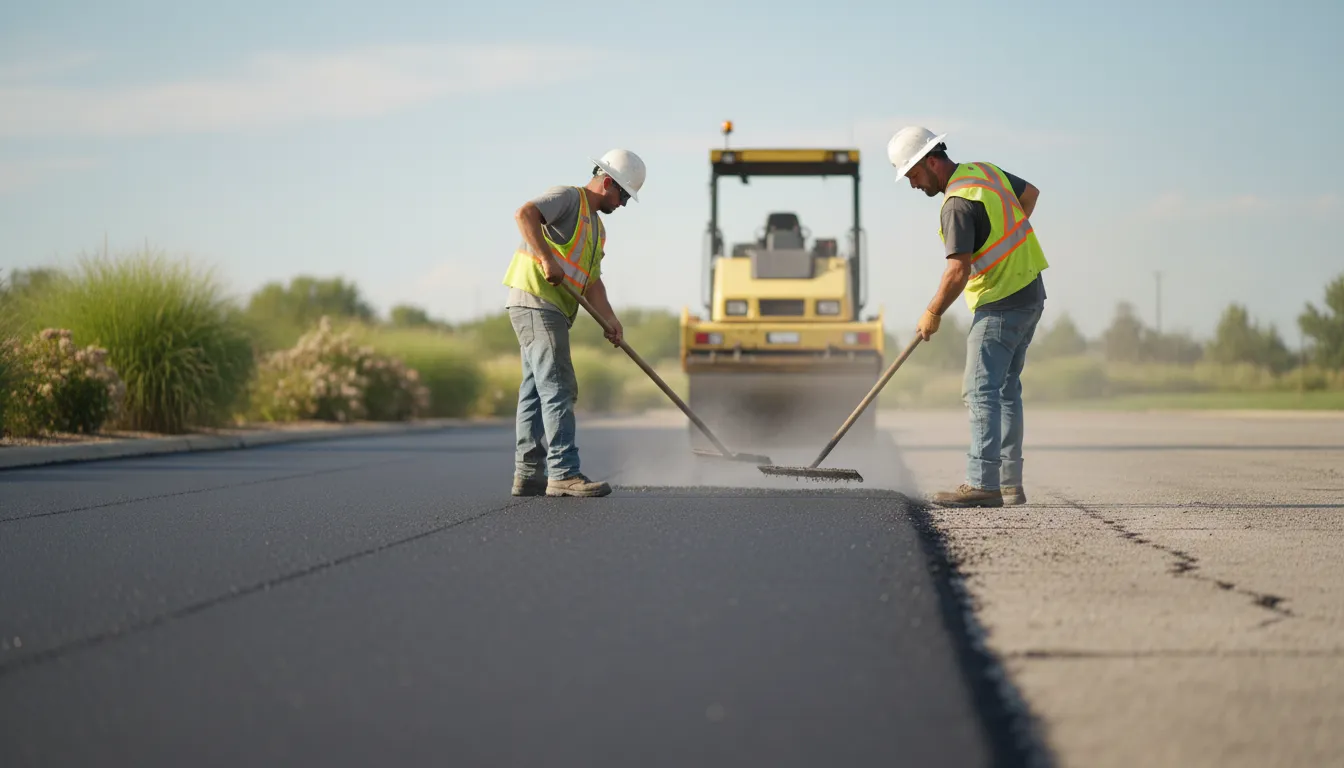
Find the Best Parking Lot Paving Contractors for Your Business
No obligation • Fast responses • Nationwide coverage
Why you can trust Tidy Parking
Tidy Parking is a leading U.S. source for parking lot maintenance services, including striping, sealcoating, sweeping, paving, resurfacing, and repairs. Our content is created independently, and providers cannot pay to influence ratings or recommendations.
Search providers near you
Best Parking Lot Paving Contractors in Idaho Ranked
A well-paved parking lot is a critical asset for any Idaho business, providing a safe, durable, and professional first impression for customers. However, the state's unique climate and strict construction standards make parking lot paving a specialized task. This guide explains the key considerations, from Idaho-specific materials and weather challenges to local regulations and costs, helping you understand what goes into a successful project and how to connect with qualified local paving professionals.
Pro Paving LLC
5575 W Summerview Ln, Nampa, ID 83687
Pro Paving LLC is a family-owned paving company serving Boise, ID, with over 24 years of experience. They specialize in asphalt services including parking lot striping, sealcoating, paving, resurfacing, and repairs. Their expertise also covers excavation, grading, drainage systems, and custom driveway design. Pro Paving LLC is known for chip sealing, patching, and winter patching services, working directly with owners to manage projects of various sizes.
Boise Asphalt Creations
4062 W Dorian St, Boise, ID 83705
Boise Asphalt Creations is an asphalt contractor based in Boise, ID, specializing in residential driveways, commercial parking lots, and maintenance services. They offer comprehensive asphalt solutions including paving, patching, striping, sealcoating, and driveway installation. With many years of experience, the company emphasizes attention to detail and uses high-quality materials and techniques to ensure durable and long-lasting pavement. Boise Asphalt Creations is licensed, insured, and bonded, providing protection and reliability for their clients.
Delta Paving
3597 E Monarch Sky Ln Suite 240, Meridian, ID 83646
Delta Paving is a parking lot paving and repair company based in Boise, ID, serving Meridian and the surrounding areas. They provide commercial and residential asphalt paving services, including parking lot striping, resurfacing, and maintenance. The company uses advanced techniques such as infrared asphalt repair to deliver durable and eco-friendly paving solutions. With over 35 years of experience, Delta Paving offers custom designs and comprehensive maintenance plans to enhance the longevity and appearance of paved surfaces.
Atlas Asphalt
6168 W View Point Dr, Meridian, ID 83642
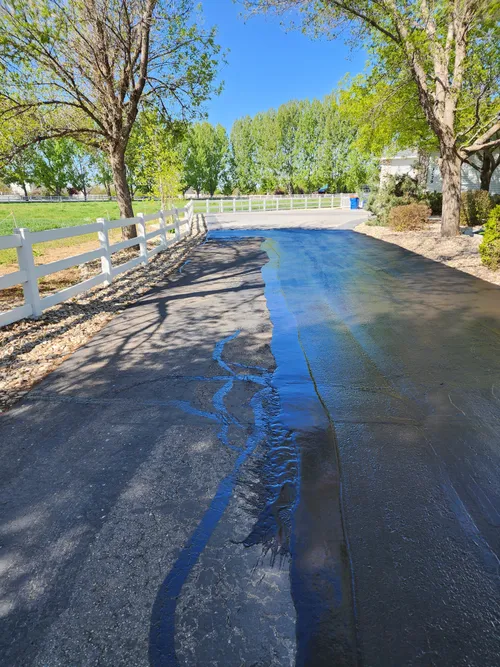
Atlas Asphalt is a parking lot paving and repair contractor based in Boise, ID. They offer asphalt maintenance and new installation services, applying their experience and expertise to meet client needs. The company focuses on delivering reliable and efficient asphalt solutions in the Boise area.
DW Paving
Boise, ID
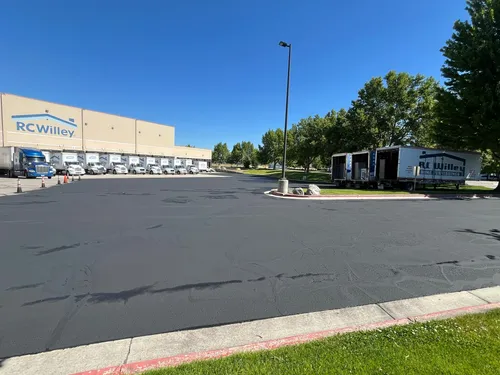
DW Paving is a parking lot paving contractor based in Boise, ID. The company offers paving services with a focus on quality workmanship. With over 20 years of experience, DW Paving brings extensive knowledge to its projects, ensuring durable and well-executed paving solutions.
Idaho's Climate and Its Impact on Asphalt
Idaho's environment presents distinct challenges for asphalt pavement. The most significant factor is the state's extreme temperature fluctuations, which drive a relentless freeze-thaw cycle. Water seeps into tiny cracks, freezes and expands, then thaws, repeatedly stressing the asphalt and leading to cracking and pothole formation. This makes proper construction and timely maintenance non-negotiable.
Beyond freeze-thaw, other climatic factors include:
- Temperature Restrictions for Paving: Asphalt must be placed when ambient and ground temperatures are typically above 40°F-50°F and rising to ensure it remains workable and can be compacted to the required density. Paving outside this window risks premature failure.
- Heavy Snow Loads: Parking lot designs must account for the weight of accumulated snow and the repeated passage of snowplows, requiring a robust structural design.
- UV Exposure: High-altitude areas in Idaho experience intense sunlight, which can oxidize and embrittle asphalt binder over time, making the surface more prone to cracking 1.
- Deicing Chemicals: Salts and other deicers used for winter maintenance can accelerate corrosion of the asphalt surface and sub-base if drainage is inadequate 2.
Idaho Paving Standards and Material Specifications
Idaho follows rigorous standards, often referencing the Idaho Standards for Public Works Construction and Idaho Transportation Department (ITD) specifications, which are commonly adopted by local municipalities for commercial projects.
Key Asphalt Mixes:
- Superpave HMA: The ITD emphasizes Superpave Hot Mix Asphalt (HMA), an advanced mix design method. The specific grade (e.g., SP 2, SP 3, SP 5) is selected based on traffic volume and load, with higher gyration levels for heavier traffic 3 4.
- Surface Course (Type D): This mix is typically specified for the final wearing surface of parking lots, providing a smooth, dense, and weather-resistant finish.
- Anti-Stripping Additives: Idaho specifications often require additives like lime or liquid anti-stripping agents in the asphalt mix. These are crucial for preventing moisture damage, where water separates the asphalt binder from the aggregate, a common failure point 5.
- Recycled Asphalt Pavement (RAP): Using RAP is generally allowed and environmentally friendly, but Idaho practices often limit it to 30-35% in new mixes for parking lots due to concerns about increased stiffness and potential for reflective cracking 6.
The Critical Role of Base Preparation
A durable parking lot is built from the ground up. The asphalt surface is only as good as the foundation it rests on. In Idaho, proper base construction is paramount to withstand freeze-thaw cycles and heavy loads.
- Base Material: A minimum of 6 inches of 3/4-inch crushed rock (base course) is a standard starting point for commercial parking lots. For areas expecting truck traffic or heavy loads, 8 to 12 inches or more may be necessary.
- Compaction: The base material must be thoroughly compacted in layers (lifts) to achieve a firm, unyielding platform. Inadequate compaction is a leading cause of asphalt settlement and cracking 7 8.
- Subgrade & Moisture: The native soil (subgrade) must be stable and properly graded. Construction should not proceed if the subgrade is overly wet, as moisture trapped under the compacted base can lead to future failure.
Drainage and Slope Requirements
Managing water is the single most effective way to extend the life of an asphalt parking lot in Idaho. Standing water accelerates damage from freeze-thaw cycles and deicing chemicals.
- Minimum Slope: A cross-slope of at least 1.5% (a 1.5-foot fall per 100 feet) is recommended to ensure water flows off the pavement surface efficiently.
- Stormwater Compliance: Projects must adhere to local municipal stormwater management codes. This often involves designing systems to capture and slowly release runoff on-site, which may include curbs, gutters, catch basins, and even retention ponds 9 10.
- Water Testing: Before final acceptance, many jurisdictions require that the finished parking lot be water-tested to prove it drains properly without creating puddles.
Find the perfect parking lot paving contractors for your needs
Get personalized recommendations and expert advice
Parking Lot Design and Layout Standards
Beyond the pavement itself, the layout must meet functional and legal requirements. Local city codes, such as those in Sandpoint, provide detailed regulations 11.
- Stall Dimensions: A standard parking stall is typically 9 feet wide by 18 feet deep. For high-turnover areas like retail centers, 10 feet by 20 feet stalls may be specified for easier access.
- Aisle Width: Two-way traffic aisles usually require a minimum width of 24 feet.
- ADA Compliance: Federal and state ADA (Americans with Disabilities Act) requirements are mandatory. This includes a specific number of accessible stalls (often 1 in every 25), van-accessible stalls, proper slope (max 2.0%), and clearly marked access aisles 12.
Understanding Costs for Parking Lot Paving in Idaho
Costs are highly variable and depend on project scope, location (Boise vs. rural), site conditions, and current material prices. The following ranges provide a general estimate:
- Resurfacing (Overlay): For an existing lot in sound structural condition needing a new surface layer (typically 2 inches), costs can range from $2.50 to $4.00 per square foot 13 14. This is a lower-cost option that addresses surface wear.
- Full-Depth Reconstruction: A new parking lot requiring excavation, grading, a full crushed rock base, and new asphalt pavement represents a larger investment. Prices for this comprehensive work are higher per square foot due to the increased material and labor 15.
- Key Cost Factors:
- Site Excavation & Grading: Rocky or uneven sites require more preparation.
- Drainage Infrastructure: Adding catch basins, pipes, or retention structures adds cost.
- Asphalt Thickness: Thicker asphalt (e.g., 3+ inches) for heavy-duty areas increases material costs.
- Accessibility Upgrades: Meeting ADA standards may involve additional signage, striping, and curb ramp installation.
Optimal Timing and Planning for Your Project
Planning your paving project around Idaho's seasons is crucial for quality and longevity.
- Prime Paving Season: The ideal window for asphalt paving runs from late spring through early fall, when consistent daytime temperatures are above 50°F. This ensures the mix stays hot enough for proper placement and compaction.
- Winter Considerations: While cold mix asphalt can be used for emergency pothole repairs in winter, it is a temporary solution. Full-depth paving or resurfacing should not be attempted in cold weather, as the asphalt will not compact properly and will fail quickly 16.
- Planning Checklist: Secure permits, finalize designs, and schedule contractors well in advance of the paving season to ensure availability.
Summary Checklist for Idaho Parking Lot Paving
| Component | Standard Requirement / Guideline |
|---|---|
| Surface Course | Minimum 2-3 inches of Superpave HMA (Type D) with anti-stripping additive 17. |
| Base Course | Minimum 6-8 inches of 3/4" crushed rock, compacted in layers 18. |
| Drainage Slope | Minimum 1.5% cross-slope to prevent standing water 19 20. |
| Optimal Paving Window | Late Spring to Early Fall (consistent air temps above 50°F) 21. |
| Standard Stall Size | 9' x 18' (standard) to 10' x 20' (high turnover). |
| Key Regulation | Compliance with local codes, ITD specs, and ADA requirements. |
Frequently asked questions
Sources
Footnotes
-
Weather and Environmental Breakdown of Parking Lot Pavement - https://buckbros.com/blog/environmental-breakdown-of-parking-lot-pavement/ ↩
-
Effect Of The Seasons On Asphalt Parking Lots - https://standardpaving.com/effect-of-the-seasons-on-asphalt-parking-lots/ ↩
-
2021 SP 405 HMA - Idaho Transportation Department - https://apps.itd.idaho.gov/Apps/manuals/SpecBook/2021_SP_405_HMA.pdf ↩
-
2024 Special Provision for 405 Superpave Hot Mix Asphalt ... - https://apps.itd.idaho.gov/Apps/manuals/SpecBook/2024_SP_405_HMA_2023_Spec_Book.pdf ↩
-
2020 SP 405 HMA - 07/21/2020 - Idaho Transportation Department - https://apps.itd.idaho.gov/Apps/manuals/SpecBook/2020_SP_405_HMA.pdf ↩
-
Developing Recommendations for Allowable RAP Contents in Idaho ... - https://apps.itd.idaho.gov/apps/research/Completed/RP269.pdf ↩
-
CONSTRUCTION SURFACE COURSES AND PAVEMENT 400 - https://apps.itd.idaho.gov/apps/manuals/ca/ca400-surface_pavement.pdf ↩
-
Base for Asphalt Driveway: Why a Strong Foundation Matters - https://www.joemcasphaltservices.com/base-for-asphalt-driveway/ ↩
-
Supplemental Material and Excavation Requirements For Permits in ... - https://apps.itd.idaho.gov/Apps/FormFinder2DMZ/Home/OpenLink?formnumber=2105 ↩
-
pavement notes - City of Rathdrum, Idaho - https://www.rathdrum.gov/docview.aspx?docid=52896 ↩
-
CHAPTER 5 OFF-STREET PARKING AND LOADING FACILITIES - https://www.sandpointidaho.gov/media/15016 ↩
-
ADA Parking Lot Requirements in Idaho: What You Need to Know - https://www.rmserviceco.com/ada-parking-lot-requirements-in-idaho-what-you-need-to-know/ ↩
-
Things to Consider Before Paving an Asphalt Parking Lot - https://bitroads.com/About-Us/Blog/entryid/35/things-to-consider-before-paving-an-asphalt-parking-lot ↩
-
How Much Does It Cost to Pave a Parking Lot in NJ? (2025 Guide) - https://www.fixasphalt.com/blog/how-much-does-it-cost-to-pave-a-parking-lot-in-nj-2025-guide ↩
-
Parking Lot Paving - Cost per Square Foot - https://www.topwestasphalt.com/what-is-the-asphalt-cost-per-square-foot-for-a-parking-lot/ ↩
-
Keeping Your Asphalt Business Profitable in the Winter - https://pavementnetwork.com/keeping-your-asphalt-business-profitable-in-the-winter/ ↩
-
Applications and Depths for Type-B and Type-D Hot Mix Asphalt - https://texpaveexperts.com/blog/applications-and-depths-for-type-b-and-type-d-hot-mix-asphalt/ ↩
-
The Essential Guide To Asphalt Thickness For Parking Lots - https://www.royalpavementsolutions.com/the-essential-guide-to-asphalt-thickness-for-parking-lots/ ↩
-
CHAPTER 5 OFF-STREET PARKING AND LOADING ... - https://www.sandpointidaho.gov/media/14611 ↩
-
Drainage and Asphalt - https://suburbanasphalt.com/drainage-and-asphalt/ ↩
-
Can Asphalt Paving Be Done In Cold Weather? - https://enroadspaving.com/resource/can-asphalt-paving-be-done-in-cold-weather/ ↩