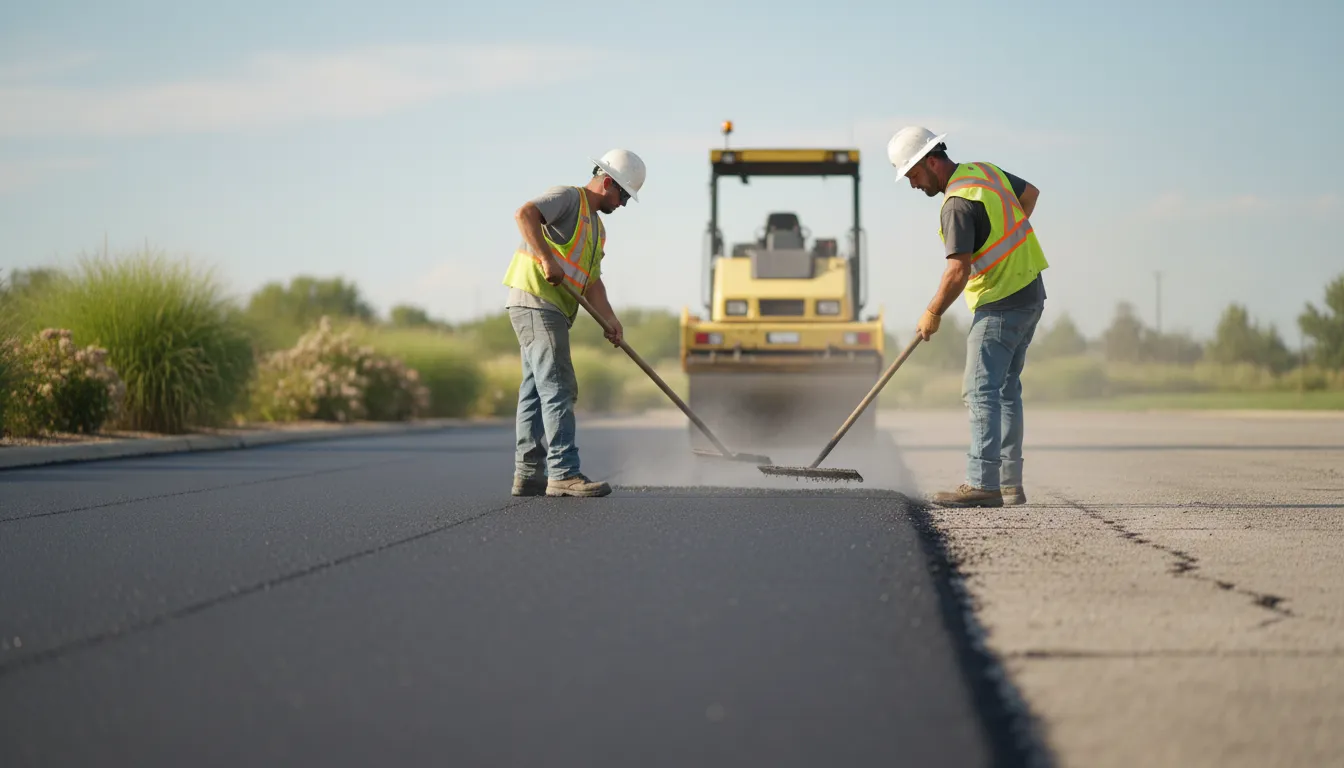
Find the Best Parking Lot Paving Contractors for Your Business
No obligation • Fast responses • Nationwide coverage

Why you can trust Tidy Parking
Tidy Parking is a leading U.S. source for parking lot maintenance services, including striping, sealcoating, sweeping, paving, resurfacing, and repairs. Our content is created independently, and providers cannot pay to influence ratings or recommendations.
Search providers near you
Best Parking Lot Paving Contractors in Hawaii Ranked
A well-paved parking lot is a critical asset for any business or property in Hawaii, providing a safe, durable, and professional first impression. Given the islands' unique climate-characterizing by high humidity, intense UV exposure, and significant rainfall-proper asphalt installation is not just about aesthetics; it's about engineering a surface that can withstand environmental challenges for years. This guide explains the essential considerations for parking lot pavement in Hawaii, from design and materials to construction best practices, helping you make informed decisions when evaluating local paving professionals for your project.

Road Builders Corporation
2836 Awaawaloa St, Honolulu, HI 96819
Road Builders Corporation is a woman-owned, Native Hawaiian-owned asphalt paving contractor based in Honolulu, HI. Since 1986, they have provided paving services for military, commercial, industrial, and residential projects across Hawaii. Their work includes airfields, harbors, bridges, roadways, parking lots, and play courts. The company is fully bonded and insured, serving a wide range of sectors including federal, state, city, and private clients.
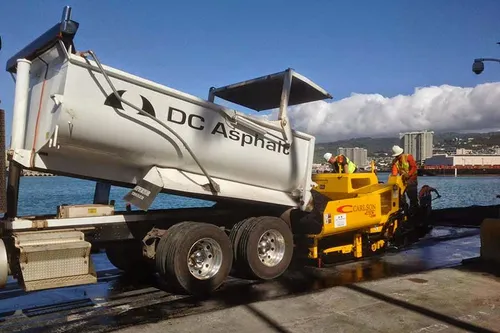
DC Asphalt Services Inc
91-315 Kaiholo St, Kapolei, HI 96707
DC Asphalt Services Inc is a full-service asphalt paving contractor based in Honolulu, HI. They provide a wide range of paving services including sealcoating, paving, and repair for parking lots across Honolulu, Oahu, and all of Hawaii. Known as Hawaii's original pavement maintenance experts, they offer comprehensive solutions tailored to each project's needs, including crack filling and scheduled maintenance programs to extend pavement life.
Grace Pacific LLC
949 Kamokila Blvd # 200, Kapolei, HI 96707
Grace Pacific LLC is a paving contractor based in Honolulu, HI, specializing in parking lot sealcoating and paving services. Serving the Hawaiian Islands, the company offers a broad range of construction-related materials and services, including asphalt paving for roads, airport runways, harbor facilities, and parking lots. Grace Pacific operates quarries and asphalt plants, enabling them to supply quality materials and perform large-scale projects that meet state highway standards. With over 75 years of experience since the 1930s, the company has contributed to many infrastructure developments across Hawaii.
Alakona Corporation
2906 Kaihikapu St, Honolulu, HI 96819
Alakona Corporation is a licensed asphalt paving and maintenance contractor based in Honolulu, HI. Serving commercial, industrial, government, and residential clients on Oahu and the neighbor islands, they offer a wide range of services including asphalt paving, cold milling, overlay, seal coating, crack filling, and pavement repairs. The company also operates an aggregate crushing plant that recycles asphalt, coral, and concrete for use in projects. Established in 1982, Alakona has decades of experience and is known for handling emergency repairs within 72 hours.
Seal Pro's Hawaii
1019 Waimanu St # 207, Honolulu, HI 96814
Seal Pro's Hawaii is a parking lot striping, sealcoating, paving, and repair company based in Honolulu, HI. They offer a range of asphalt services including paving driveways and roadways, applying sealcoating to protect asphalt surfaces, striping parking lots, and performing asphalt repairs to extend pavement life. The company also provides civil construction services such as site development, drainage systems, and earthwork. Seal Pro's Hawaii uses quality tools and machinery to ensure effective results and emphasizes proper asphalt maintenance to prevent costly replacements. Their team consists of dedicated professionals focused on delivering consistent workmanship.
Why Hawaii's Climate Demands Specialized Paving
The tropical environment presents specific challenges that directly impact pavement performance. High annual rainfall requires exceptional drainage to prevent water from pooling and weakening the pavement's foundation, or subgrade 1. Simultaneously, constant humidity and powerful sun can accelerate the oxidation and aging of asphalt binder if the wrong mix is used. A paving project that ignores these factors is likely to experience premature failures like cracking, rutting, and potholes, leading to costly repairs. Successful parking lot construction here prioritizes water management and uses materials formulated for durability in moist, hot conditions.
Core Design Priorities: Drainage and Slope
In Hawaii, managing water is the foremost design objective. The primary goal is to move rainwater off the pavement surface quickly and efficiently.
- Minimum Slope Requirements: Industry guidelines for Hawaii specify that parking lot pavements should have a minimum slope of 2% (approximately 1/4 inch per foot) to ensure adequate runoff 2. In areas where precise grading is difficult, such as around drains or where asphalt must be placed by hand, a steeper slope of 4% is recommended 2.
- Crown and Directional Flow: Lots are typically designed with a crown (high point in the center) to shed water toward the edges or with a consistent directional slope toward drains or landscaped areas.
- Subsurface Drainage: In some cases, especially where the natural soil has poor permeability, incorporating subsurface drainage systems like perforated pipes or a layer of open-graded base material may be necessary to prevent water from being trapped beneath the pavement.
Selecting the Right Asphalt Mix for Hawaii
The asphalt mix itself must be tailored to local conditions. Hot Mix Asphalt (HMA) is the standard, but not all HMA is the same. Hawaii has specific mix designs to address its climate.
- Standard Surface Mixes: For the final, smooth driving surface, fine-graded mixes are used. Common specified mixes include State Mix 5 or City & County Mix 4. These mixes provide a tight, durable surface that resists wear and water infiltration.
- Structural Base Course: Beneath the surface layer, a structural base course provides strength. This often uses a Hot Mix Asphalt Base (HMAB) with a larger nominal maximum aggregate size (e.g., 1 inch) to create a stable platform 3.
- Binder Considerations: The asphalt binder (the "glue" that holds the rock together) must be selected to resist softening in heat and hardening from oxidation. In high-traffic areas or locations with heavy vehicle loads, a stiffer performance-graded (PG) binder may be specified to prevent rutting 4 5.
- Porous Asphalt Option: For projects with stringent stormwater management goals, porous asphalt is an excellent option. This special mix allows water to drain directly through the pavement into a stone reservoir below, reducing runoff and recharging groundwater 6.
Critical Construction Steps: Base Preparation
A perfect asphalt mix will fail if placed on a poor foundation. Proper base preparation is non-negotiable in Hawaii.
- Subgrade Compaction: The native soil must be thoroughly compacted to a high density to provide uniform support. Weak, unstable soils may require stabilization with additives like lime, Portland cement, or emulsified asphalt.
- Subbase Installation: A layer of graded aggregate (gravel or crushed rock) is placed and compacted over the subgrade. This layer is vital for three reasons: it provides additional structural support, aids in drainage, and creates a stable platform for the asphalt layers 7.
- Grading: The subbase must be graded to the precise slopes and elevations specified in the design to ensure the final pavement drains correctly.
Find the perfect parking lot paving contractors for your needs
Get personalized recommendations and expert advice
Compliance and Best Practices
Adhering to local standards is crucial for long-term performance. Paving mixes and construction methods should comply with Section 401 of the Hawaii Standard Specifications for Road and Bridge Construction. Furthermore, experienced contractors will follow additional best practices:
- Accounting for Wet Conditions: In areas with very high water tables or poor drainage, designers may specify a thicker overall pavement section to compensate for potential subgrade softening 8.
- Timing and Weather: Asphalt should be placed during dry weather. Placing hot mix on a wet base or in the rain compromises the bond and density.
- Compaction: Immediate and proper compaction of the hot asphalt is critical to achieve the required density, which prevents water and air intrusion and ensures durability.
Understanding Project Scope and Considerations
The approach to paving depends heavily on your project's specific needs.
- New Construction: This involves full excavation, subgrade preparation, installation of a thick aggregate base, and placement of multiple asphalt layers. It's the most comprehensive and costly option but results in a brand-new, warrantable asset.
- Resurfacing (Overlay): If the existing pavement is structurally sound but worn, a new layer of asphalt (typically 1.5 to 2 inches thick) can be placed over it. Proper preparation includes repairing all cracks and potholes and milling the surface to ensure proper bonding and drainage.
- Repairs and Maintenance: Targeted repair of distressed areas, followed by sealcoating, is essential for extending pavement life. In Hawaii, regular crack sealing is particularly important to prevent water from penetrating the base.
When planning your project, factors like the lot's size, traffic patterns (including any heavy delivery vehicles or buses), and the site's specific drainage challenges will all influence the final design and cost. Obtaining detailed quotes from qualified local contractors who understand these Hawaii-specific requirements is the best path to a successful, long-lasting parking lot.
Frequently asked questions
Sources
Footnotes
-
Asphalt Parking Lots: Asphalt Mixes And Subgrade - https://goodmansonconstruction.com/parking-lots-asphalt-mixes-subgrade/ ↩
-
Parking Lots - Hawaii Asphalt Paving Industry - http://hawaiiasphalt.org/guide/modules/02_design_catalog/02_parking_lots.htm ↩ ↩2
-
Standard Hawai'i HMA Mixes - Hawaii Asphalt Paving Industry - http://hawaiiasphalt.org/guide/modules/04_pavement_types/04_standard_hawaii_mixes.htm ↩
-
Parking Lots Paving - Hot Mix Asphalt (HMA) Recommendations - https://www.wsbeng.com/parking-lots-paving-hot-mix-asphalt-hma-recommendations/ ↩
-
Asphalt Lot Paving in HOA: Costs, Maintenance and Tips | HHM - https://hillcrestmgmt.com/asphalt-lot-paving-in-hoa/ ↩
-
Asphalt Options - DC Asphalt Services - Honolulu - https://www.dcasphaltservices.com/asphalt-options/ ↩
-
Surface Preparation - Hawaii Asphalt Paving Industry - http://hawaiiasphalt.org/guide/modules/09_construction/09_surface_preparation.htm ↩
-
PAVEMENT DESIGN MANUAL - Hawaii Department of Transportation - https://hidot.hawaii.gov/highways/files/2013/01/hwy_l-HWY-Pavmenent-Design-Manual.pdf ↩