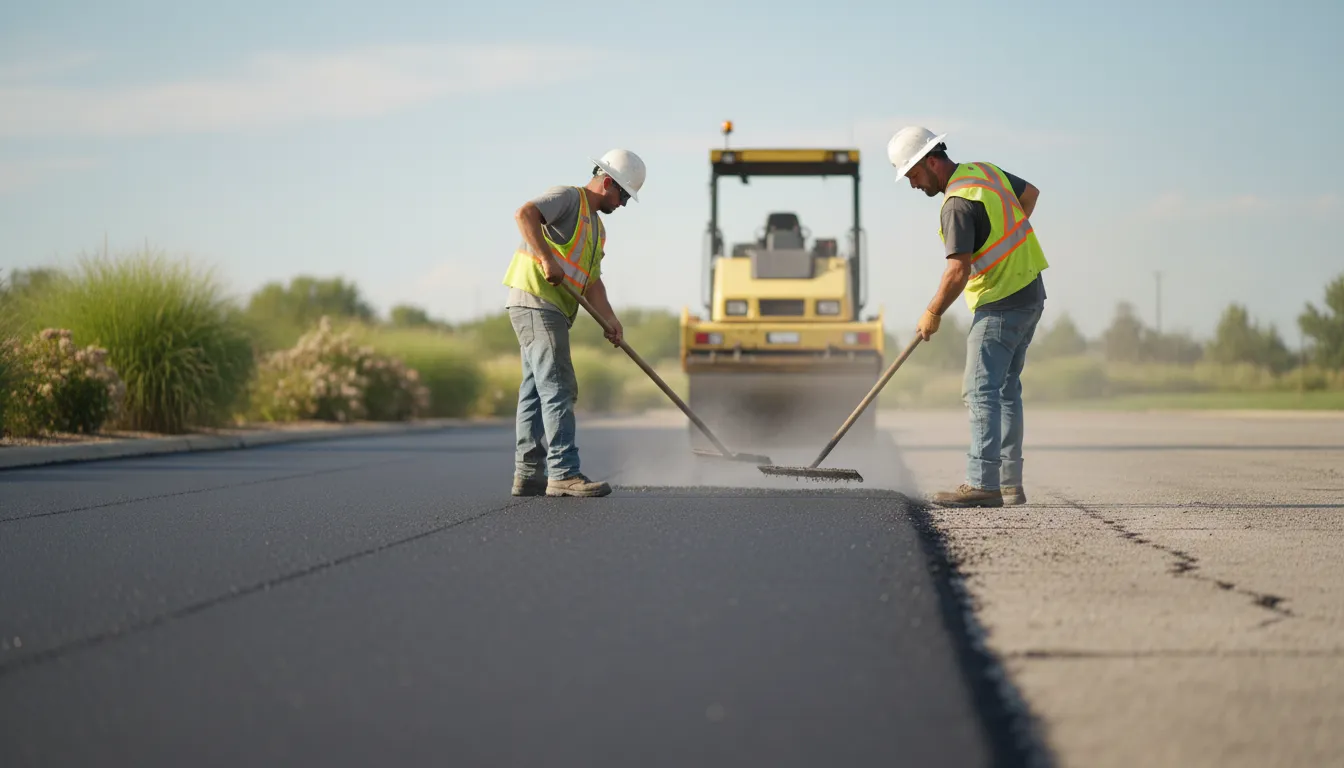
Find the Best Parking Lot Paving Contractors for Your Business
No obligation • Fast responses • Nationwide coverage

Why you can trust Tidy Parking
Tidy Parking is a leading U.S. source for parking lot maintenance services, including striping, sealcoating, sweeping, paving, resurfacing, and repairs. Our content is created independently, and providers cannot pay to influence ratings or recommendations.
Search providers near you
Top Parking Lot Paving Contractors in Smyrna, Georgia Ranked
A durable, well-constructed parking lot is a critical asset for any Smyrna business or property owner. It creates a positive first impression, ensures safety for vehicles and pedestrians, and protects your investment from costly, premature repairs. Parking lot paving is a complex process that must account for Middle Tennessee's unique soil and climate challenges to ensure longevity. This guide explains the key considerations, processes, and local factors involved in asphalt paving projects, helping you make informed decisions when evaluating local paving services for your property.
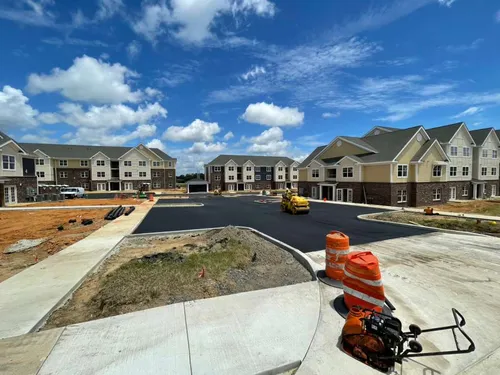
Peach State Paving, Striping & Sealcoating Atlanta
6473 Roswell Rd, Atlanta, GA 30328
Peach State Paving, Striping & Sealcoating Atlanta provides asphalt paving, concrete work, sealcoating, striping, and parking lot repair services in Atlanta, GA. With over 25 years of experience, they serve residential and commercial clients throughout the city and metro area. Their capabilities include asphalt paving, resurfacing, patching, and durable striping for parking lots, driveways, and sidewalks. They focus on using quality materials and proper site preparation to ensure long-lasting results that withstand Atlanta's traffic and weather conditions.
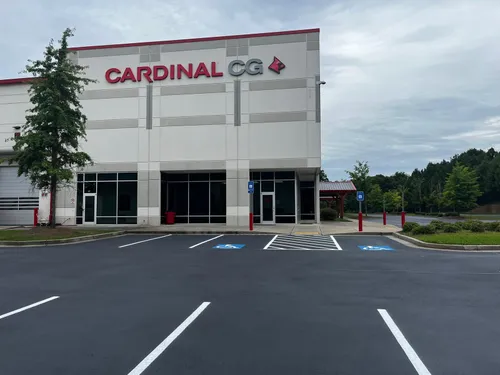
All Star Innovations
5300 Webb Pkwy NW, Lilburn, GA 30047
All Star Innovations is a paving contractor based in Atlanta, GA, specializing in asphalt and concrete paving, sealcoating, parking lot striping, resurfacing, and repair for commercial and residential properties. Since 2013, they have provided durable, long-lasting pavement solutions designed to handle heavy traffic and meet local codes. Their services include milling, patching, pothole repair, and detailed line striping to ensure safe and organized parking areas. The company is known for managing complex paving projects with careful planning and execution, supporting large-scale work with specialized equipment and experienced crews.
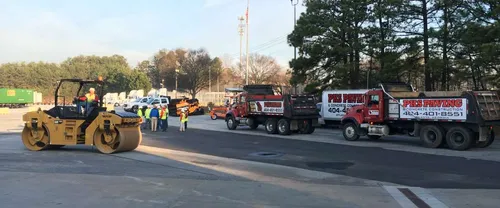
PKS Paving
1340 N County Line Rd, Lithia Springs, GA 30122
PKS Paving is a commercial parking lot paving contractor serving the Atlanta, GA area. They provide paving services across the Atlanta metropolitan region, using local knowledge to understand and meet client needs efficiently. The company is recognized for its expertise in asphalt paving and has received positive recognition within Douglas County.
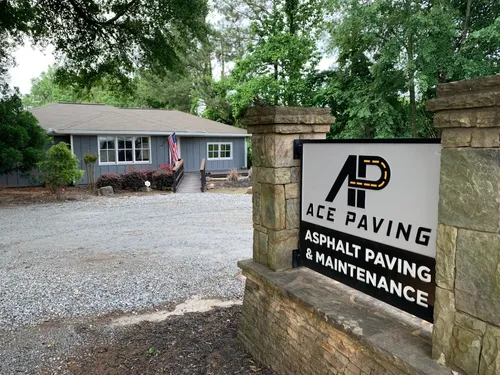
ACE Paving & Maintenance
3465 Francis Rd, Alpharetta, GA 30004
ACE Paving & Maintenance is a commercial and residential paving company serving South Fulton, GA, and the Metro Atlanta area. Since 1997, they have provided services including parking lot sealcoating, paving, crack sealing, pothole repair, ADA compliance, infrared asphalt patching, drainage repair, and puddle repair. Their expertise covers a wide range of projects for retail centers, municipal facilities, schools, apartment communities, and property management companies. ACE Paving & Maintenance focuses on quality and efficiency in all aspects of asphalt and concrete flatwork.
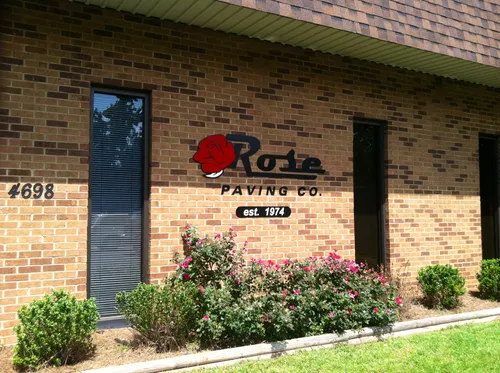
Rose Paving Atlanta
4698 S Old Peachtree Rd, Norcross, GA 30071
Rose Paving Atlanta is a commercial paving company serving the Atlanta, GA area. They provide a wide range of parking lot services including striping, sealcoating, asphalt and concrete repair, and storm basin drainage. With over 50 years of experience, Rose Paving focuses on maintaining and improving parking lots to withstand local weather and heavy traffic conditions. Their expertise includes cracksealing to extend pavement life and prevent water damage, supporting long-term pavement durability.
Understanding Smyrna's Paving Challenges
Successful asphalt installation in Smyrna begins with recognizing the local environmental and geological factors that can impact pavement performance. Two primary concerns dominate: expansive clay soils and Tennessee's variable climate.
The Clay Soil Problem Much of Rutherford County, including Smyrna, sits on heavy clay soils. These soils are "expansive," meaning they swell significantly when saturated with water and shrink during dry periods. This constant movement exerts tremendous pressure on anything built on top of it. For a parking lot, an improperly prepared sub-base over this clay can lead to severe cracking, sinking, and an uneven surface as the ground beneath heaves and settles. A proper paving plan must address this instability from the ground up.
Climate and Thermal Stress Tennessee experiences a full range of seasons, each presenting a stress test for asphalt 1. Smyrna's hot, humid summers can soften asphalt binder, leading to rutting from vehicle tires if the mix isn't designed for high temperatures. Conversely, freezing winter temperatures cause the pavement to contract. The most damaging cycle, however, is the freeze-thaw cycle. Water that seeps into tiny cracks expands when it freezes, forcing those cracks to widen progressively each year 2 3. A paving strategy must use appropriate materials and include timely protective measures like sealcoating to combat these effects.
The Step-by-Step Paving Process for Durability
A long-lasting commercial parking lot is built in deliberate, engineered stages. Skipping or short-changing any step to save time or money often leads to major expenses down the road.
1. Planning and Site Evaluation
This initial phase is about designing for the future. Contractors assess the intended use-will it handle light passenger cars or heavy delivery trucks? They develop a grading plan to ensure positive drainage (a minimum 1-2% slope is standard) to direct water away from the pavement and building foundations 4. This stage also determines the necessary thickness of the asphalt and base materials based on the expected traffic loads.
2. Site Preparation and Excavation
The existing surface, whether failing asphalt, gravel, or grass, is removed. In Smyrna, this often involves excavating deeper than in other regions to remove the unstable, high-plasticity clay soil mentioned earlier 5. The goal is to reach a stable subgrade. All debris is cleared, and the area is graded according to the drainage plan.
3. Soil Stabilization and Base Installation
This is arguably the most critical step for success in the Smyrna area. To create a stable platform that won't shift with the clay, a thick layer of compacted aggregate (crushed stone) is installed. This base layer acts as a load-bearing foundation, distributes weight evenly, and provides crucial drainage for any subsurface water. For commercial lots, a compacted base of 6 to 8 inches or more is common to ensure stability over the soft clay 6 7.
4. Asphalt Application and Compaction
Hot mix asphalt (HMA) is then laid in one or more layers (lifts). For a durable commercial parking lot, a total thickness of 4 inches of asphalt is typically a minimum standard 8. The hot mix is spread by a paver and then immediately compacted with heavy rollers. Proper compaction is essential to achieve the required density, which eliminates air pockets and creates a smooth, unified surface that resists water infiltration and cracking.
5. Final Finishes and Curing
Once compacted and cooled, the new pavement is ready for use but requires ongoing care. It is recommended to wait 3 to 6 months for the asphalt to fully cure before applying a protective sealcoat 9. Sealcoating fills small surface voids, blocks UV oxidation, and prevents water and chemicals from penetrating the asphalt. Finally, pavement striping is applied to define parking stalls, fire lanes, and directional arrows for safety and organization.
Find the perfect parking lot paving contractors for your needs
Get personalized recommendations and expert advice
Common Pavement Issues and Their Local Causes
Understanding what can go wrong helps in specifying the right preventative measures during construction.
- Alligator Cracking: This web-like pattern of cracks often indicates a failure in the base or subgrade. In Smyrna, it's frequently traced back to an inadequate gravel base over expansive clay or poor drainage that saturates and weakens the foundation.
- Potholes: Potholes start with small cracks that allow water to seep in. When that water freezes and expands, it breaks apart the asphalt and base material. Repeated freeze-thaw cycles, combined with traffic, quickly turn a small crack into a hazardous pothole.
- Rutting: These depressions in the wheel paths are caused by the asphalt mix deforming under load. In summer heat, a soft asphalt mix can become pliable, and repeated traffic from heavy vehicles can cause permanent ruts 10.
- Drainage and Edge Failures: If a lot is not graded correctly, water will pool. This standing water accelerates wear and leads to depressions. Improperly managed runoff can also erode the soil along the edges of the pavement, causing the asphalt to crack and crumble at the sides 11.
Cost Considerations for Smyrna Projects
Parking lot construction costs are highly site-specific, but understanding general price ranges can help with budgeting. Key variables include the size of the lot, the amount of site preparation and soil stabilization needed, the thickness of materials, and current prices for asphalt and aggregate in Rutherford County.
- New Paving / Full Reconstruction: For a completely new asphalt parking lot built from the ground up, including excavation, a substantial gravel base, and asphalt installation, property owners can expect a typical range of $2.50 to $5.00 per square foot 12. The higher end of this range often applies to sites with difficult soil or complex drainage requirements.
- Resurfacing (Overlay): If the existing asphalt base is structurally sound, a new wearing surface can be applied over it. A 2-inch asphalt overlay is a common solution for worn surfaces and generally costs less than full reconstruction, with reported averages in Tennessee around $1.37 per square foot (ranging from $1.28 to $1.45) 13 14.
- Alternative: Tar and Chip: For some smaller lots or low-traffic areas, a tar-and-chip (chip seal) surface can be a cost-effective alternative. It involves spraying asphalt emulsion and embedding aggregate stone. Costs are similar to asphalt, typically ranging from $2 to $5 per square foot 15.
Selecting a Local Paving Contractor
Given the technical challenges posed by local conditions, choosing an experienced contractor familiar with Smyrna and Rutherford County is paramount. Look for providers who proactively discuss soil testing, base preparation strategies, and drainage solutions. Ask for detailed project specifications that outline the proposed thickness of both the aggregate base and the asphalt layers. Request references for similar commercial projects and verify that the company carries proper insurance and licensing. A reputable contractor will provide a clear, written estimate that breaks down the costs for each phase of the work, from site preparation to final striping.
Frequently asked questions
Sources
Footnotes
-
Tennessee Climate and Its Impact on Roofing Decisions - https://tennesseeroofauthority.com/tennessee-roofing-climate-considerations ↩
-
A case study on State Route in Tennessee, USA - TRID - https://trid.trb.org/View/2630900 ↩
-
Naixing Liang's research works | Chongqing Jiaotong University and other places - https://www.researchgate.net/scientific-contributions/Naixing-Liang-74490183 ↩
-
Common Issues With Asphalt Parking Lots - https://earthtekpaving.com/common-issues-with-asphalt-parking-lots/ ↩
-
How Nashville Soil Affects Your New Driveway Foundation Build - https://www.nashpaving.com/how-does-soil-type-in-nashville-affect-your-new-driveway-foundation/ ↩
-
How Long Does It Take to Pave a Parking Lot: Timeline Guide - https://greenfieldpavement.com/how-long-does-it-take-to-pave-a-parking-lot/ ↩
-
How Long Does It Take to Build a Parking Lot with Asphalt Paving? - https://www.standardpavinginc.com/how-long-does-it-take-to-build-a-parking-lot-with-asphalt-paving/ ↩
-
How Thick is Parking Lot Asphalt? - https://theamericanasphalt.com/2021/05/13/how-thick-is-parking-lot-asphalt/ ↩
-
Paving a Parking Lot from Scratch (FULL INSTALLATION) - https://www.youtube.com/shorts/4BMJKirANqk ↩
-
How Weather and Temperature Impact Asphalt Paving Quality - https://asphaltcoatingscompany.com/blog/how-weather-and-temperature-impact-asphalt-paving-quality/ ↩
-
Knoxville's Top Drainage Issues & Their Solutions - Rainscapes - https://rainscapes.com/solving-knoxvilles-top-5-drainage-issues-from-erosion-to-poor-soil/ ↩
-
Everything You Need To Know About Paving a Parking Lot - Elite Asphalt - https://eliteasphalt.net/paving-a-parking-lot/ ↩
-
Tennessee Parking Lots Costs & Prices - ProMatcher.com - https://parking-lots.promatcher.com/cost/tennessee.aspx ↩
-
Your Trusted Paving Contractor in Smyrna, TN - https://prioritypavingfranklin.com/paving-contractor-in-smyrna-tn/ ↩
-
What is the cheapest form of paving for commercial projects? - https://www.welovepaving.com/what-is-the-cheapest-form-of-paving/ ↩