Find the Best Parking Lot Paving Contractors for Your Business
No obligation • Fast responses • Nationwide coverage
Why you can trust Tidy Parking
Tidy Parking is a leading U.S. source for parking lot maintenance services, including striping, sealcoating, sweeping, paving, resurfacing, and repairs. Our content is created independently, and providers cannot pay to influence ratings or recommendations.
Search providers near you
Top Parking Lot Paving Contractors in Weston, Florida Ranked
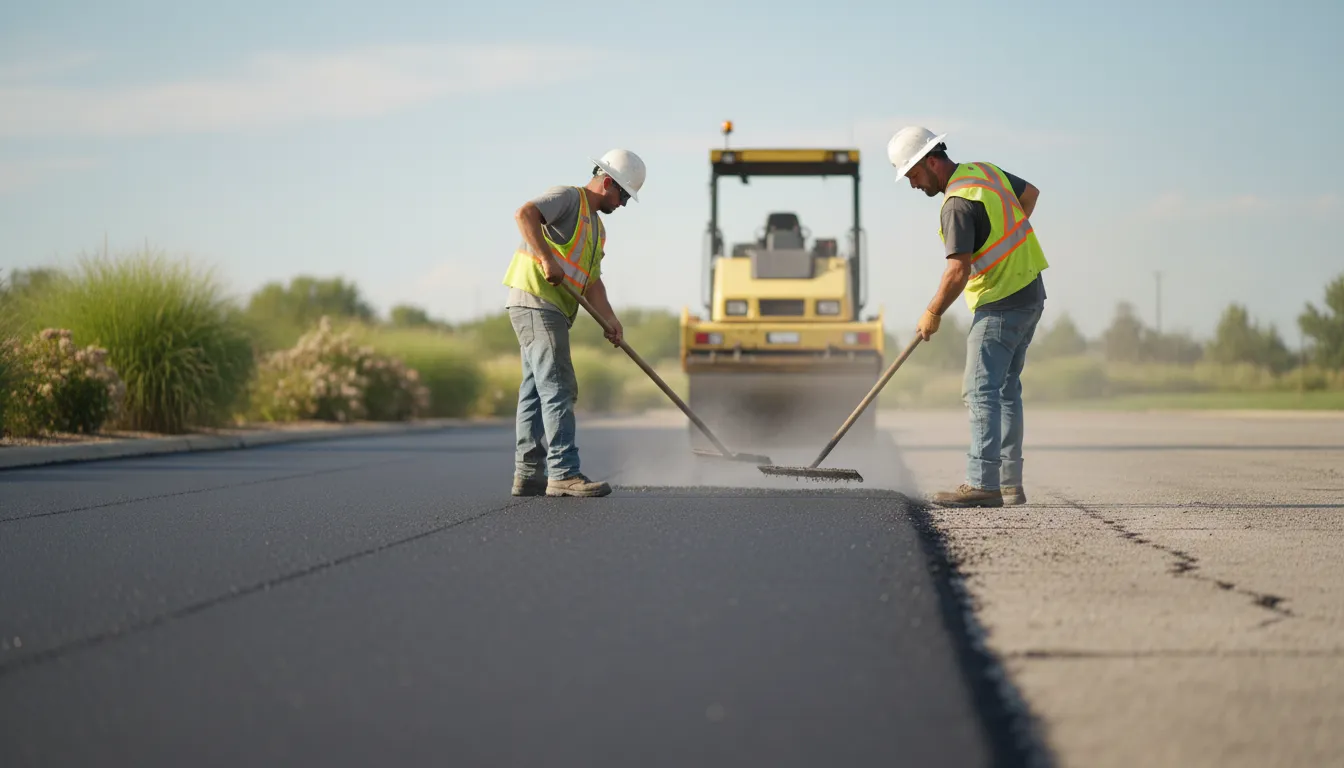
A well-paved parking lot is a critical asset for any Weston business, providing a safe, durable, and professional first impression for customers. Parking lot paving involves the construction of a new asphalt surface or the complete replacement of an old one, a significant investment that requires careful planning and execution. In South Florida's unique environment, this process demands specialized knowledge to address challenges like high water tables, sandy soil, and intense heat. This guide explains the paving process, local considerations, and typical costs to help you make informed decisions when planning your project.
Star Asphalt Inc.
4050 SW 110th Ct, Miami, FL 33165
Star Asphalt Inc. is a locally owned asphalt contractor serving Miami, FL, and nearby areas. With over 40 years of experience, the company provides a range of services including parking lot striping, seal coating, paving, and repairs. They focus on maintaining and enhancing asphalt surfaces through quality seal coating and parking lot maintenance to extend the life of the pavement.
FL ASPHALT PAVING OF CORAL SPRINGS
10001 W Atlantic Blvd APT 118, Coral Springs, FL 33071
FL Asphalt Paving of Coral Springs is a parking lot paving contractor based in Fort Lauderdale, FL. The company serves Coral Springs and surrounding communities including Parkland, Coconut Creek, Lauderdale Lakes, Plantation, and more. They provide asphalt paving services for residential neighborhoods, commercial zones, and public spaces, focusing on safe and durable parking lots, walkways, and roadways. The business emphasizes the use of high-quality materials, modern techniques, and sustainable practices to support long-term infrastructure performance and enhance curb appeal throughout the region.
Tropical Asphalt Sealcoating
10310 NW 11th Ct, Plantation, FL 33322
Tropical Asphalt Sealcoating is a parking lot sealcoating, paving, and repair company based in Hollywood, FL. They provide a full range of asphalt services including paving, repair, and maintenance using high-quality materials and equipment. The company is family-owned and has over 25 years of experience in the asphalt industry.
DMI Paving and Sealcoating
1100 NW 73rd St, Miami, FL 33150
DMI Paving and Sealcoating is a parking lot sealcoating and paving contractor based in Miami, FL. The company specializes in commercial and government projects, focusing on parking lot maintenance and paving services. They do not provide services for residential properties.
Fort Lauderdale Asphalt
Fort Lauderdale, FL
Fort Lauderdale Asphalt is a full-service asphalt paving company based in Fort Lauderdale, FL, serving all of Broward County. They specialize in asphalt installation, repair, resurfacing, sealcoating, crack filling, pothole patching, line striping, and speed bump installation for residential, commercial, and industrial properties. The company also offers excavation and drainage services, including land clearing and site preparation. Their team uses quality materials tailored for the local climate to ensure durable results. Fort Lauderdale Asphalt has extensive experience working across South Florida and provides night paving to reduce downtime when needed.
The Paving Process: From Groundwork to Finish Line
A successful parking lot construction project in Weston follows a meticulous, multi-stage process. Each step is crucial for ensuring the final pavement's longevity and performance under local conditions.
1. Site Preparation and Clearing The first phase involves clearing the construction area of all vegetation, debris, and any existing deteriorated pavement. This creates a clean slate for the new build. Proper clearing is essential for accurate grading and base installation.
2. Grading and Drainage Installation Given Weston's flat topography and propensity for heavy, sudden downpours, this is arguably the most critical step. The site must be precisely graded to establish the correct slope-typically a minimum of 2%-to direct stormwater toward designated drainage points 1. Contractors will install catch basins, retention areas, or drywells to manage runoff effectively and prevent pooling, which can quickly lead to pavement failure 2.
3. Subgrade Preparation and Stabilization Here, the native soil is compacted to create a stable foundation. South Florida's sandy soils drain well but lack the inherent stability of clay-based soils. To combat this, subgrade stabilization is often necessary. This can involve mixing the native sand with soil cement or other stabilizing agents to create a firm, non-shifting base that can support the pavement above.
4. Base Layer Installation On top of the prepared subgrade, a thick base layer is installed. In Weston, a 6-to-8-inch layer of compacted limerock (a type of crushed limestone) is typical 3. This aggregate base provides the structural strength to handle vehicle loads and distributes weight evenly to the subgrade.
5. Asphalt Application and Compaction Hot-mix asphalt (HMA) is then laid over the base in one or more layers (lifts). The total thickness usually ranges from 1.5 to 3 inches, depending on expected traffic (e.g., passenger cars vs. delivery trucks). While still hot, the asphalt is compacted with heavy rollers to achieve proper density, smoothness, and to remove air pockets, creating a solid, unified surface.
6. Finishing Touches Once the new asphalt pavement has cooled and cured, the final touches are applied. This includes painting line striping for parking spaces and traffic flow, installing wheel stops, and placing all necessary ADA-compliant signage and accessible parking markings.
Unique Challenges for Weston Pavement Projects
Paving in Weston isn't the same as paving in other parts of the country. Several local environmental factors must be specifically engineered for during the design and construction phases.
- High Water Table: South Florida has a notoriously shallow groundwater table. This means water is often just a few feet below the surface. If not properly accounted for, this groundwater can saturate and weaken the pavement base from below, leading to sinking, cracking, and potholes 4.
- Sandy Soil Composition: While sandy soil allows for excellent drainage, it is less cohesive and stable than other soil types. Without proper stabilization, it can shift or settle unevenly under the weight of the pavement and traffic, causing cracks and surface deformities 5.
- Drainage and Erosion Demands: The high-intensity summer rains in Weston place immense demand on a parking lot's drainage system. Inadequate drainage leads to standing water, which is a major cause of asphalt deterioration like raveling and potholes. Furthermore, paved surfaces increase runoff speed, which can accelerate soil erosion in adjacent landscaped or unpaved areas if not managed with proper retention or diversion 6.
- Heat and Humidity: The constant South Florida heat and humidity present a dual challenge. High temperatures can cause asphalt to soften, leading to rutting and deformation under heavy, stationary loads (like delivery trucks). Meanwhile, high humidity and frequent rain increase the risk of moisture damage within the asphalt mix itself, a problem known as "stripping," where the asphalt binder separates from the aggregate.
Find the perfect parking lot paving contractors for your needs
Get personalized recommendations and expert advice
Asphalt Specifications for South Florida's Climate
To combat the local climate challenges, reputable paving contractors in Weston will use specific materials and mixes designed for performance.
- Performance-Graded (PG) Binders: Instead of standard asphalt cement, contractors should use binders graded for high-temperature performance. A PG 76-22 binder, for example, is engineered to resist softening at high temperatures (up to 76°C) while maintaining flexibility at lower temperatures 7. This helps prevent rutting during Weston's hottest days.
- Moisture-Resistant Mix Designs: The asphalt mix formula can be adjusted with additives or specific aggregate types to improve adhesion between the binder and stone, enhancing resistance to stripping caused by humidity and rainfall 8.
- Accelerated Maintenance Schedules: The intense UV radiation and heat in Florida accelerate the oxidation of asphalt, making it brittle and prone to cracking. Because of this, a proactive maintenance plan is non-negotiable. Sealcoating, which applies a protective layer, is recommended every 2 to 4 years in this climate to preserve the asphalt's flexibility and prevent water intrusion 9.
Understanding Parking Lot Paving Costs in Weston
The cost to pave a parking lot is typically calculated per square foot and can vary widely based on size, site conditions, and material specifications. The figures below provide a general framework for budgeting a commercial project in the Weston area.
- New Construction (Full Depth Paving): This includes all steps from clearing to finishing. For a standard commercial lot, expect a range of $2.50 to $7.00 per square foot 10. Projects requiring extensive subgrade stabilization or complex drainage will be on the higher end of this spectrum.
- Resurfacing (Overlay): If the existing base is structurally sound, a new layer of asphalt can be installed over the old. This is less expensive, typically ranging from $1.00 to $3.00 per square foot.
- Sealcoating (Maintenance): The protective sealcoat application is a separate maintenance cost, generally $0.30 to $0.50 per square foot 11.
Important Note on Scale: Large, heavy-duty commercial lots designed for 200+ cars or frequent heavy truck traffic will often have higher costs due to the need for a thicker base, thicker asphalt layers, and more robust drainage systems 12.
Frequently asked questions
Sources
Footnotes
-
Stormwater Quality Applicant's Handbook - FDOT - https://www.fdot.gov/docs/default-source/roadway/drainage/files/StormwaterQualityAppHB-DRAFT.pdf ↩
-
The Role of Parking Lot Drainage in Your Maintenance Plan - https://acplm.net/the-role-of-parking-lot-drainage/ ↩
-
IAPA :: Parking Lots - Illinois Asphalt Pavement Association - https://www.il-asphalt.org/asphalt-info/private-commercial/parking-lots/ ↩
-
Understanding Asphalt Surfaces and Their Environmental Impact - https://ecorastergrid.com/understanding-asphalt-surfaces-and-their-environmental-impact/ ↩
-
Florida Soil and Paver Installation: What Port St Lucie and Treasure Coast Homeowners Need to Know - https://pandapavers.com/blog/florida-soil-and-paver-installation/ ↩
-
Paved parking lots generally speed up soil erosion from nearby ... - CK-12 - https://www.ck12.org/flexi/earth-science/avoiding-soil-loss/paved-parking-lots-generally-speed-up-soil-erosion-from-nearby-land-by-increasing-b-%28starts-with-r%29/ ↩
-
How Temperature Impacts Asphalt Paving Quality in South Florida - https://pavefl.com/how-temperature-impact-asphalt-paving-quality/ ↩
-
Effects of Weather on Your Asphalt Pavement - Florida Sealcoating - https://www.floridasealcoating.com/blog/2024/effects-of-weather-on-your-asphalt-pavement.html ↩
-
Parking Lot Paving: Costs, Materials, and Maintenance - https://waltspaving.com/what-does-it-cost-to-pave-a-parking-lot/ ↩
-
Everything You Need To Know About Paving a Parking Lot - Elite Asphalt - https://eliteasphalt.net/paving-a-parking-lot/ ↩
-
The Cost of ADA Asphalt Paving: What to Expect in 2025 - https://advancedasphaltofswflinc.com/the-cost-of-ada-asphalt-paving-what-to-expect-in-2025/ ↩
-
How Much Does It Cost to Build a Parking Lot? (2026) - HomeGuide - https://homeguide.com/costs/cost-to-build-a-parking-lot ↩