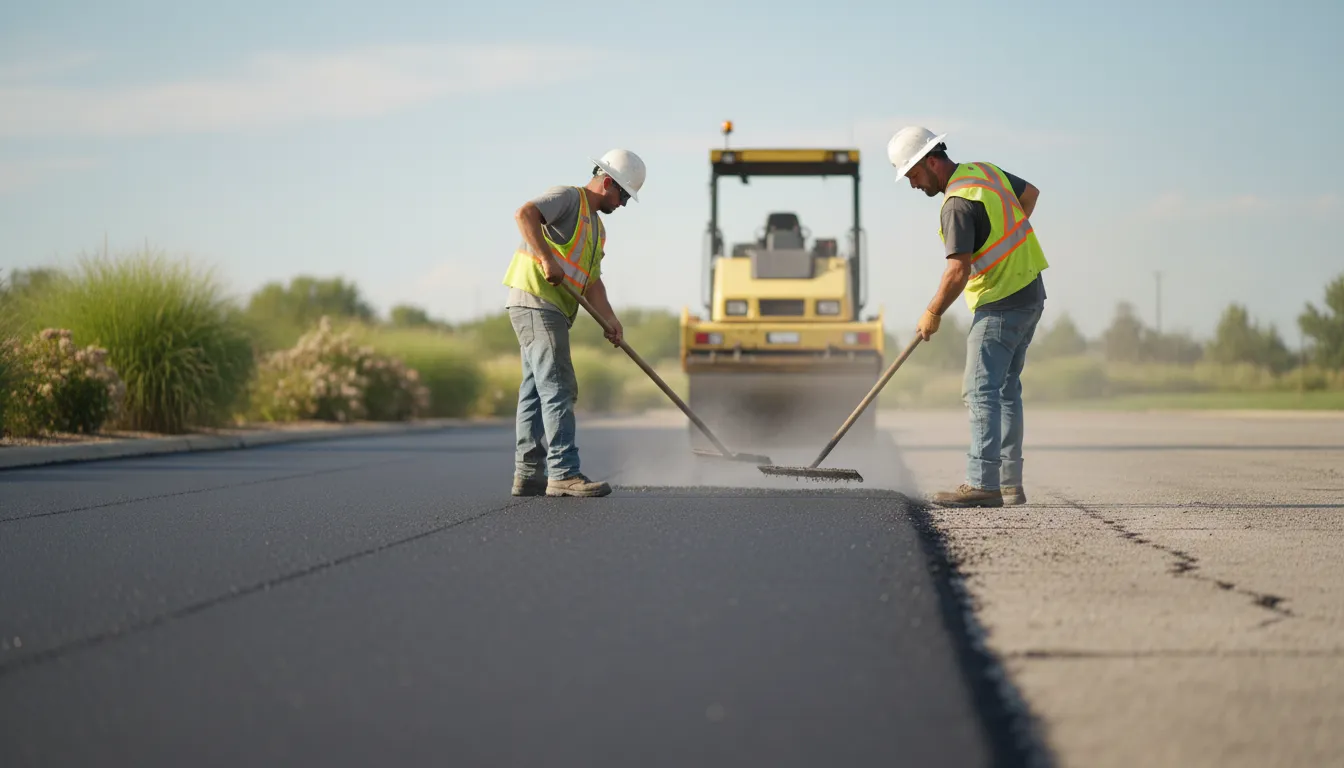
Find the Best Parking Lot Paving Contractors for Your Business
No obligation • Fast responses • Nationwide coverage
Why you can trust Tidy Parking
Tidy Parking is a leading U.S. source for parking lot maintenance services, including striping, sealcoating, sweeping, paving, resurfacing, and repairs. Our content is created independently, and providers cannot pay to influence ratings or recommendations.
Search providers near you
Top Parking Lot Paving Contractors in Tamarac, Florida Ranked
A well-paved parking lot is a critical asset for any business or property in Tamarac, providing a safe, durable, and professional first impression for customers and tenants. Parking lot paving is a complex construction process that involves preparing the ground, installing a stable base, and applying asphalt to create a smooth, long-lasting surface. In South Florida's unique climate, this work requires specialized knowledge to combat challenges like sandy soil, heavy rainfall, and intense heat. This guide will help you understand the process, local considerations, and how to evaluate paving services to find a qualified contractor for your project.
FL ASPHALT PAVING OF CORAL SPRINGS
10001 W Atlantic Blvd APT 118, Coral Springs, FL 33071
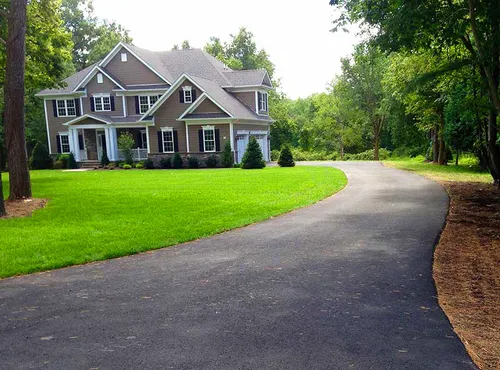
FL Asphalt Paving of Coral Springs is a parking lot paving contractor based in Fort Lauderdale, FL. The company serves Coral Springs and surrounding communities including Parkland, Coconut Creek, Lauderdale Lakes, Plantation, and more. They provide asphalt paving services for residential neighborhoods, commercial zones, and public spaces, focusing on safe and durable parking lots, walkways, and roadways. The business emphasizes the use of high-quality materials, modern techniques, and sustainable practices to support long-term infrastructure performance and enhance curb appeal throughout the region.
Tropical Asphalt Sealcoating
10310 NW 11th Ct, Plantation, FL 33322
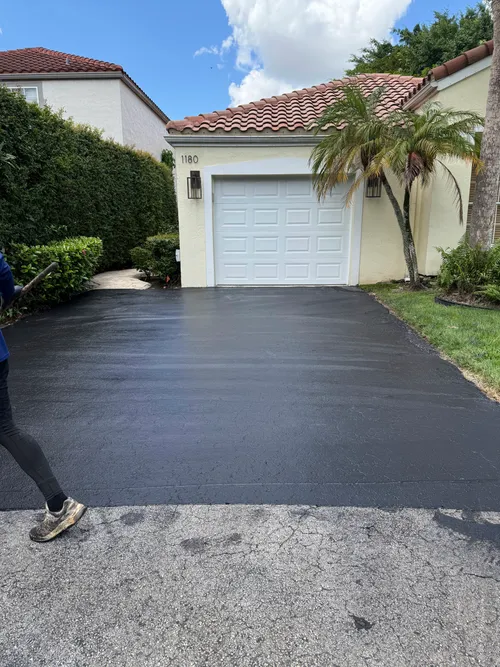
Tropical Asphalt Sealcoating is a parking lot sealcoating, paving, and repair company based in Hollywood, FL. They provide a full range of asphalt services including paving, repair, and maintenance using high-quality materials and equipment. The company is family-owned and has over 25 years of experience in the asphalt industry.
DMI Paving and Sealcoating
1100 NW 73rd St, Miami, FL 33150
DMI Paving and Sealcoating is a parking lot sealcoating and paving contractor based in Miami, FL. The company specializes in commercial and government projects, focusing on parking lot maintenance and paving services. They do not provide services for residential properties.
Palm Beach Asphalt
West Palm Beach, FL
Palm Beach Asphalt is an asphalt paving company based in West Palm Beach, FL, serving the entire Palm Beach County. They offer a wide range of asphalt services including driveway and parking lot sealcoating, striping, repairs, resurfacing, and new installations for residential, commercial, and industrial properties. Their expertise includes asphalt crack filling, pothole repair, and complete repaving, ensuring durable and weather-resistant pavement solutions. With over 25 years of experience, Palm Beach Asphalt is equipped to handle large projects with state-of-the-art equipment and provides services such as speed bumps, signage, curbing, and drainage to maintain safe parking areas.
Fort Lauderdale Asphalt
Fort Lauderdale, FL
Fort Lauderdale Asphalt is a full-service asphalt paving company based in Fort Lauderdale, FL, serving all of Broward County. They specialize in asphalt installation, repair, resurfacing, sealcoating, crack filling, pothole patching, line striping, and speed bump installation for residential, commercial, and industrial properties. The company also offers excavation and drainage services, including land clearing and site preparation. Their team uses quality materials tailored for the local climate to ensure durable results. Fort Lauderdale Asphalt has extensive experience working across South Florida and provides night paving to reduce downtime when needed.
Why Tamarac's Environment Demands Specialized Paving
Paving a parking lot in Tamarac isn't the same as doing it in other parts of the country. The local subtropical climate and geology present specific hurdles that must be addressed during the asphalt installation to ensure longevity and avoid premature failure.
Sandy Soil and High Water Tables: Much of Florida, including Tamarac, sits on sandy soil with a naturally high groundwater table. Sandy soil lacks stability and can shift or settle if not properly compacted, leading to cracks and depressions in the pavement above. The high water table means the ground beneath your pavement can become saturated, especially during the rainy season, which weakens the subgrade and can cause the entire pavement structure to fail from below 1.
Extreme Rainfall and Drainage: Tamarac experiences heavy, high-volume summer rains. Without excellent drainage, water will pond on the surface, seeping into cracks and accelerating deterioration through a process known as "alligator cracking". Proper paving here isn't just about laying asphalt; it's about engineering a surface that sheds water efficiently, often requiring integrated systems like French drains, catch basins, and carefully calculated slopes.
Intense Heat and Sun Exposure: The relentless Florida sun and temperatures frequently above 90°F pose a dual threat. High heat can cause standard asphalt to soften and rut under the weight of vehicles. Simultaneously, UV radiation breaks down the asphalt binder, making it brittle and prone to cracking. A successful paving project must use materials and techniques designed to withstand these conditions.
The Step-by-Step Process for a Durable Parking Lot
A quality asphalt installation follows a meticulous sequence. Cutting corners on any step is a primary cause of future problems and costly repairs 2.
1. Site Assessment and Design
Every successful project begins with a thorough evaluation. A professional contractor will assess the soil type, check the water table, and survey the terrain. For sandy soils, this often includes soil testing to determine the required compaction level (often to 95% Proctor density) to prevent future settling 3. The design phase also plans the final grading for water runoff (typically a 1-2% slope) and the integration of any necessary drainage infrastructure 4 5.
2. Clearing, Excavation, and Grading
The area is cleared of all vegetation, debris, and old pavement. The ground is then excavated to the required depth and graded-shaped with precise slopes-to ensure water will flow toward drains and away from buildings. This foundational grading is perhaps the most critical step in preventing water-related damage.
3. Base Installation
In Florida, a strong, deep base is non-negotiable. Contractors typically install 8 to 12 inches of compacted limestone aggregate. This base layer provides a stable platform, distributes load, and aids in drainage. Proper compaction of this base material is essential to counteract the instability of sandy soil.
4. Asphalt Application and Compaction
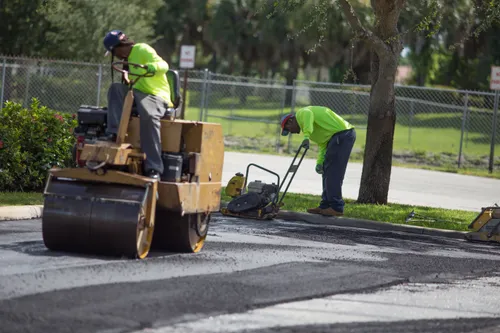
Hot Mix Asphalt (HMA) is brought in and applied in layers. A thick base layer is laid first, followed by a smoother surface layer. Each layer is meticulously compacted with heavy rollers. In Tamarac's humidity, timing is crucial; the asphalt must be compacted before it cools too much to achieve optimal density and strength. For heat resistance, contractors may recommend polymer-modified asphalt mixes, such as PG 76-22, which are engineered to resist rutting in high temperatures.
5. Finishing and Curing
Once the final surface is smooth and compacted, finishing touches are added. This includes installing asphalt curbing to help direct water and defining parking stalls and traffic flow. The new pavement then needs time to cure and harden fully before being opened to traffic.
Find the perfect parking lot paving contractors for your needs
Get personalized recommendations and expert advice
Common Pavement Problems in Tamarac and Their Causes
Understanding what can go wrong helps you spot quality issues and plan preventative maintenance.
- Alligator Cracking: This web-like pattern of cracks is almost always a sign of structural failure, often caused by a weak or saturated base, inadequate drainage, or poor compaction during installation 6.
- Rutting: Long depressions in the wheel paths occur when asphalt softens under heat and pressure. It indicates the asphalt mix was not suitable for Florida's high temperatures or wasn't compacted properly 7.
- Raveling and Oxidation: The surface breaks down, leaving loose gravel and a rough texture. This is primarily caused by UV oxidation from the sun breaking down the asphalt binder. Regular sealcoating is the best defense.
- Potholes: These start as small cracks that allow water to infiltrate. Freeze-thaw cycles (rare in Florida) aren't the main culprit here; instead, traffic pumping water through cracks erodes the base, causing the surface to collapse.
- Ponding Water: Standing water after a rainstorm is a clear sign of inadequate slope or blocked drainage. It drastically shortens pavement life by constantly attacking the asphalt and sub-base.
Maintenance is Key to Longevity
Your investment in new asphalt paving must be protected. A proactive maintenance plan is far more cost-effective than major repairs.
Sealcoating: This is your pavement's sunscreen and raincoat. Applying a coal tar or asphalt-based sealer every 2-3 years protects the surface from UV rays, water, and chemical spills like gas or oil. It also restores a rich, black appearance.
Prompt Crack Sealing: Small cracks should be cleaned and filled with a rubberized sealant annually. This prevents water from entering and expanding the cracks, which is the first step toward pothole formation 8.
Regular Cleaning and Drainage Inspection: Keep drains and catch basins clear of debris. Pressure washing removes corrosive substances and helps you spot early signs of wear.
Understanding Costs for Parking Lot Paving in Tamarac
Costs can vary based on site conditions, project size, materials, and contractor. The following are general price ranges for the Tamarac area 9.
- New Commercial Asphalt Paving: $2.50 - $7.00 per square foot. This wide range accounts for site preparation complexity, base depth requirements, and asphalt mix specifications.
- Asphalt Resurfacing/Overlay: $1.00 - $3.50 per square foot. This is an option when the existing base is still sound, and only the top layers need replacement.
- Sealcoating: $0.15 - $0.50 per square foot. A crucial maintenance procedure.
- Repairs (Patching): Often priced by linear foot for crack sealing or by the square foot for pothole patching, typically ranging from $1 - $3 per linear foot for crack filling.
Note: Larger projects often benefit from economies of scale, which can reduce the cost per square foot 10. Always ensure quotes are detailed and specify the scope of work, materials to be used, and warranty information.
Frequently asked questions
Sources
Footnotes
-
CHAPTER EIGHT - https://www.co-asphalt.com/assets/docs/CAPA-Parking-Lot-Design-Guide-2nd-edition-DEC2016.pdf ↩
-
Parking Lot Paving - What Does a Good Job Look Like? - https://acplm.net/parking-lot-paving-job/ ↩
-
Florida Asphalt Paving: What Property Owners Must Know - https://pavefl.com/florida-asphalt-paving-guide/ ↩
-
5 Tips for Parking Lot Drainage Solutions in Florida - https://www.plsofflorida.com/parking-lot-drainage-solutions/ ↩
-
Parking Lot Paving - https://www.3-dpaving.com/services/asphalt-paving/parking-lot-paving/ ↩
-
Anticipating and Responding to Pavement Performance as Climate Changes - https://link.springer.com/chapter/10.1007/978-3-662-44719-2_4 ↩
-
How Temperature Impacts Asphalt Paving Quality in South Florida - https://pavefl.com/how-temperature-impact-asphalt-paving-quality/ ↩
-
What Causes Premature Asphalt Paving Deterioration? - Bonness Inc - https://www.bonnessinc.com/what-causes-premature-asphalt-paving-deterioration/ ↩
-
Understanding the Cost of Parking Lot Maintenance - PLS - https://www.plsofflorida.com/understanding-the-cost-of-parking-lot-maintenance-budgeting-for-long-term-savings/ ↩
-
The Cost of ADA Asphalt Paving: What to Expect in 2025 - https://advancedasphaltofswflinc.com/the-cost-of-ada-asphalt-paving-what-to-expect-in-2025/ ↩