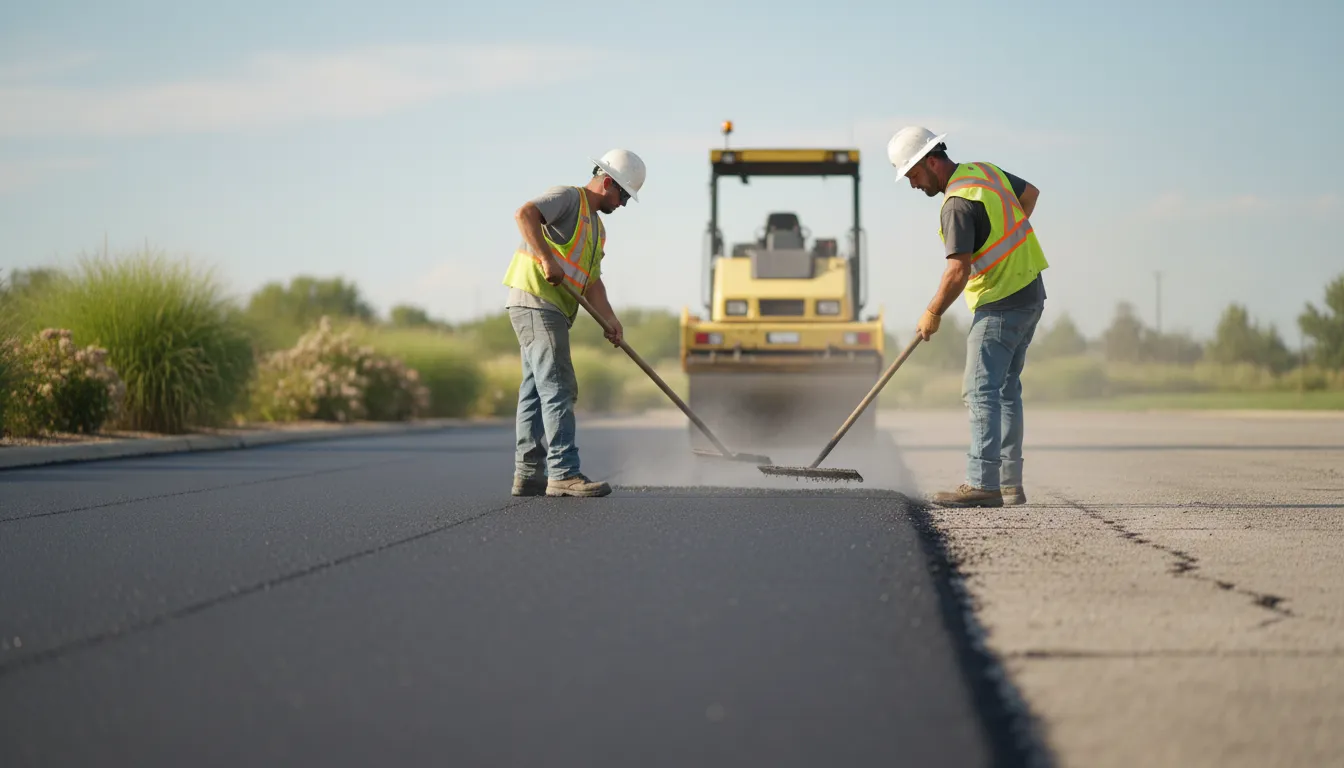
Find the Best Parking Lot Paving Contractors for Your Business
No obligation • Fast responses • Nationwide coverage
Why you can trust Tidy Parking
Tidy Parking is a leading U.S. source for parking lot maintenance services, including striping, sealcoating, sweeping, paving, resurfacing, and repairs. Our content is created independently, and providers cannot pay to influence ratings or recommendations.
Search providers near you
Top Parking Lot Paving Contractors in Wilmington, Delaware Ranked
A well-paved parking lot is a critical asset for any Delaware business or property, providing a safe, durable, and professional first impression. The right asphalt installation can withstand the state's variable climate, manage stormwater effectively, and last for decades with proper care. This guide explains the key standards, materials, and costs for parking lot paving in Delaware, helping you understand what goes into a quality project and how to connect with experienced local professionals who can bring your plans to life.
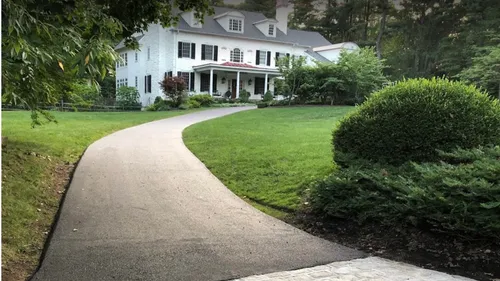
Maintain-It-All - Residential & Commercial Driveway Paving
18 W Mt Kirk Ave Suite 200, Eagleville, PA 19403
Maintain-It-All - Residential & Commercial Driveway Paving provides driveway paving, sealcoating, and exterior maintenance services in Philadelphia, PA. They serve both residential and commercial clients, offering solutions such as driveway patching, extensions, and power washing to enhance and protect property surfaces. Their team focuses on quality workmanship to extend the life and improve the appearance of driveways and exterior areas. Maintain-It-All serves Montgomery, Chester, and Delaware counties as well, acting as a comprehensive exterior maintenance provider in the Pennsylvania region.
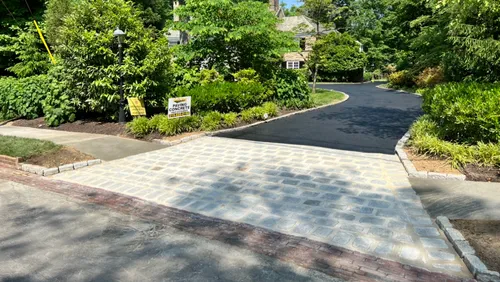
Quality Paving & Concrete
2 Bala Plaza Suite 300-726, Bala Cynwyd, PA 19004
Quality Paving & Concrete is a contractor based in Philadelphia, PA, specializing in asphalt paving, concrete work, and parking lot repair and resurfacing. They offer a range of services including asphalt overlay, removal, and replacement, as well as concrete installation and repair. The company also provides hardscaping, masonry, patios, retaining walls, and basement waterproofing. With over 20 years of experience, Quality Paving & Concrete has developed expertise in delivering durable paving and concrete solutions. They serve a wide area including Bucks County, Montgomery County, Chester County, and surrounding communities.

FGG Sealcoating & Paving
Philadelphia, PA
FGG Sealcoating & Paving is a parking lot sealcoating and paving contractor based in Philadelphia, PA. The company provides services focused on maintaining and improving parking lot surfaces, including sealcoating and paving work. Their expertise helps protect and extend the life of parking areas in the Philadelphia area.
United Paving Contractors
707 1st Ave, Deptford, NJ 08096
United Paving Contractors is a parking lot paving contractor serving Philadelphia, PA, and the surrounding South Jersey area. They specialize in asphalt paving for driveways and parking lots, handling projects for residential, corporate, and government clients. The company has a full line of maintained equipment and trained professionals to manage projects from start to finish. Their service area includes Burlington, Camden, Gloucester, and Salem counties, among others. United Paving Contractors emphasizes integrity and customer education in their business approach.
Abc sealcoating llc
30 Acres Dr, Ridley Park, PA 19078
Abc Sealcoating LLC is a paving contractor based near Philadelphia, PA, offering a range of services including parking lot striping, sealcoating, paving, and repair. With over 20 years of experience, the company handles projects from large commercial parking lots to residential driveway repairs. Their capabilities include asphalt maintenance such as fixing potholes and unstable walkways, as well as professional sealcoating to protect and restore pavement surfaces. Abc Sealcoating LLC serves the Ridley Park area and is equipped to manage both small and large paving jobs.
Delaware's Climate & Paving Specifications
Delaware's weather presents a unique challenge for pavement, with hot, humid summers that can soften asphalt and cold winters that bring freeze-thaw cycles capable of causing significant cracking and heaving. To combat this, state and local specifications are designed for maximum durability. Many projects follow DelDOT (Delaware Department of Transportation) standards, which provide a reliable blueprint for commercial and municipal work.
A critical specification is the performance grade (PG) of the asphalt binder. In Delaware, a PG 64-22 binder is standard for parking lots. This grade means the asphalt is engineered to perform in temperatures up to 64°C (147°F) without rutting and down to -22°C (-7.6°F) without becoming brittle and cracking. Using the correct binder is the first defense against Delaware's seasonal transitions.
The ideal paving window in the First State is between late spring and early fall, when ambient temperatures are consistently between 50°F and 85°F 1. This range allows the hot mix asphalt to cool and compact properly, creating a dense, strong surface. Scheduling your project during this season is crucial for long-term performance.
Recommended Asphalt Mixes for Delaware Lots
Not all asphalt is created equal. The mix design-the recipe of aggregate (stone, sand) and asphalt binder-determines the pavement's strength and suitability.
- Warm Mix Asphalt (WMA): This is a preferred technology in Delaware 2. WMA is produced and placed at temperatures 30 to 120 degrees Fahrenheit lower than traditional Hot Mix Asphalt (HMA). The benefits are substantial: it allows for better compaction (leading to a denser, stronger mat), extends the paving season into cooler weather, reduces fuel consumption, and lowers emissions on-site 3.
- Hot Mix Asphalt (HMA): Traditional HMA remains a highly durable option, especially for high-traffic commercial lots expecting heavy delivery trucks or constant vehicle flow 4. It provides excellent strength and is a proven material when placed under ideal conditions.
- Surface Course Mix: The top layer that vehicles drive on should be a fine-graded mixture. This creates a smooth, quiet riding surface and provides a tight, impermeable layer to shield the pavement structure from water infiltration 5.
- Binder Course Mix: Beneath the surface course, a binder layer uses a larger stone aggregate. This layer's primary job is structural strength and stability, distributing loads down to the base 6.
Pavement Thickness & Structural Design
A parking lot is a structural system, and its thickness is dictated by the traffic it will bear. Delaware standards provide clear guidance:
- Light-Duty Lots (Passenger Cars Only): For lots serving offices, churches, or low-traffic retail, a compacted asphalt thickness of 2 to 3 inches is typically sufficient 7.
- Commercial/Heavy-Duty Lots: For shopping centers, warehouses, or facilities frequented by delivery trucks, a minimum of 3 to 4 inches of compacted asphalt is required 8. This ensures the surface can handle heavier loads without deforming.
The asphalt layers sit on top of a robust base, which is arguably more important than the surface itself. A 6-to-8-inch aggregate base of crushed stone (such as DelDOT Borrow Type G or crusher-run) is standard. This layer provides a stable, well-draining platform that prevents the asphalt from flexing and cracking under load. Beneath the base, the native soil (subgrade) must be properly compacted-typically to about 95% of its maximum density-to prevent future settling 9.
Critical Base Preparation & Drainage
A perfect asphalt surface will fail quickly if the foundation is weak or water is allowed to pool. Proper site preparation is non-negotiable.
Drainage is the paramount concern. Standing water is asphalt's enemy, seeping into cracks and eroding the base. Delaware specifications require a minimum transverse slope of 1.5% to 3.0% across the parking lot to direct water toward drains or landscaped areas 10. Furthermore, for projects incorporating subsurface infiltration systems for stormwater management, there must be a minimum vertical separation of 2 feet from the seasonal high water table or bedrock 11.
Before any stone is placed, the subgrade soil must be tested and compacted. On sites with very weak or unstable soils, contractors may install geotextile fabric over the compacted subgrade before adding base stone. This fabric acts as a separator and stabilizer, preventing the stone from sinking into the soil and providing additional tensile strength.
Find the perfect parking lot paving contractors for your needs
Get personalized recommendations and expert advice
Understanding Costs for Delaware Parking Lot Paving
Parking lot paving costs in Delaware vary significantly based on the project's scope, size, and site conditions. Prices are often quoted per square foot, with larger projects benefiting from economies of scale.
- New Paving (Full Reconstruction): For a complete project including excavation, grading, a new aggregate base, and asphalt installation, costs typically range from $2.50 to $4.50 per square foot. This is the most comprehensive and durable option.
- Large Lot Overlay: For existing lots in sound structural condition needing a fresh surface, a 1.5 to 2-inch compacted overlay on a large project (50,000+ sq ft) can range from $1.25 to $1.50 per square foot.
- Small to Medium Lot Patching & Repair: Targeted repairs and patching on smaller lots are less efficient per unit of work, often averaging around $2.90 per square foot.
- Milling (Surface Removal): If an existing asphalt surface needs to be removed before an overlay to maintain curb reveal or correct drainage, milling costs add $0.25 to $0.60 per square foot 12.
- Geotextile Fabric: Adding fabric for stabilization adds approximately $0.14 to $0.22 per square foot to material costs 13.
The statewide average cost for parking lot paving in Delaware is reported between $1.25 and $1.66 per square foot, which generally reflects overlay work on larger commercial properties 14. Always obtain detailed, written estimates that break down all preparatory work, materials, and labor.
Key Considerations for a Successful Project
Beyond the core construction, several finer points ensure a professional, long-lasting result.
- Curb Reveal: This is the vertical height from the top of the curb to the pavement surface. When overlaying an existing lot, it's essential to ensure the final asphalt height maintains a minimum 6-inch curb reveal for proper drainage and aesthetics. This may necessitate milling the old surface first.
- Preventing Reflection Cracks: If your existing pavement has severe "alligator" cracking, these cracks can reflect through a new overlay. As mentioned, geotextile fabric is one solution. Another is a specialized stress-absorbing membrane interlayer (SAMI), though this is a more advanced technique.
- Maintenance Planning: A new pavement is an investment to protect. Plan for crack sealing within the first year or two to fill small hairline cracks before they widen. Sealcoating-applying a protective coal-tar or asphalt-based emulsion-should begin 6-12 months after paving and be repeated every 2-3 years. These maintenance activities are best scheduled during Delaware's shoulder seasons (spring or fall) 15.
Frequently asked questions
Sources
Footnotes
-
How to Prepare Your Yard for Asphalt Paving? - https://www.standardpavinginc.com/how-to-prepare-your-yard-for-asphalt-paving/ ↩
-
Asphalt Paving Terminology - University of Delaware - https://sites.udel.edu/dct/2020/06/02/asphalt-paving-terminology/ ↩
-
What asphalt mix suits your project? - Crossroads Paving CT - https://crossroadspavingct.com/what-kind-of-asphalt-mix-is-best-for-your-project/ ↩
-
Asphalt Parking Lots: Asphalt Mixes And Subgrade - https://goodmansonconstruction.com/parking-lots-asphalt-mixes-subgrade/ ↩
-
Things to Consider Before Paving an Asphalt Parking Lot - https://bitroads.com/About-Us/Blog/entryid/35/things-to-consider-before-paving-an-asphalt-parking-lot ↩
-
PAVEMENT SELECTION - Delaware Department of Transportation - https://deldot.gov/Publications/manuals/road_design/pdfs/09_pavement_selection.pdf ↩
-
How Thick Should Asphalt Paving Be? Complete Guide 2025 - https://sspaving.com/blog/how-thick-should-asphalt-paving-be/ ↩
-
The Essential Guide To Asphalt Thickness For Parking Lots - https://www.royalpavementsolutions.com/the-essential-guide-to-asphalt-thickness-for-parking-lots/ ↩
-
5 Essential Elements of a Long-Lasting Asphalt Driveway - https://www.pavementsolutions.org/5-essential-elements-of-a-long-lasting-asphalt-driveway/ ↩
-
7.01 SUBDIVISION PAVEMENT DESIGN A. The ... - Harrington - https://harrington.delaware.gov/files/2014/08/Const_Specs_Section_7.pdf ↩
-
3.06.2 Post Construction Stormwater BMP Standards and ... - https://documents.dnrec.delaware.gov/swc/Drainage/Documents/Sediment%20and%20Stormwater%20Program/Technical%20Document/Latest%20Version%20of%20all%20Articles/3.06.2%20Post%20Construction%20Stormwater%20BMP%20Standards%20and%20Specifications.pdf ↩
-
Cost to Pave a Parking Lot Price Guide [2026 Data] | Angi - https://www.angi.com/articles/cost-to-pave-parking-lot.htm ↩
-
What's The Average Cost To Pave A Parking Lot In Delaware? - https://www.fixasphalt.com/blog/cost-to-pave-parking-lot-0 ↩
-
Delaware Parking Lots Costs & Prices - ProMatcher Cost Report - https://parking-lots.promatcher.com/cost/delaware.aspx ↩
-
Strategic decisions for project management in areas with ... - https://www.delawarevalleypaving.com/maximizing-value-in-your-paving-project-2/ ↩