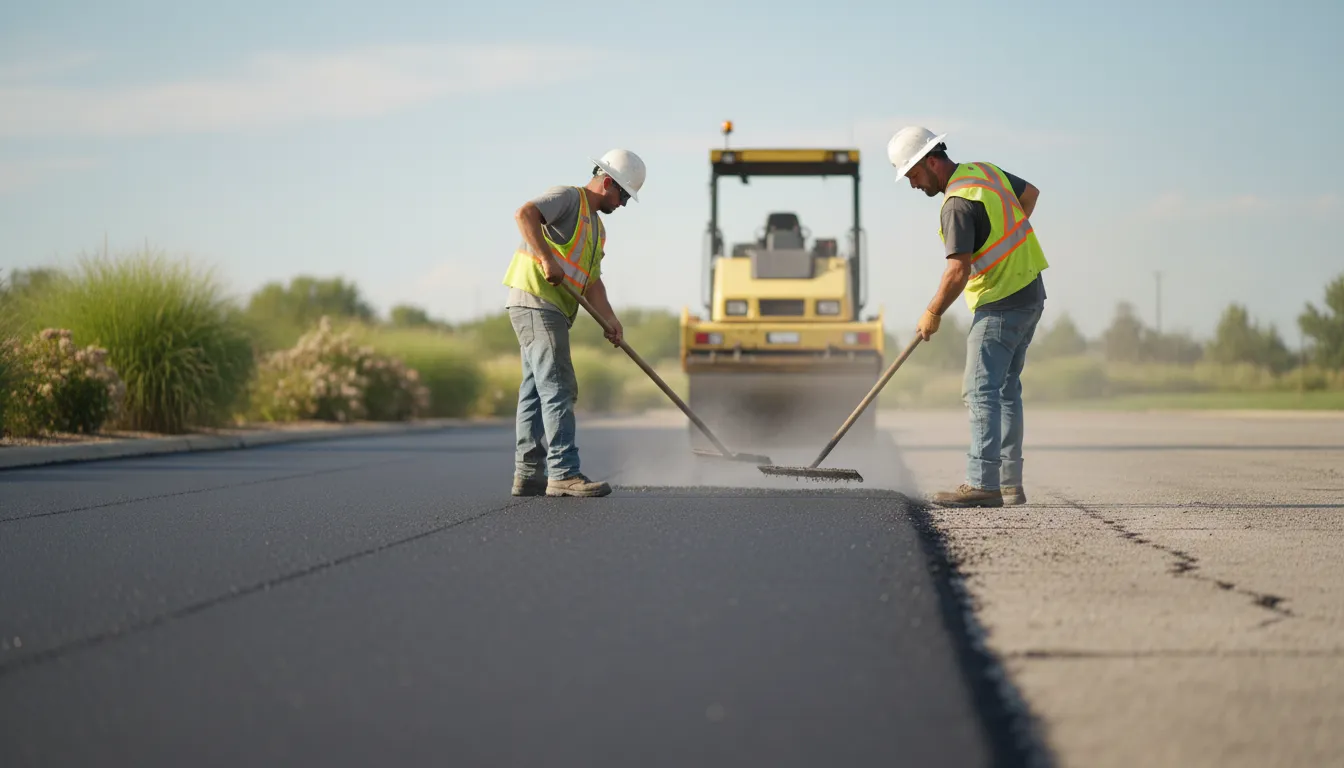
Find the Best Parking Lot Paving Contractors for Your Business
No obligation • Fast responses • Nationwide coverage

Why you can trust Tidy Parking
Tidy Parking is a leading U.S. source for parking lot maintenance services, including striping, sealcoating, sweeping, paving, resurfacing, and repairs. Our content is created independently, and providers cannot pay to influence ratings or recommendations.
Search providers near you
Top Parking Lot Paving Contractors in North Little Rock, Arkansas Ranked
A well-paved parking lot is more than just a place to park; it's a critical piece of infrastructure that ensures safety, manages traffic flow, and creates a positive first impression for your business. In North Little Rock, where specific soil and weather conditions pose unique challenges, proper asphalt installation is essential for long-term durability. This guide explains the local paving process, key considerations for the Central Arkansas climate, and how you can connect with qualified professionals to ensure your project is built to last.
Cranford Construction Co
2420 Eanes Rd, North Little Rock, AR 72117
Cranford Construction Co is a parking lot paving and resurfacing contractor based in Little Rock, AR. With over 50 years of experience, they specialize in asphalt production and paving services, including parking lot construction and overlay projects. As part of the McGeorge Contracting Family of Companies, Cranford Construction has the expertise and resources to manage complex projects, including interstate and highway construction. Their long history in the industry reflects a strong commitment to delivering projects on time and on budget.

Peneprime of Arkansas
148 Valley Club Cir, Little Rock, AR 72212
Peneprime of Arkansas is a parking lot paving contractor based in Little Rock, AR. Established in 1972, this family-owned business has grown through three generations, maintaining a focus on craftsmanship and dedication. They provide paving services tailored to meet client specifications, ensuring detailed and quality workmanship throughout each project.
Cranford Construction Co
820 Granite Mountain Cir, Little Rock, AR 72206
Cranford Construction Co is a parking lot paving and resurfacing contractor based in Little Rock, AR. With over 50 years of experience, the company specializes in asphalt production and paving services, including parking lot construction and overlay projects. Cranford Construction is part of the McGeorge Contracting Family of Companies, providing the expertise and resources to manage complex projects such as interstate and highway construction. The company is committed to delivering projects on time and within budget.
Asphalt Brothers LLC
600 Delta Dr, Little Rock, AR 72206
Asphalt Brothers LLC is a family-owned asphalt contractor serving Little Rock, AR, and the greater central Arkansas area. They offer commercial and residential asphalt paving, parking lot paving, sealcoating, striping, asphalt repair, and pavement maintenance. Their team is skilled in full parking lot installations, overlays, and asphalt patching, providing comprehensive paving solutions. With decades of experience in the local community, Asphalt Brothers LLC emphasizes craftsmanship and attention to detail in every project. They serve multiple nearby communities including Conway, Searcy, and Hot Springs.
Cooley's Asphalt Paving
15100 Arch St, Little Rock, AR 72206
Cooley's Asphalt Paving is a parking lot paving contractor based in Little Rock, AR, offering a wide range of asphalt paving services. They handle commercial, industrial, and residential projects across Arkansas, including driveway paving, parking lot construction, and site development. Their expertise includes the use of premium hot mix asphalt to ensure smooth, durable surfaces. Cooley's Asphalt Paving also provides comprehensive maintenance services aimed at extending the lifespan of paved areas.
The Step-by-Step Paving Process in Central Arkansas
A successful parking lot construction project in North Little Rock follows a meticulous sequence designed to combat local environmental factors. Skipping steps or cutting corners can lead to premature failure, especially given the region's clay soils and rainfall.
1. Site Evaluation and Planning Every durable asphalt project begins with a thorough assessment. Contractors will evaluate current traffic loads (from passenger cars to delivery trucks), identify existing or potential drainage issues, and conduct a survey to plan for the proper slope. This stage is crucial for designing a pavement structure that can handle the specific use and for anticipating any needed drainage improvements.
2. Site Preparation and Clearing This phase involves removing old pavement, vegetation, and debris. The most critical part of preparation in this area is grading. The subgrade must be shaped to create a consistent slope of 2-5% to facilitate water runoff. Proper grading away from buildings and toward drains or swales is the first line of defense against water damage, which is the primary cause of pavement failure in Arkansas.
3. Base Installation and Compaction A stable, well-compacted base is the foundation of your parking lot. Contractors will install a layer of crushed stone or gravel, which is then heavily compacted using rollers. This step is especially vital in North Little Rock due to the prevalent clay-heavy soils, which can retain water and become soft. A robust, compacted base helps prevent future settling and shifting that leads to cracks and potholes.
4. Binder and Surface Layer Application The pavement structure is typically built in layers. First, a binder layer of coarse aggregate mixed with asphalt cement is laid for structural strength. Finally, a smooth surface layer of fine-grade, hot-mix asphalt is applied. Each layer is meticulously rolled to achieve the proper density and a smooth, even finish 1.
5. Quality Control and Curing After rolling, the new asphalt surface is checked for consistency and density. The material then needs time to cure and harden, a process that typically takes 2-3 weeks before the final step of pavement striping can be applied. During this time, the lot should be kept clear of heavy traffic to allow the asphalt to reach its full strength 2.
Critical Local Factors: Drainage and Soil
The longevity of an asphalt surface in North Little Rock is almost entirely dependent on managing water and building on a stable base. Local contractors must be experts in these areas.
The Challenge of Clay Soils and High Water Tables Central Arkansas is known for its clay-heavy soils, which are impermeable and drain poorly 3. This can lead to a saturated subgrade, creating "soft spots" that cannot support the weight of the pavement above, resulting in cracks, depressions, and premature failure. A proper base layer is designed to mitigate this risk by providing a stable platform and facilitating drainage away from the clay.
The Non-Negotiable 2% Slope Rule Effective water management starts with slope, or "grade." Industry standards and local experience dictate that a parking lot must have a minimum slope of 2% (about 1/4 inch per foot) 4. Anything less will cause water to pond on the surface. Standing water seeps into tiny cracks, softens the base, and dramatically accelerates the deterioration of the asphalt through freeze-thaw cycles and general weakening.
Required Drainage Solutions Often, proper grading alone isn't enough. Based on the site evaluation, contractors may need to integrate specific drainage infrastructure such as:
- Catch Basins: Inlets that collect surface water and channel it into underground pipes.
- Trench Drains: Linear drains often placed at the base of slopes or near building entrances.
- Storm Drainage Improvements: Tying the site's drainage into the municipal storm system.
Projects that disturb over one acre of land are also required by the state to have a Stormwater Pollution Prevention Plan (SWPPP) to control erosion and sediment runoff during construction 5.
Find the perfect parking lot paving contractors for your needs
Get personalized recommendations and expert advice
Adapting Asphalt for the Arkansas Climate
The local weather doesn't just impact drainage; it directly affects the asphalt material itself. A knowledgeable paver will select materials and designs suited to these conditions.
Summer Heat and Rutting Hot, humid Arkansas summers can cause conventional asphalt to soften. This makes it susceptible to rutting-permanent indentations formed by vehicle tires, especially in areas where cars stop and turn repeatedly. To combat this, contractors may specify a high-performance asphalt binder mix that is formulated to remain stable at higher pavement temperatures.
Winter Freeze-Thaw and Cracking While winters are generally mild, North Little Rock does experience enough freezing temperatures to create a freeze-thaw cycle. Water that infiltrates the pavement expands when it freezes, pushing the asphalt apart from within and leading to cracks and potholes 6. This makes the previously mentioned drainage and crack-sealing maintenance doubly important.
Heavy Rainfall and Erosion An increase in the frequency of heavy rain events demands a robust pavement design. Without proper planning, torrential downpours can cause rapid erosion around the pavement edges and under the base, leading to structural failure. Proper slope, drainage, and erosion control measures during installation are key climate adaptations 7.
Understanding Costs for Parking Lot Installation
The cost of a new asphalt parking lot in North Little Rock is influenced by the scale of the project and the specific site challenges that must be overcome.
A common method for refreshing an existing lot is an asphalt overlay (placing new asphalt over a stable existing base). For a standard 2-inch overlay, costs in the area typically range from $1.29 to $1.46 per square foot 8 9. For a full reconstruction, which includes excavation, new base installation, and paving, the cost per square foot will be higher.
Key factors that influence the final price include:
- Project Size: Larger projects often benefit from a lower cost per square foot due to economies of scale.
- Site Conditions: Extensive excavation, poor soil that requires removal/replacement, or significant tree root mitigation will add cost.
- Drainage Work: The need to install catch basins, trench drains, or other water management infrastructure is a major cost variable 10 11.
- Access and Complexity: Tight sites with limited access for equipment or lots with many light poles and islands that require detailed handwork may increase labor time and cost.
Frequently asked questions
Sources
Footnotes
-
The Parking Lot Paving Process - https://www.fixasphalt.com/blog/the-asphalt-paving-process-0 ↩
-
Asphalt Parking Lot Paving Little Rock, AR | Rogers, AR - https://www.tommysasphaltco.com/asphalt-parking-lot-paving ↩
-
Bad Soil Can Ruin Asphalt Paving, How to Avoid It? - https://asphaltcoatingscompany.com/blog/bad-soil-can-ruin-asphalt-heres-how-to-avoid-it/ ↩
-
How Parking Lot Drainage Impacts Pavement Longevity - Rose - https://www.rosepaving.com/blog/how-parking-lot-drainage-impacts-pavement-longevity/ ↩
-
STORMWATER POLLUTION PREVENTION, GRADING, AND ... - https://cityoflittleflock.com/wp-content/uploads/2024/06/BMP-Manual-1-17-ALL.pdf ↩
-
Effect of environmental and geographical conditions on ... - https://www.sciencedirect.com/science/article/pii/S2214509525013737 ↩
-
Asphalt Road Pavements to Address Climate Change Challenges- ... - https://www.mdpi.com/2076-3417/12/24/12515 ↩
-
Making the Grade: Parking Lot Drainage - Metro Paving INC - https://metropavinginc.com/2021/03/making-the-grade-parking-lot-drainage/ ↩
-
Arkansas Parking Lots Costs & Prices - ProMatcher Cost Report - https://parking-lots.promatcher.com/cost/arkansas.aspx ↩
-
Cost of Parking Lot Paving in Little Rock, AR - https://littlerockasphaltservice.com/cost-of/parking-lot-paving ↩
-
Commercial Parking Lot Paving Costs and Timelines - KNL Industries - https://www.kandlindustries.com/commercial-parking-lot-paving-costs/ ↩