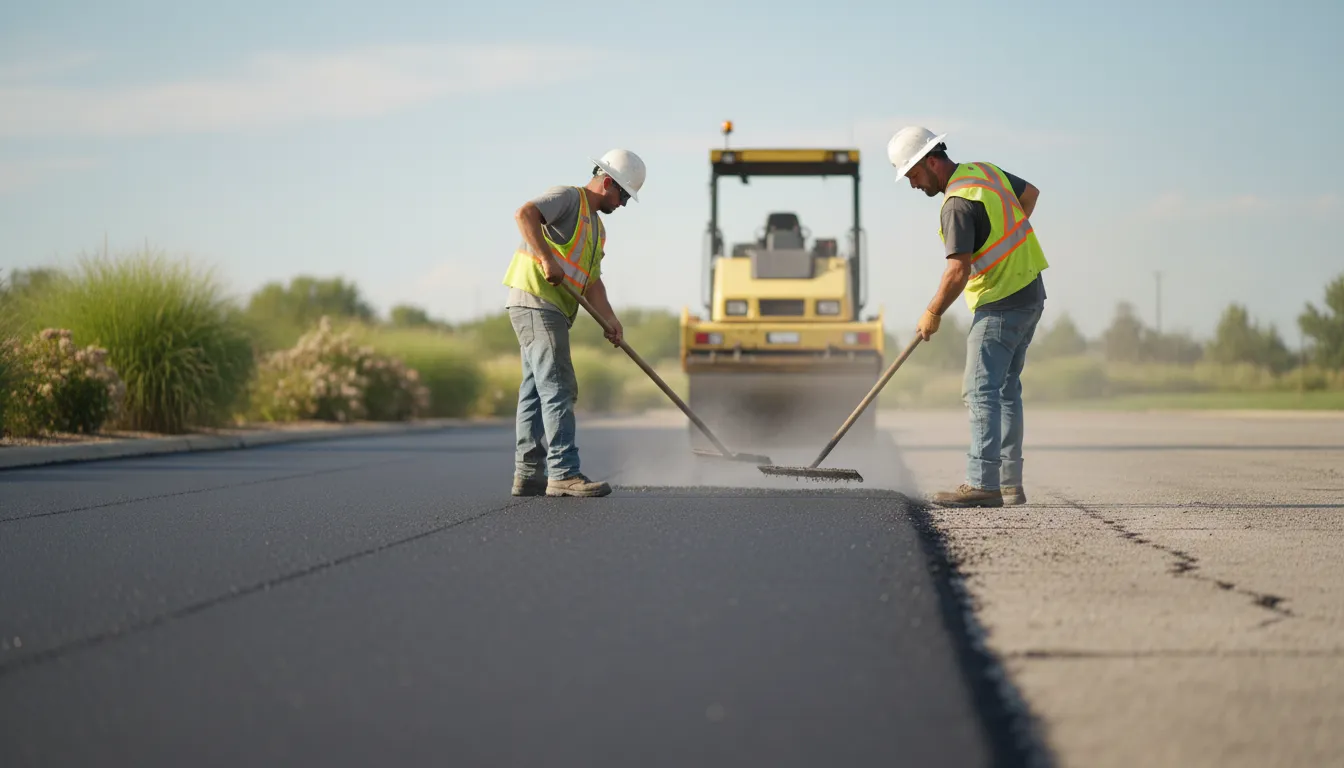
Find the Best Parking Lot Paving Contractors for Your Business
No obligation • Fast responses • Nationwide coverage

Why you can trust Tidy Parking
Tidy Parking is a leading U.S. source for parking lot maintenance services, including striping, sealcoating, sweeping, paving, resurfacing, and repairs. Our content is created independently, and providers cannot pay to influence ratings or recommendations.
Search providers near you
Best Parking Lot Paving Contractors in Alaska Ranked
Constructing a durable asphalt parking lot in Alaska is a significant engineering challenge. The state's extreme cold, heavy snowfall, and dramatic freeze-thaw cycles demand specialized paving techniques, materials, and designs to prevent premature failure. A properly paved lot is a critical asset, providing safe, reliable access for customers and employees while protecting your investment from Alaska's harsh environment. This guide outlines the essential considerations for asphalt paving in Alaska, helping you understand the specifications, costs, and maintenance needed for a long-lasting surface.
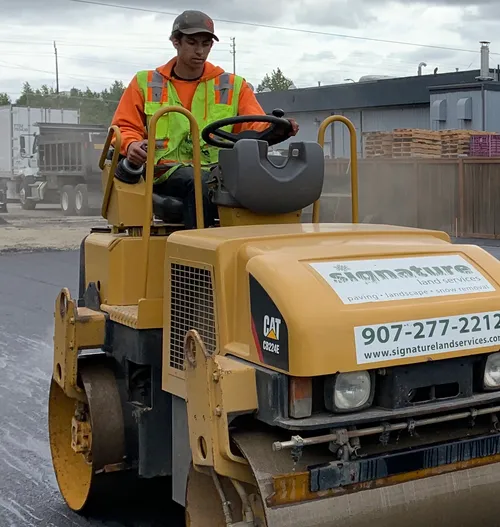
Signature Land Services
2945 Mountain View Dr, Anchorage, AK 99501
Signature Land Services is a parking lot paving and repair contractor based in Anchorage, AK. They provide asphalt and concrete paving services along with snow removal and ice management. The company emphasizes tailored solutions for each project and is licensed, bonded, and insured. Signature Land Services is also SBA certified as a woman-owned business entity.
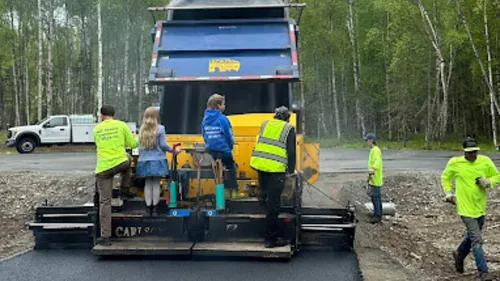
MAX Services Paving
2550 S Knik Goose Bay Rd, Wasilla, AK 99654
MAX Services Paving is a family-run parking lot paving contractor based near Anchorage, AK. With three generations of experience, they provide paving services in Mat-Su Valley and nearby areas. The company emphasizes quality craftsmanship and integrity in their work, continuing a long-standing family legacy in the paving industry.
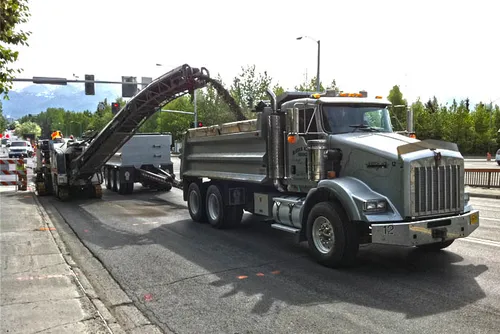
Alaska Frontier Services, LLC
2825 E 154th Ave, Anchorage, AK 99516
Alaska Frontier Services, LLC is a civil construction and paving company based in Anchorage, AK. They provide a wide range of services including asphalt paving, parking lot maintenance and repair, grading, roto-milling, reclaiming, trucking, and snow removal. The company has experience working with private, commercial, and government clients such as the State of Alaska and Municipality of Anchorage. Established in 1992 initially as a trucking company, they expanded into grading and paving in 1997. They also offer asphalt recycling through mobile crushing and reclamation services.
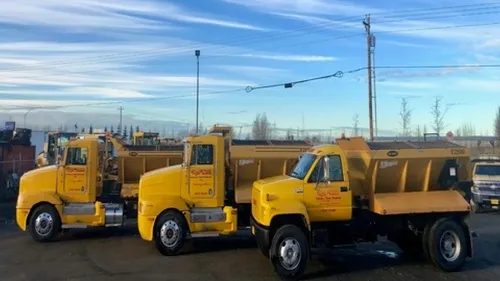
Ron Webb Paving, Inc
241 King Cir, Anchorage, AK 99515
Ron Webb Paving, Inc is a family-owned and operated paving and snow removal company based in Anchorage, AK. Since 1980, they have provided commercial and residential paving services including parking lot construction, asphalt repairs, seal coating, and resurfacing. Their capabilities also extend to excavation, storm drain installation, and commercial snow removal, serving the Anchorage area with licensed and insured expertise.
AK Pave Co.
9044 Hartzell Rd, Anchorage, AK 99507
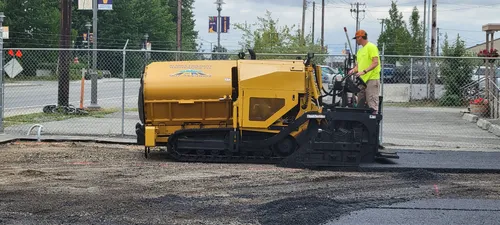
AK Pave Co. is a commercial and residential asphalt paving and maintenance contractor based in Anchorage, AK. They provide services including asphalt paving, parking lot striping, crack filling, seal coating, repairs, and commercial snow plowing with 24-hour availability. The company serves Anchorage, Girdwood, the Mat-Su Valley, and surrounding areas. AK Pave Co. offers custom driveway and parking lot installations designed for Alaska's northern climate, ensuring durable and well-prepared surfaces. They have an owner on-site for quality control and provide a one-year warranty on new pavement.
Why Alaska's Climate Demands Specialized Paving
Alaska's environment presents unique obstacles for pavement longevity. The primary concern is low-temperature thermal cracking, where asphalt becomes brittle and fractures in extreme cold 1. This is exacerbated by freeze-thaw cycles, where water trapped in or under the pavement freezes, expands, and thaws, leading to surface deterioration, potholes, and structural heaving. In some regions, permafrost adds another layer of complexity, as thawing ice-rich ground can cause severe subsidence under a paved surface. Standard paving practices used in milder climates will not withstand these forces, making it imperative to follow specifications tailored for northern conditions.
Critical Design & Material Specifications
Asphalt Thickness and Structure
For commercial parking lots in Alaska, a robust pavement structure is non-negotiable. A total compacted thickness of 6 to 8 inches is commonly recommended for durability 2. This is typically built in layers:
- Binder Course: A 1.75-inch compacted lift of a sturdy 19.0 mm Superpave mix provides structural strength.
- Surface Course: A 1.25-inch compacted lift of a finer 9.5 mm Superpave mix creates a smooth, dense, and weather-resistant driving surface.
While minimums for non-highway hot mix asphalt (HMA) can be as low as 2 inches, such thin applications are unsuitable for Alaska's demanding conditions and load requirements 3.
Performance-Graded (PG) Binders
The type of asphalt binder is the most critical material choice. Binders are graded for performance at specific high and low temperatures. For Alaska, soft binders that remain flexible in deep cold are essential. Specifications often call for binders like PG 52-34 or PG 52-28, which are engineered to perform at high temperatures up to 52°C and low temperatures as severe as -28°C to -34°C 4 5. Using a binder graded for a warmer climate is a leading cause of premature cracking.
Base and Subgrade Preparation
A strong pavement is built from the ground up. Inadequate base preparation is a common point of failure.
- Subgrade: The native soil must be properly compacted to provide a stable platform and prevent settling 6.
- Sub-base: To handle frost load and distribute weight, a thick compacted granular sub-base-often 12 inches or more-is frequently required in Alaska 7.
- Aggregate Base Course: A minimum of 6 inches of compacted, high-quality aggregate (like MDOT 703.06 Type B) is typically placed on top of the sub-base.
- Drainage: The base should extend at least 24 inches beyond the pavement edge and be graded to ensure water drains away from the structure, a principle often summarized as "drainage, drainage, drainage" 8 9.
The Paving Process Adapted for Alaska
Seasonal Timing
The ideal paving window in Alaska is limited. Hot mix asphalt (HMA) should be placed when ambient and ground temperatures are consistently above 40°F 10. To extend the season or improve workability, Warm Mix Asphalt (WMA) technologies can be used. WMA is produced and placed at lower temperatures than traditional HMA, offering benefits like reduced fuel use and better compaction in cooler conditions, which is particularly valuable in Alaska 11.
Mix Selection
- Hot Mix Asphalt (HMA): The standard for permanent, durable parking lot surfaces. Fine-graded mixes are preferred for surface courses to create a dense, impermeable layer that resists water infiltration 12.
- Warm Mix Asphalt (WMA): An excellent option for Alaska, offering similar performance to HMA with enhanced placement characteristics in cold weather 13.
- Cold Mix Asphalt: Used almost exclusively for emergency pothole repairs during winter. It is not a suitable material for a full parking lot paving project 14 15.
Compaction and Slope
Proper compaction during installation is vital to achieve the required density and prevent future settlement and water penetration 16. Furthermore, the finished surface must be graded with a minimum slope of 1-2% to ensure water runs off into designated drainage areas like curbs and gutters, preventing dangerous ice patches and structural water damage 17 18.
Find the perfect parking lot paving contractors for your needs
Get personalized recommendations and expert advice
Cost Considerations for Alaskan Projects
Asphalt paving costs in Alaska are influenced by the extreme site preparation often needed. General estimates for 2026 fall between $2.50 to $4.00 per square foot for the asphalt work itself 19. However, total project costs can vary significantly based on:
- Project Size: Smaller lots (<10,000 sq ft) have higher per-square-foot costs ($4.50 - $6.00+) due to mobilization and fixed expenses. Larger lots (>30,000 sq ft) benefit from economies of scale ($2.50 - $3.50 per sq ft) 20 21.
- Site Conditions: Costs rise dramatically if significant excavation, poor soil replacement, permafrost mitigation, or complex drainage systems are required 22 23.
- Location: Remote sites in Alaska will incur substantial mobilization and material transportation premiums.
Long-Term Maintenance for Lifespan
Protecting your investment begins immediately after paving.
- Sealcoating: A new asphalt lot should be sealcoated within the first 6-12 months to protect the surface from fuel spills, oxidation, and water. Reapplication every 2-3 years is standard maintenance 24.
- Crack Sealing: This is the most important annual maintenance task in Alaska. Sealing hairline cracks before winter prevents water from entering, freezing, and expanding, which is the direct cause of potholes and base failure 25.
- Prompt Repair: Addressing drainage issues, potholes, and surface raveling immediately prevents small problems from becoming expensive reconstruction projects.
Compliance with Local Codes
All paving must conform to the Alaska Department of Transportation & Public Facilities (DOT&PF) Standard Specifications or applicable local municipal codes (e.g., from Anchorage or Fairbanks) 26. These specifications govern materials, compaction, thickness, and construction methods to ensure public safety and durability. Working with a paving professional familiar with these local requirements is crucial for a compliant and successful project.
Frequently asked questions
Sources
Footnotes
-
Asphalt Binder Adaption for Climatic Conditions in Cold Regions ↩
-
Base for Asphalt Driveway: Why a Strong Foundation Matters ↩
-
The Best Base for an Asphalt Driveway: A Comprehensive Guide ↩
-
Can Hot or Cold Weather Affect the Asphalt Paving Process? ↩
-
Preventing Parking Lot Injuries: Slope, Condition, and Lighting ↩
-
Transportation Synthesis Report: Comparison of Permeable Pavement Types ↩
-
Asphalt Binder Adaption for Climatic Conditions in Cold Regions ↩