
Preparing your parking lot for sealcoating
What your sealcoating crew handles vs. what you should plan
Before you worry about brooms and barricades, it helps to understand where your sealcoating contractor's responsibility usually ends and the property manager's begins.
What sealcoating contractors typically handle (if it's in the scope):
- Final power cleaning of the surface (blowers, mechanical sweepers)
- Crack filling and localized patching spelled out in the proposal
- Oil-spot priming with specialty primers where needed
- Mixing and applying the sealcoat itself
- Coning/taping off freshly sealed areas during work and initial cure
- Restriping, if included in the quote
What property managers usually own:
- Choosing timing and phasing so tenants can still function
- Getting vehicles, dumpsters, pallets, and loose items out of the way
- Scheduling or approving any larger asphalt repairs ahead of sealcoating
- Communicating closures to tenants, staff, and vendors
- Managing site security and access after the crew leaves for the day
Preparation sounds mundane, but it directly impacts how well the sealer bonds, how long it lasts, and how smoothly the project runs.1
1-2 weeks before: walk the lot and plan repairs
Use this window to decide what needs more than just a cosmetic seal.
Inspect and document pavement issues
Walk the lot (ideally with your contractor) and note:
- Alligator cracking (areas that look like reptile skin) - usually needs patching, not just sealcoat.
- Potholes and deep depressions - safety issues that should be cut out and patched.
- Wide cracks (3/8" and up) - candidates for hot-pour or cold-pour crack sealants.
- Standing water or "birdbaths" - may need leveling or drainage fixes.
Industry best practices are clear: cleaning, crack repair, patching, and oil-spot prep should be completed before the sealcoating starts, not during.1
Clarify who is doing what
Ask your contractor:
- Are crack sealing and patching included, or separate line items?
- Will they handle saw-cut patching of failed areas, or should a paving contractor do that first?
- How many days before sealcoating will repairs be completed so materials have time to cure?
Get this in writing. Sealcoat cannot fix structural failures; if those aren't addressed first, you'll still have problems under a fresh black surface.
2-3 days before: cleaning and oil spot treatment
Now you're focused on giving the crew a clean, unobstructed surface.
Get the surface reasonably clean
Most professional sealcoating crews bring power blowers and may use mechanical sweepers for final prep, but they expect the site to be free of obvious junk and loose obstacles.
As the property manager, you should:
- Schedule a parking lot sweeping (if you use a sweeping service) the night before or morning of the project.
- Remove loose items: pallets, shopping carts, outdoor displays, planters, gravel piles, mulch, and landscape debris.
- Trim vegetation that has crept over the asphalt at edges and islands.
- Verify drains and inlets are clear so wash water and rain can escape.
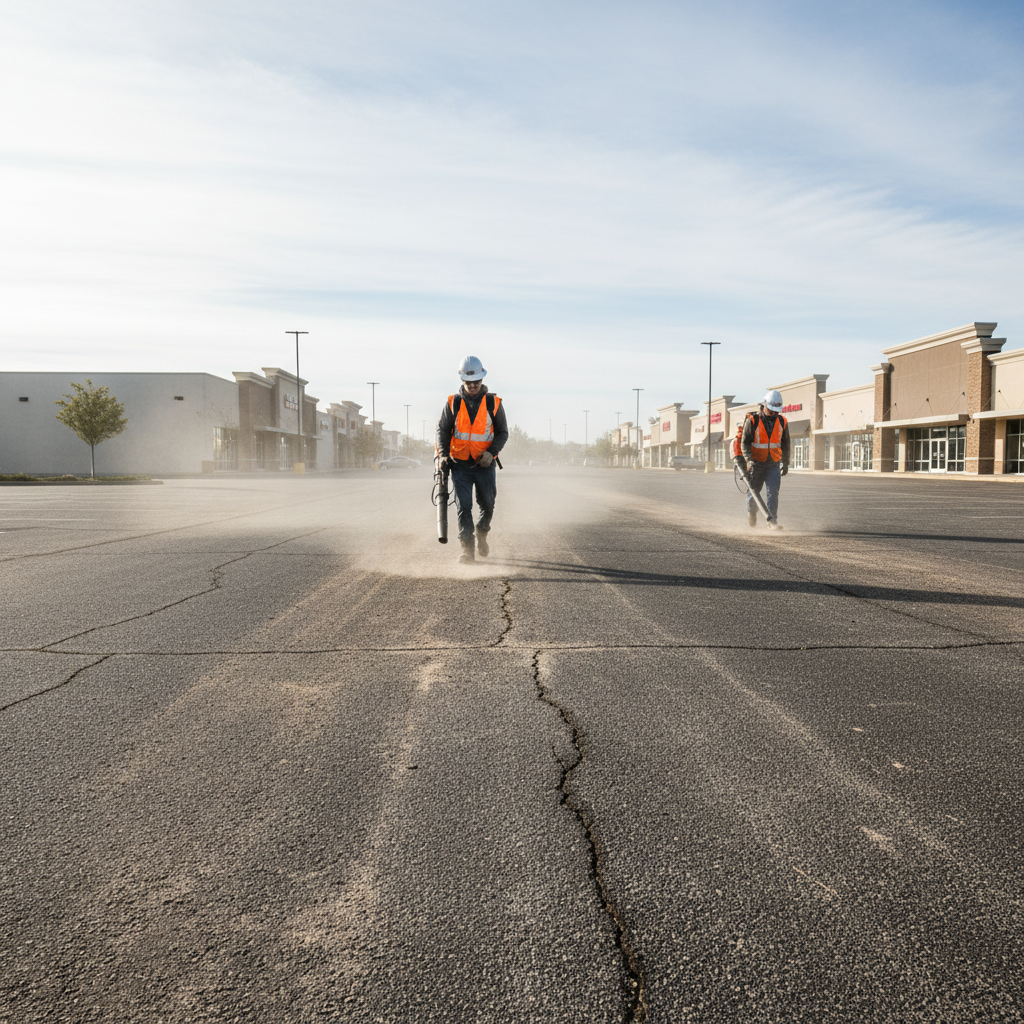
Your contractor's final cleaning is about getting fines and dust off the surface so the sealer can bond. It's not about hauling away trash or abandoned materials.
Flag and treat oil spots
Sealcoat will not reliably bond to heavy oil or fuel saturation, especially in front of dumpsters, loading docks, drive-thrus, and long-term parking stalls.2 3
Best approach:
- Identify problem areas early. Mark heavily stained spots on a site map or with paint.
- Ask your contractor how they'll treat them. Typical methods: detergent or degreaser cleaning, light power washing, then application of an oil-spot primer designed for asphalt.
- Understand limits. On badly saturated asphalt that has turned soft, the only real fix may be cutting out and patching the area before sealcoating.2
Confirm whether oil-spot cleaning and primer are included in the price or billed as extras. These line items are normal and important, not upsells.
Day-of: access control, tenants, and timing
Even perfect surface prep can be undermined if people drive on wet sealer or sprinklers soak the lot.
Phasing the job and keeping cars out
Work with your contractor on a phasing plan that covers:
- Which entrances and sections close when so you always have some parking open, if needed.
- Where to relocate tenant and employee parking during each phase.
- How long each phase will be closed to traffic (commonly 24-36 hours under good conditions).4
Most contractors will cone and tape the immediate work area. As the property manager, you may still need:
- Extra barricades or signage at property entrances.
- Security or staff presence for busy retail centers.
- A towing policy communicated before the project so you're not stuck with abandoned vehicles in work zones.
Bottom line: your contractor can control a work zone, but only you can control your tenants, customers, and vendors.
Manage water, deliveries, and trash
Water and heavy vehicles are the two biggest enemies of fresh sealer.
Check off these items:
- Turn off sprinklers 24-48 hours before and after sealcoating so the surface is dry when the crew arrives and stays dry while it cures.4
- Pause pressure washing of facades, sidewalks, or windows that might drain across the asphalt.
- Reschedule dumpster pickups and large deliveries away from sealed phases; a garbage truck or semi can track sealer everywhere or scar it while it's still tender.
- Warn recurring services (landscape crews, shuttle buses, school/employee transportation) about closures and alternative routes.
Coordinate these details in writing and share a simple map with all affected tenants.
Simple prep checklist for property managers
Use this as a quick run-through before your sealcoating date:
1-2 weeks out
- Walk the lot with your contractor and mark:
- Alligator cracking, potholes, and wide cracks
- Chronic standing water areas
- Heavy oil/fuel spots
- Approve and schedule any crack sealing and patching.
- Agree on scope: what the contractor cleans vs. what you'll handle.
- Choose project dates and phasing (sections, entrances, and days).
2-3 days out
- Arrange a sweeping service or in-house cleanup.
- Remove loose items (pallets, carts, displays, debris) from the work areas.
- Confirm dumpsters can be moved or are out of active phases.
- Mark major oil spots and confirm primer/repair plan.
- Send closure maps and timing to tenants, staff, and vendors.
Day-of and curing period
- Verify vehicles are out of the scheduled section before the crew arrives.
- Shut off irrigation and any water sources crossing the lot.
- Place any additional signage or barricades at property entrances.
- Keep traffic off newly sealed areas for the full cure window your contractor recommends.4
- Walk the lot with the foreman or project manager once areas reopen.
Conclusion
If you handle inspection, basic cleaning, logistics, and communication ahead of time, your sealcoating crew can work efficiently and leave you with a sharp, long-lasting parking lot surface.
Sources
Footnotes
-
https://www.forconstructionpros.com/pavement-maintenance/blacktop/paving/article/21271857/parking-lot-sealcoating-best-practices ↩ ↩2
-
https://irp.cdn-website.com/0c65691f/files/uploaded/Asphalt-Maintenance-Fact-Sheet-v2.pdf ↩ ↩2
-
https://pavingfinder.com/expert-advice/parking-lot-sealcoating/ ↩
-
https://www.rosepaving.com/sealcoating/asphalt-parking-lot-maintenance-sealcoating/ ↩ ↩2 ↩3