
How often to sealcoat an asphalt parking lot
Sealcoating is one of the cheapest ways to keep an asphalt parking lot looking good and lasting longer-but the right interval is not the same for a quiet church as it is for a busy grocery store in a snow belt.
This guide walks through recommended sealcoating frequencies for different traffic levels and climates, how UV light and winter deicing change the schedule, and how to plug sealcoating into a 5-10 year plan that also covers striping and small repairs.
Quick answer
Most commercial asphalt parking lots should be sealcoated every 2-3 years, with the exact interval tightened or relaxed based on traffic, climate, and pavement condition. In harsh sun or heavy freeze-thaw and deicing, busy drive lanes and entrances may need sealcoating as often as every 1-2 years. In mild climates with light traffic (small offices, churches), you can often stretch to 3-5 years as long as you inspect annually and address cracks promptly.1 2
What really drives your sealcoating schedule
You'll hear "every two years" a lot, but that's only a starting point. Four main factors actually control how often you should sealcoat.
1. Traffic and use patterns
Think about both volume and type of traffic:
- Light traffic: Small offices, churches, HOA pools, employee-only lots.
- Tires mostly roll straight, low daily turnover.
- Sealcoat film wears slowly.
- Moderate traffic: Medical offices, typical suburban retail, restaurants with drive-thrus.
- More turning, braking, and stop-and-go in key areas.
- High-wear zones show gray and polished aggregate sooner.
- Heavy traffic: Grocery stores, big-box retail, logistics yards, lots with frequent delivery trucks or buses.
- Heavy loads and tight turning radii (dumpsters, loading docks, drive-thrus) abrade the surface quickly.
The heavier and more aggressive the traffic, the more often you'll need to sealcoat-and the more likely you are to spot-treat high-wear sections between full-lot applications.2
2. Climate, UV, and moisture
Asphalt is essentially rock glued together with asphalt binder. Over time, ultraviolet (UV) light and oxygen dry out that binder ("oxidation"), making it gray and brittle. Sealcoating adds a sacrificial layer that absorbs UV and helps shed water.1
Climate impacts frequency like this:
- Hot, high-sun regions (Sun Belt, high elevation):
- Faster oxidation and fading; surface dries out sooner.
- Plan on the shorter end of any recommended range.
- Freeze-thaw regions:
- Water works into tiny cracks, then expands as it freezes, prying the pavement apart.
- A sound, well-bonded sealcoat reduces water infiltration and slows this cycle.
- Wet climates with poor drainage:
- Standing water accelerates stripping and raveling.
- Keep sealcoating intervals tighter until drainage issues are fixed.
3. Winter snow, salts, and deicing chemicals
In snow states, plowing and deicing do as much damage as the cold itself:
- Plow blades and tire chains scrape and scour the surface, thinning the sealcoat.
- Deicing salts and chemicals drive more moisture into pavement, and some liquid deicers and alternative chemicals can weaken the bond between asphalt binder and aggregate, especially when combined with repeated freeze-thaw cycles.3
- Melt-refreeze cycles mean the surface stays wet longer, increasing the benefit of a good seal.
If you're in a heavy snow and deicing region, especially with frequent plowing, assume your effective sealcoat life is 20-40% shorter than in a similar but snow-free climate, and plan your schedule accordingly.3
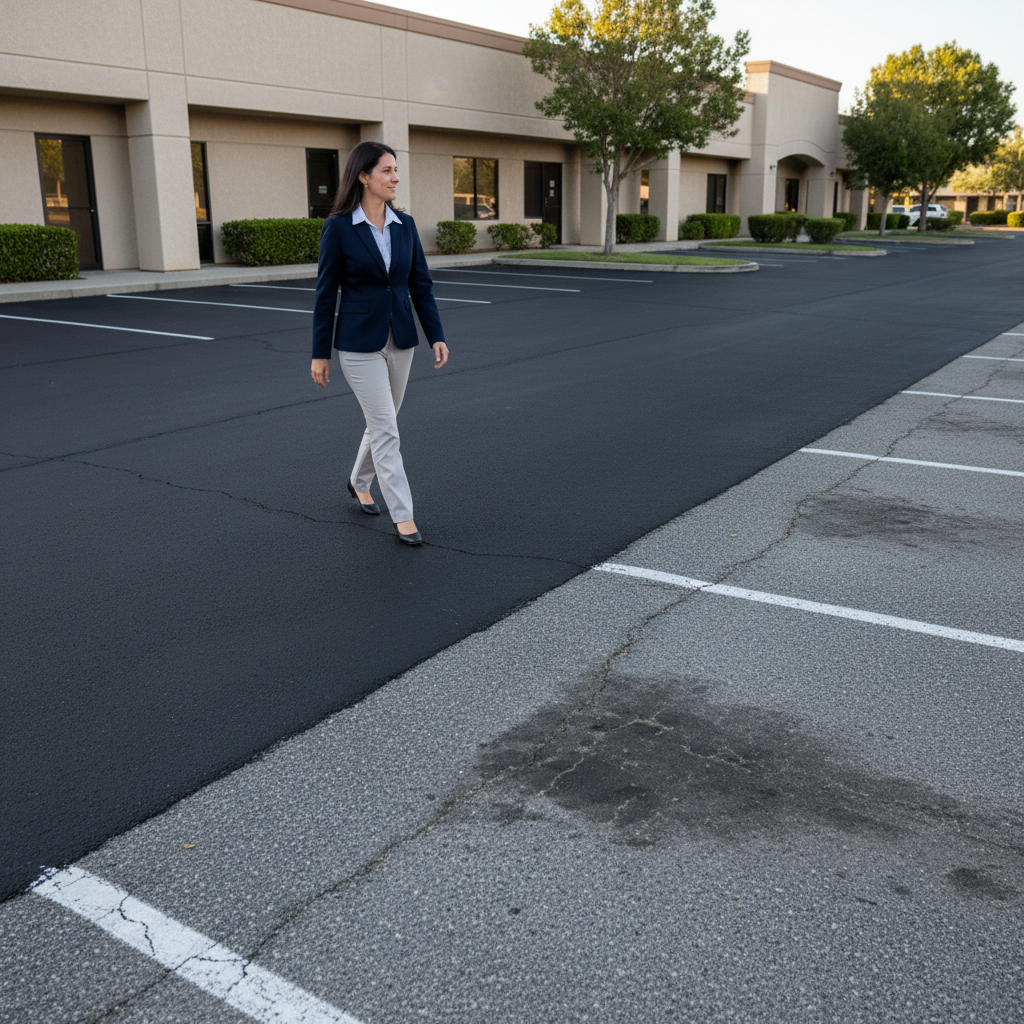
4. Age and condition of the asphalt
Two lots the same age may need sealing on different schedules:
- A younger lot (under ~5 years) with good drainage and compaction may only need sealing when you first see:
- Noticeable fading from jet-black to dull gray
- Hairline surface cracks
- Light raveling (loose sand-like fines at the surface)
- An older lot or one with past neglect may need more frequent sealcoating just to keep fine cracks and raveling from escalating into potholes.
The Asphalt Institute notes that sealing is most effective on pavements that have dried and become brittle, with small cracks and surface voids-not on brand-new, still-flexible asphalt.1
Recommended intervals by lot type and climate
Use the table below as a planning baseline. Adjust one step tighter if you have:
- Intense sun
- Heavy plowing and deicing
- Lots of trucks or buses
| Lot type & use | Typical climate | Inspect at least | Sealcoat interval* |
|---|---|---|---|
| Small office, church, HOA amenities | Mild, low snow | Annually | Every 4-5 years |
| Small office, church, HOA amenities | Harsh sun or snow belt | Annually | Every 3-4 years |
| Medical, professional, light retail | Any | Annually | Every 2-3 years |
| Busy retail, grocery, restaurants | Any | Annually | Every 1-3 years |
| Truck yards, loading docks, buses | Any | Twice per year | Every 1-2 years (plus localized patching) |
*Assumes a good-quality, two-coat commercial sealcoat applied at proper thickness, with cracks sealed and patches made ahead of time.2 4
Remember: condition beats the calendar. If the lot still looks dark, intact, and free of raveling or new cracks after the "target" interval, you can usually wait; if you see widespread dull gray and fine cracking early, move your next sealcoat up.
Planning a 5-10 year maintenance cycle
Instead of thinking, "When do I seal next?", think in terms of a repeating cycle that blends inspections, crack sealing, sealcoating, and striping.
A simple framework for a typical commercial lot:
Year 0 - New or major resurfacing
- Let new asphalt fully cure before first sealcoat; many engineers prefer at least one full warm season so excess oils can leave the surface.1
- Confirm drainage, catch basin function, and weak spots early.
Years 1-2 - First detailed inspection
- Walk the lot (or hire a contractor) to mark:
- New cracks, patches, depressions/ponding
- High-wear areas (entrances, drive-thru lanes, around dumpsters)
- Seal significant cracks and repair localized failures.
- Decide timing of your first sealcoat based on appearance and early wear; for most commercial lots, this is within 1-3 years of paving.2
Ongoing (repeat every 2-3 years for typical commercial lots)
- Annually
- Inspect and map new cracks, ruts, and drainage issues.
- Seal working cracks and repair potholes.
- Sealcoat cycle (target 1-5 years depending on your category above)
- Schedule sealcoating in warm, dry weather.
- Do all crack sealing and patching before sealcoat.
- Plan for restriping immediately after sealcoating while the surface is clean and dark.
- Use this opportunity to refresh ADA (Americans with Disabilities Act) markings and update any layout changes.
Every 8-15+ years (depending on traffic, climate, and subbase)
- Re-evaluate whether an overlay or resurfacing is more cost-effective than continued patch-and-seal.
- If you plan an overlay in the next 1-2 years, you may stretch or skip a scheduled sealcoat and focus money on structural repairs instead.
Coordinating sealcoating with striping and minor repairs
To keep disruption and costs down, bundle work where you can:
- Crack sealing and patching:
- Always do this before sealcoating so the sealer locks into a sound surface instead of bridging voids.
- Sealcoating and striping:
- Every time you seal, you'll need to restripe; budget these as a single event.
- Use the dark, fresh background to improve visibility of stalls, ADA spaces, and fire lanes.
- Phasing the lot:
- For busy sites, plan to seal and stripe in sections so part of the parking stays open.
- Rotate phases across cycles so the same areas are not always last.
Over a decade, this kind of planned approach-rather than one-off emergency fixes-often adds many years of service life to the pavement at a lower total cost.4
How to tell it's time to sealcoat sooner
Calendar aside, bump a sealcoat forward if you see:
- Widespread, uniform fading from black to light gray.
- Surface sand and small stones coming loose (raveling).
- Hairline "alligator" cracking starting in drive lanes.
- Deep color loss and wear in wheel paths and turn areas while adjacent areas still look dark.
- Evidence of moisture staying in the surface (dark, damp spots long after rain) or fine cracks holding water.
If multiple signs show up well before the schedule you planned, tighten your interval and look at root causes (drainage, heavier traffic than expected, aggressive plowing or deicing).
Conclusion
For most asphalt parking lots in the U.S., aim to inspect yearly and sealcoat every 1-5 years, using traffic, climate, and visible wear-not just the calendar-to fine-tune the cycle and coordinate striping and repairs.
Sources
Footnotes
-
https://www.asphaltinstitute.org/faq_section/seal-coats/ ↩ ↩2 ↩3 ↩4
-
https://asphaltcalculatorusa.com/average-lifespan-of-sealcoated-asphalt/ ↩ ↩2 ↩3 ↩4
-
https://www.sewrpc.org/SEWRPCFiles/Publications/TechRep/tr-062-impacts-of-chloride-on-the-natural-and-built-environment.pdf ↩ ↩2
-
https://www.tularelocalhealthcaredistrict.org/files/2b6b361a7/11.STAFF%2BREPORT%2BParking%2BLot%2BSealing%2Bof%2BPaving%2BEVO.pdf ↩ ↩2