How often to restripe a parking lot
Quick answer
Most U.S. parking lots need restriping every 1-3 years, but heavy-traffic or harsh-climate lots often benefit from annual striping. The exact timing depends on traffic volume, sun and snow exposure, whether you sealcoat, and the paint or marking material used. You don't have to wait for lines to disappear: plan to restripe when markings lose contrast, edges blur, or ADA and safety markings are no longer instantly clear.
What really controls how long striping lasts
Striping life isn't just about "how old" the paint is. Four big factors determine how often you'll need to restripe.
1. Traffic volume and vehicle type
More wheels = faster wear.
- High-traffic retail, hospitals, schools, quick-service restaurants: cars constantly turning, stopping, and rolling over stall lines and arrows. Expect the shortest lifespan.
- Medium-traffic office, medical, or mixed-use: busy on weekdays, calmer evenings and weekends.
- Low-traffic churches, storage facilities, or small offices: long stretches of time with minimal movement.
As a rule of thumb, standard water-based parking lot paint in high-traffic areas may need refreshing in 12-18 months, while the same paint in low-traffic lots may last closer to 2 years before lines look tired.1
2. Climate and weather
Climate quietly erases your lines from the day they're painted:
- Intense sun / hot climates (Southwest, Sunbelt): strong UV light bleaches paint and breaks it down faster, especially bright whites and yellows.
- Freeze-thaw regions (Upper Midwest, Northeast, mountain states): cracking pavement and snow/ice treatment wear markings quickly.
- Snow plows: blades and scraping equipment can dramatically shorten stripe life.
- Rain and standing water: water can slowly break down marginal paint and wash away fine pigments.
Lots that bake in full sun or see regular plowing often need annual or 18-month restriping just to keep markings clearly visible.
3. Sealcoating cycles
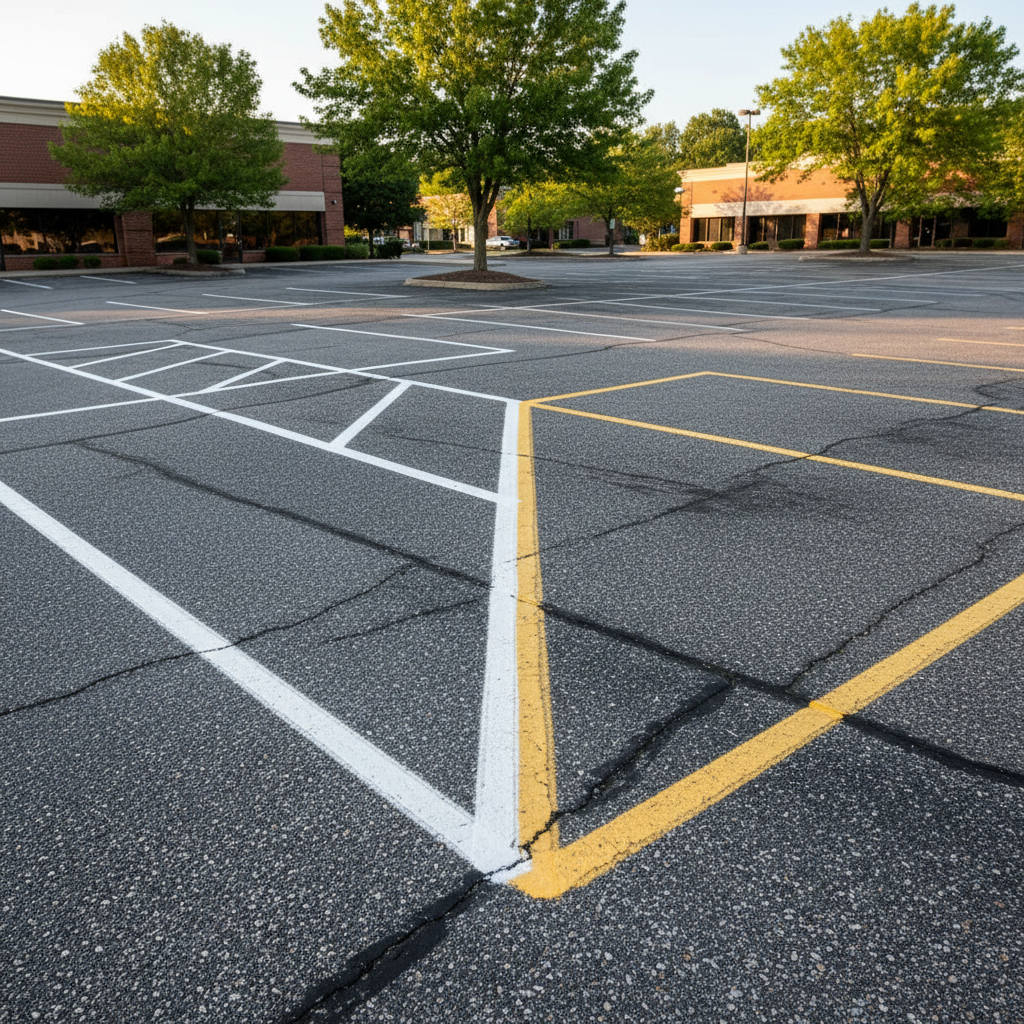
If you sealcoat your asphalt (apply a protective black coating), that always resets the clock on striping:
- Sealcoat covers existing markings, so every sealcoat application requires full restriping afterward.
- Many commercial lots are sealcoated every 2-4 years depending on climate and traffic.2
- Even if your stripes might have lasted a bit longer, the sealer forces a repaint-plan for striping in the same budget and schedule.
A smart pattern for many properties: sealcoat + restripe every 3 years, with an optional touch-up restripe of the highest-wear areas halfway through that cycle.
4. Paint or marking material type
Not all "parking lot paint" is equal. Typical ranges under moderate conditions:1 3
- Water-based acrylic traffic paint (most common): usually the budget choice; plan on 1-2 years between restripes.
- Solvent/acetone-based or higher-solids paints: harder film, better wear; often 2-3 years under similar traffic.
- Thermoplastic, epoxy, or specialty markings: used in critical or very high-traffic areas; can last 3-5+ years, but cost more and require special equipment.
Many property managers use premium materials only where it really matters (fire lanes, crosswalks, ADA symbols) and economical paint for standard stalls.
Typical restriping timelines by property type
These are practical starting points assuming typical U.S. conditions and standard water-based striping. Your exact schedule may be a bit shorter or longer.
Light-traffic properties (often 2-3 years)
- Small office buildings
- Professional parks
- Churches and event-based lots
- Self-storage facilities
Suggested cycle:
- Full restripe every 2-3 years.
- Walk the lot annually; if lines still look sharp, you can stay on the long end of that range.
Medium-traffic properties (about 1-2 years)
- Multi-tenant office complexes
- Medical offices and clinics
- Hotels
- Light industrial/business parks
Suggested cycle:
- Full restripe every 18-24 months.
- Touch up high-wear areas (entrances, loading zones, front-row stalls) halfway between full restripes if needed.
Heavy-traffic properties (often yearly)
- Supermarkets and big-box retailers
- Busy shopping centers and strip malls
- Fast-food and drive-thru restaurants
- Schools, hospitals, and urgent care centers
Suggested cycle:
- Plan on annual restriping.
- If you have snow plowing or extreme sun, don't be surprised if markings feel "tired" within 12 months.
The bottom line: if visitors hesitate, slow down abruptly, or miss stalls because they can't read the lot, you've waited too long.
Visual cues it's time to restripe
You don't need a calendar reminder if you know what to look for. Walk your lot and check these cues in normal daylight.
1. Loss of contrast and color
- Stall lines and arrows no longer pop against the asphalt-they look gray or dingy.
- Yellow curbs or no-parking zones look pale or patchy.
- At a glance from 50-75 feet away, the layout feels "muddy" instead of crisp.
2. Blurred or broken edges
- Line edges are feathered and fuzzy rather than sharp.
- Stop bars, crosswalks, and directional arrows are broken into patches of paint.
- Symbols (especially wheelchair icons) are missing parts or are hard to recognize.
3. Safety and ADA markings fading
Safety-related markings should trigger earlier maintenance:
- Fire lanes and fire hydrant markings are hard to read from a moving vehicle.
- Crosswalks no longer stand out from the surrounding pavement.
- Accessible (ADA) spaces and access aisles are not immediately obvious, especially in low light.
Because pavement markings are a recognized safety device, transportation agencies stress keeping them clearly visible and reflective to reduce crash risk.4 5 While private lots aren't highways, the same idea applies: if critical markings aren't obvious, it's time to call a striping contractor.
4. Operational red flags
- Drivers parking crooked or double-parking because they can't see stall lines.
- Delivery trucks cutting across unmarked areas instead of using drive lanes.
- Complaints from tenants, customers, or security about confusion or near-misses.
Any of these is a strong signal not to wait for your next "official" date.
How to plan your restriping schedule
You don't need an exact science-just a simple plan and regular check-ins.
1. Pick a baseline interval
Start here and adjust:
- Heavy-traffic retail/medical: every 12 months.
- Medium-traffic office/hotel: every 18-24 months.
- Light-traffic or overflow lots: every 2-3 years.
If you use more durable paint or thermoplastic, you might safely stretch these intervals, but still inspect annually.
2. Align with sealcoating and repairs
Try to bundle sealcoating, crack repair, and restriping so you're not repeatedly disrupting tenants or customers.
- After repaving or resurfacing, you'll stripe once the pavement is cured enough for paint (your paving and striping contractors will coordinate timing).
- After each sealcoat, plan on a full restripe-even if the lines underneath weren't at end of life yet.2
3. Schedule inspections, not just projects
Twice a year (spring and fall work well):
- Walk key areas: entrances, main drive aisles, ADA stalls, crosswalks, fire lanes.
- Take quick phone photos from a driver's perspective.
- Note 1-5 trouble spots and ask your striping company whether to touch up or fully restripe.
Contractors who know your property can often suggest stretching or shortening cycles based on what they see across similar lots in your area.
4. Don't wait for total failure
For both safety and appearance, aim to restripe when lines are clearly faded but still visible, not after they're almost gone. That's usually somewhere between 50-75% of their original brightness by eye, depending on your risk tolerance and use.
Conclusion
Most parking lots benefit from restriping every 1-3 years, but the right schedule for you comes from watching traffic, climate, and visual wear-and planning ahead instead of waiting for the lines to disappear.
Glossary
- ADA (Americans with Disabilities Act): U.S. civil rights law that, among other things, sets standards for accessible parking spaces and markings.
- MUTCD (Manual on Uniform Traffic Control Devices): Federal standard that defines how official traffic signs and pavement markings should look and perform.5
- Sealcoating: Applying a protective coating over asphalt to slow oxidation, weather damage, and surface wear.
- Thermoplastic markings: Long-lasting pavement markings made from melted plastic applied hot to the surface.
- Traffic paint: Specialized coating formulated to bond to pavement and withstand vehicle wear and weather.
Sources
Footnotes
-
AF&G. "Parking Lot Striping Guide" - typical repaint intervals by paint type and traffic volume. ↩ ↩2
-
GemSeal / industry article on asphalt parking lot maintenance - recommended 2-4 year sealcoating cycles and coordination with striping. ↩ ↩2
-
Bowman Line Striping. "Striping Durability and Lifespan" - expected life ranges for water-based, solvent-based, and thermoplastic markings. ↩
-
Federal Highway Administration. "Pavement Markings" - overview of visibility and safety role of pavement markings. ↩
-
Federal Highway Administration. MUTCD (Manual on Uniform Traffic Control Devices), Part 3 - pavement marking standards and maintenance emphasis. ↩ ↩2